The Adoration of the Magi by Justus van Gent
View the artwork: The Adoration of the Magi →
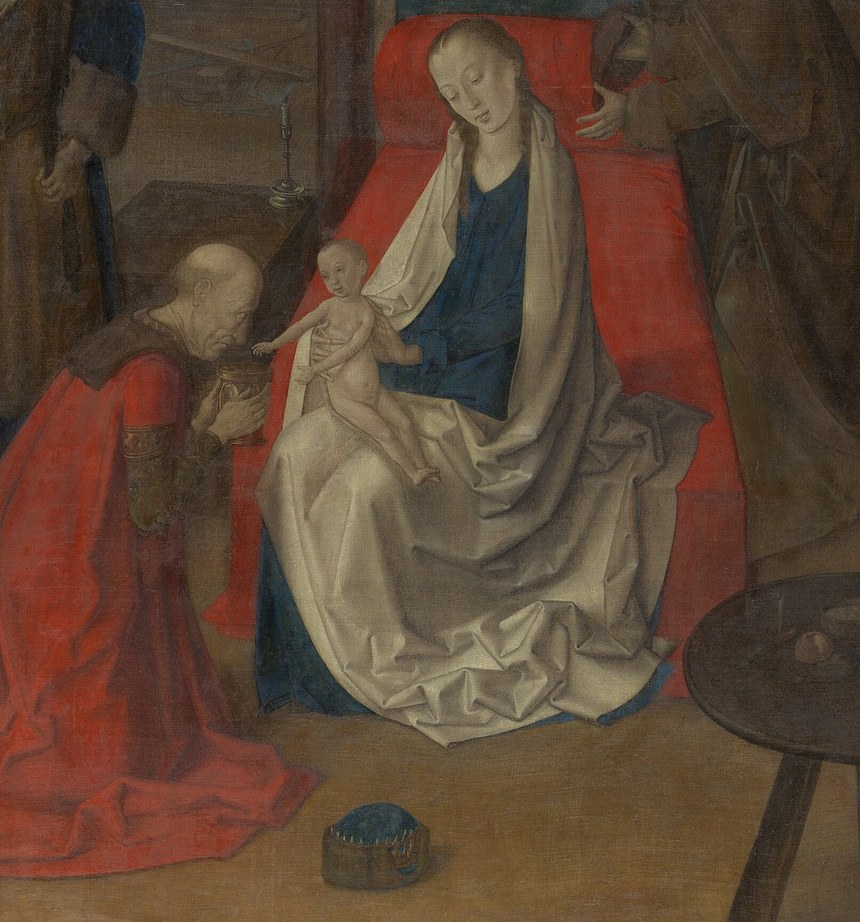
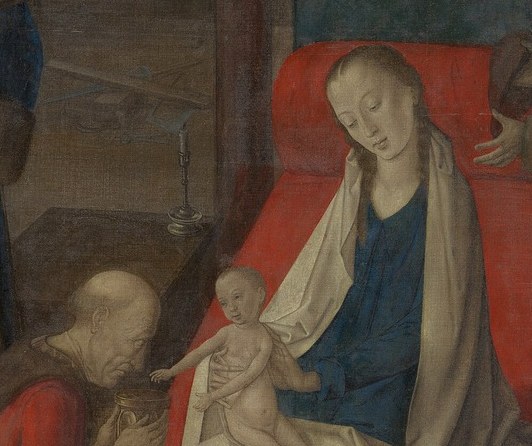
This is The Adoration of the Magi, painted by Justus van Gent around 1465. It now hangs in the Metropolitan Museum of Art. The painting shows the three kings arriving with gifts for the infant Christ, but what is most interesting here is not the main scene. It is the small figure tucked at the far left edge of the composition, kneeling in the exact same posture as the king in red.
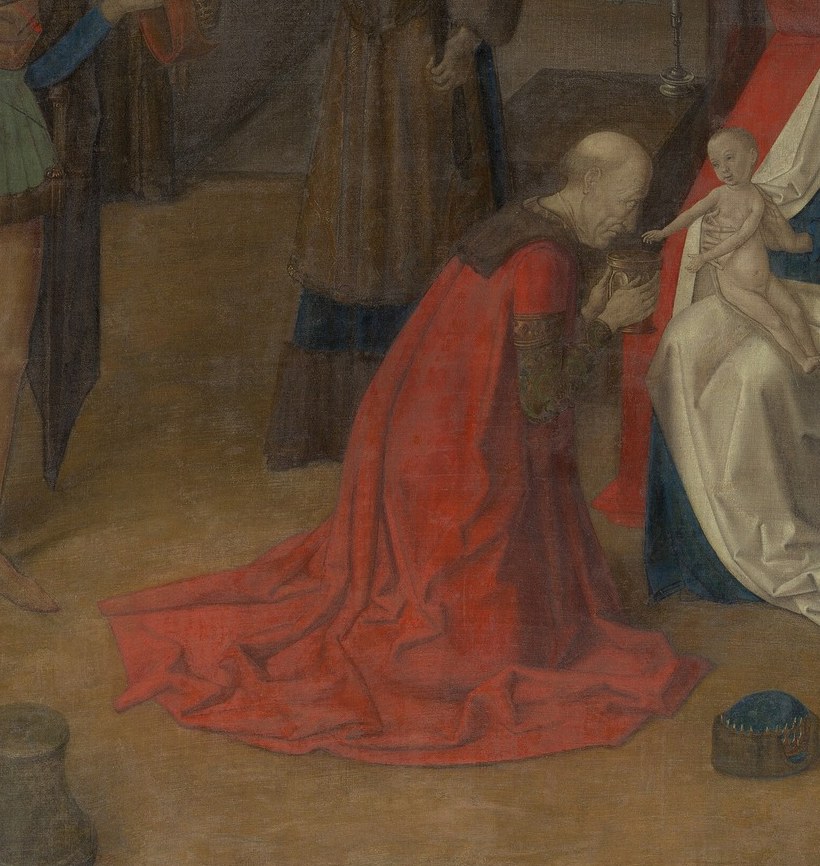
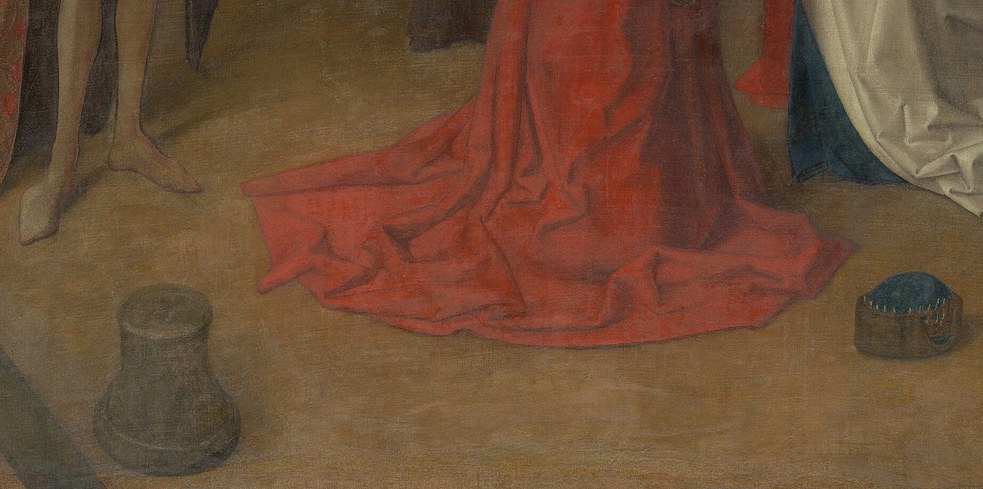
Look at the king in the foreground. His bowed face is likely an embedded donor portrait, a common practice in 15th-century Flemish painting where the person who paid for the altarpiece had their likeness painted into the biblical scene. Now look to the far left. A young attendant, perhaps a page or a donor's child, kneels in mirror-image devotion. He is easy to miss, but he balances the whole composition and quietly claims the painting for his family.
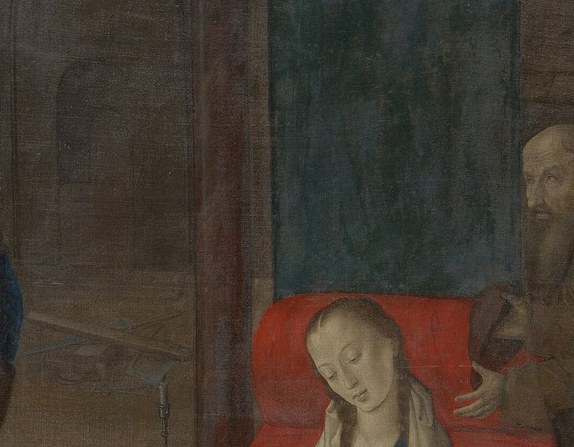
Justus van Gent was an Early Netherlandish painter who trained in Flanders and later moved to Italy, where he worked for the Duke of Urbino. This painting comes from his earlier period, executed in tempera before oil paint became the dominant medium in the north. The deep red of Mary's robe and the king's mantle is a feat of layered tempera technique, and the shallow architectural background compresses the scene inward, forcing the viewer's attention onto the intimate act of veneration.
The painting gives the same weight to a hidden child as it does to the kings and the Virgin. Whoever commissioned this altarpiece wanted their whole household remembered in the holy scene, not just the head of the family. Next time you stand before a crowded Flemish painting, look to the edges. The smallest figures often carry the most personal story.
#arthistory #earlynetherlandish #justusvangent
Details
Transcript
You are looking at an audience with a newborn king. A king kneels. The gesture collapses all distance. His face may be a portrait of the painting's patron. But the real clue is hidden at the far left edge. A young attendant kneels alone, dressed like a donor's child. He mirrors the king exactly. This painting is his family's prayer.