Artwork
The Adoration of the Magi
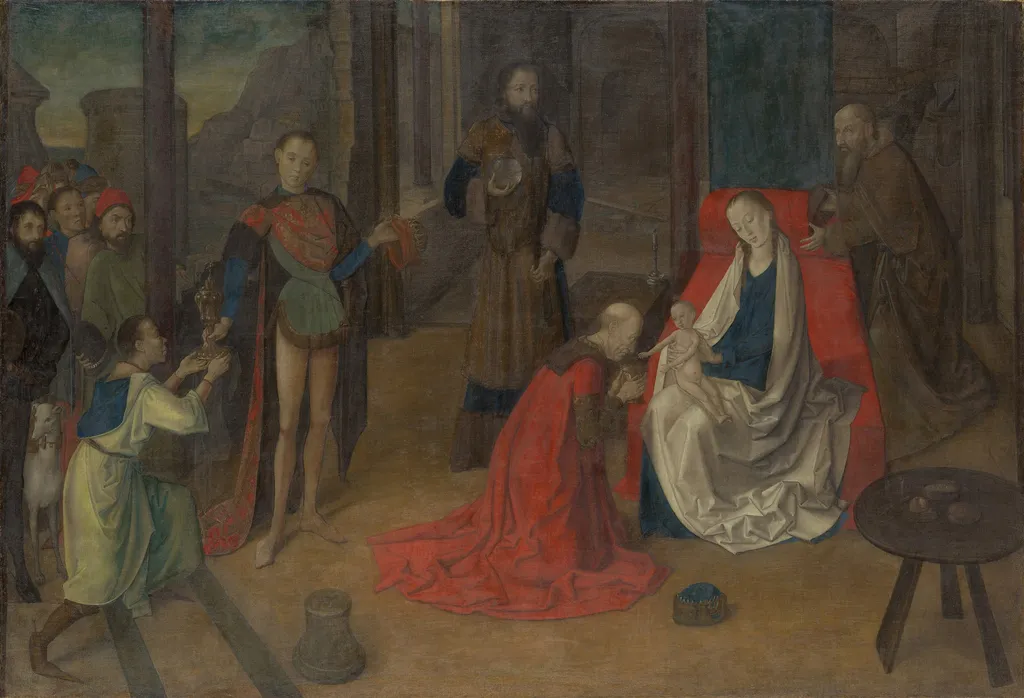
The Adoration of the Magi is a tempera painting by the Northern Renaissance artist Justus van Gent. It dates from 1465 and is held in the collection of the Metropolitan Museum of Art.
About this work
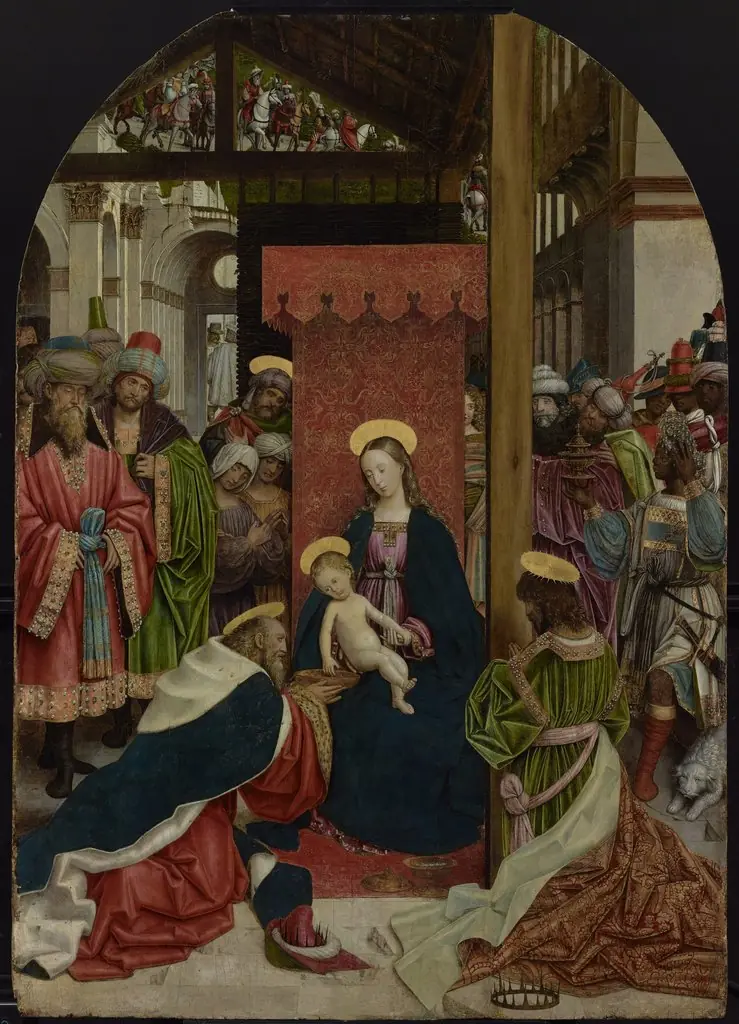
A crowd gathers around a woman in blue and red holding a calm infant. A man in a red robe kneels before them while others stand by with a crown and a small box. A dog hides in the lower left. Deep reds, blues, and greens glow against the dark. Justus van Gent, tempera, 1465.
Subject & Meaning
The painting shows the Epiphany, the Adoration of the Magi, with the Virgin Mary enthroned holding the Christ Child, Joseph present, and the three kings offering gifts; a dog lies at their feet. The scene is set in a ruined castle rather than a stable, the cradle replaced by the thalamus virginis (the Virgin’s bridal bed) symbolizing her mystical marriage to Christ. In the foreground a bowl of pap with two loaves and a glass of wine allude to the Eucharist and the Last Supper, while the figurine on the youngest king’s gift depicts a pelican feeding her young with her own blood, a sign of Christ’s sacrificial love.
The round stone before them is the foot of the column of Christ’s scourging, and exotic buildings in the background heighten the theatrical, tableau‑vivant atmosphere.
Technique & Style
The Adoration of the Magi is executed in tempera on canvas, a technique referred to as a Tüchlein, which makes the work especially vulnerable and rare in surviving condition. The canvas support, typical of Early Netherlandish painting, was prepared for transport and may have been rolled, reflecting its original purpose for a Spanish patron. Formal analysis highlights a staged, tableau‑like composition with symbolic details such as the pelican motif, the Eucharistic bread and wine, and the architectural setting that replaces the stable with a ruined palace.
Figures display elongated proportions reminiscent of Dirk Bouts, while portraiture of the African attendees echoes the style of Hugo van der Goes, underscoring the work’s blend of realism and symbolic program.
History & Provenance
The painting remained at the convent for centuries before entering the New York art market in the early 20th century, where it joined the Seligman collection.
Created circa 1465, this tempera painting on canvas is attributed to Justus van Gent (Joos van Wassenhove). The work was likely commissioned for the Santa Clara convent in Medina de Pomar, Burgos, possibly by Don Pedro Fernández de Velasco, Count of Haro, to serve as a family pantheon. The choice of canvas as a support may have facilitated transport, allowing the piece to be rolled.
The painting remained at the convent for centuries before entering the New York art market in the early 20th century, where it joined the Seligman collection. In 1925, George and Florence Blumenthal acquired the work, and upon their death in 1941, they bequeathed it to the Metropolitan Museum of Art, where it has been held since.
The Adoration of the Magi is housed in the collection of the Metropolitan Museum of Art in New York. Since its acquisition the work has been part of the museum’s European paintings galleries and is regularly displayed to the public as part of the permanent collection. Its provenance traces from a Spanish patron, possibly Don Pedro Fernández de Velasco, through the cloister of Santa Clara in Burgos, to the Blumenthal collection before entering the Met.
Context
Scholarship on Justus van Gent's The Adoration of the Magi (c. 1465) centers on its attribution and stylistic synthesis within Early Netherlandish painting. While firmly ascribed to van Gent (Joos van Wassenhove), the work's stylistic affinities with Hugo van der Goes have led some authors to propose it as an early piece by the latter or evidence of mentorship between the two artists. The painting combines the stiff, elongated figures associated with Dirk Bouts with the realistic portraiture found in van der Goes's Monforte Altarpiece.
Art historians interpret the composition as a symbolic tableau vivant rich in Eucharistic imagery, including the thalamus virginis and pelican motifs, set within a ruined castle rather than a stable. Its creation on fragile linen canvas, a rare medium for the period, suggests it was commissioned by a Spanish patron, likely for transport to the Santa Clara monastery in Burgos, highlighting the work's role in cross-cultural artistic exchange.
Legacy
The Adoration of the Magi has been cited as a pivotal work in the development of Early Netherlandish painting, particularly for its layered symbolism and theatrical staging that anticipate later Flemish compositions. Its fragile Tüchlein technique, though rare in surviving form, influenced conservation practices for similar works by contemporaries such as Dirk Bouts and Hugo van der Goes, whose figures and spatial arrangements echo elements in this painting. The panel’s association with the Velascos of Castile and its later relocation to New York broadened its transatlantic reception, embedding it in North American collections and scholarship.
Its iconography, especially the eucharistic references and exotic architectural motifs, has been analyzed as a bridge between Netherlandish realism and Italianate staging, shaping interpretations of later religious narratives.
Overview
The Adoration of the Magi is a tempera painting that portrays a significant religious event. The composition centers on a woman holding an infant, surrounded by various figures, including a man kneeling in front. The artwork employs a rich palette of deep reds, blues, and greens, which stand out against a darker background, establishing a focused and reverent mood for the sacred depiction.
Own this work as a print
Artist & collection
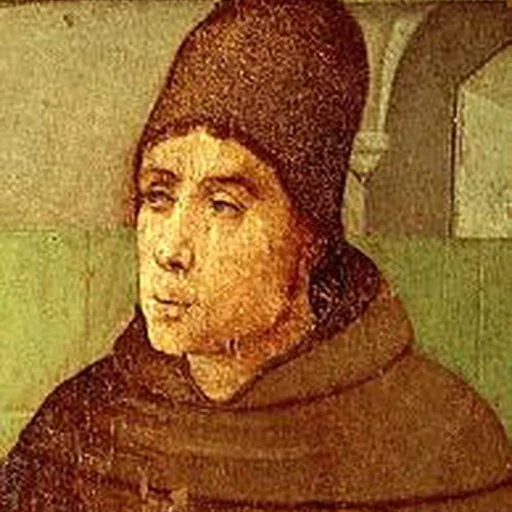
Artist
Justus van Gent or Joos van Wassenhove (c. 1410 – c. 1480) was an Early Netherlandish painter, perhaps from Ghent, who after training and working in Flanders later moved to Italy where he worked for Federico da…

- The Adoration of the Magi
 The Adoration of the Magi
 Adoration of the Kings
 The Adoration of the Magi
 The Birth and Naming of John the Baptist
 The Adoration of the Magi
 Adoration of the Magi
 Panel of an altarpiece with the Circumcision (inner wing) and the Resurrection (outer wing)
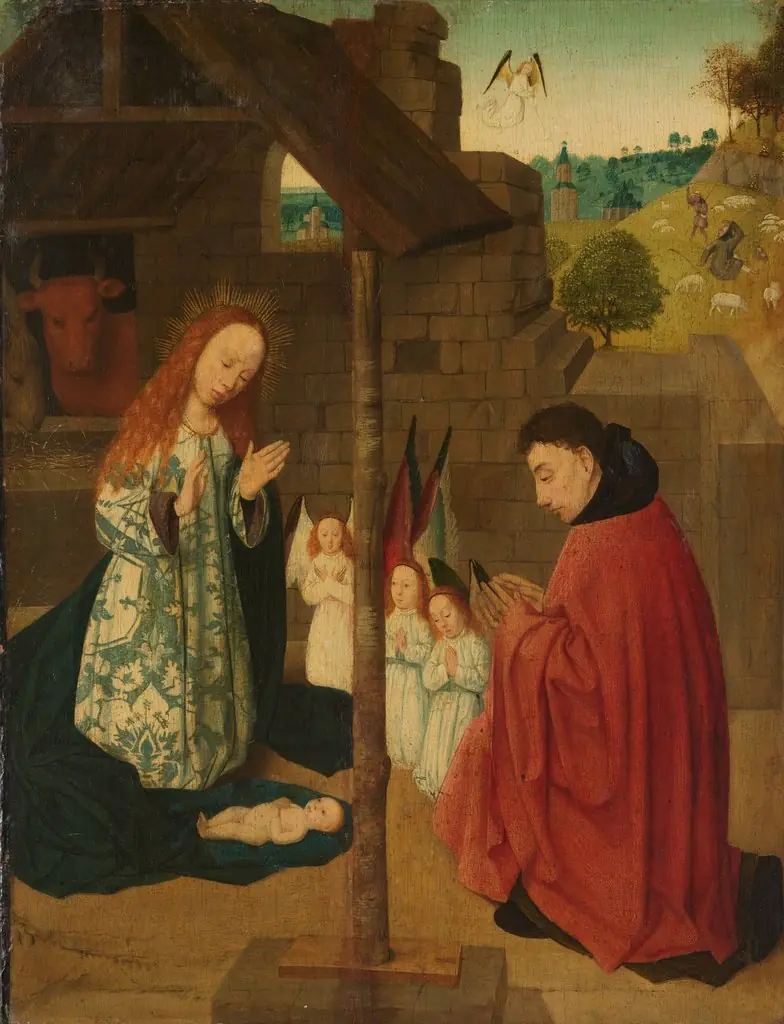 The nativity
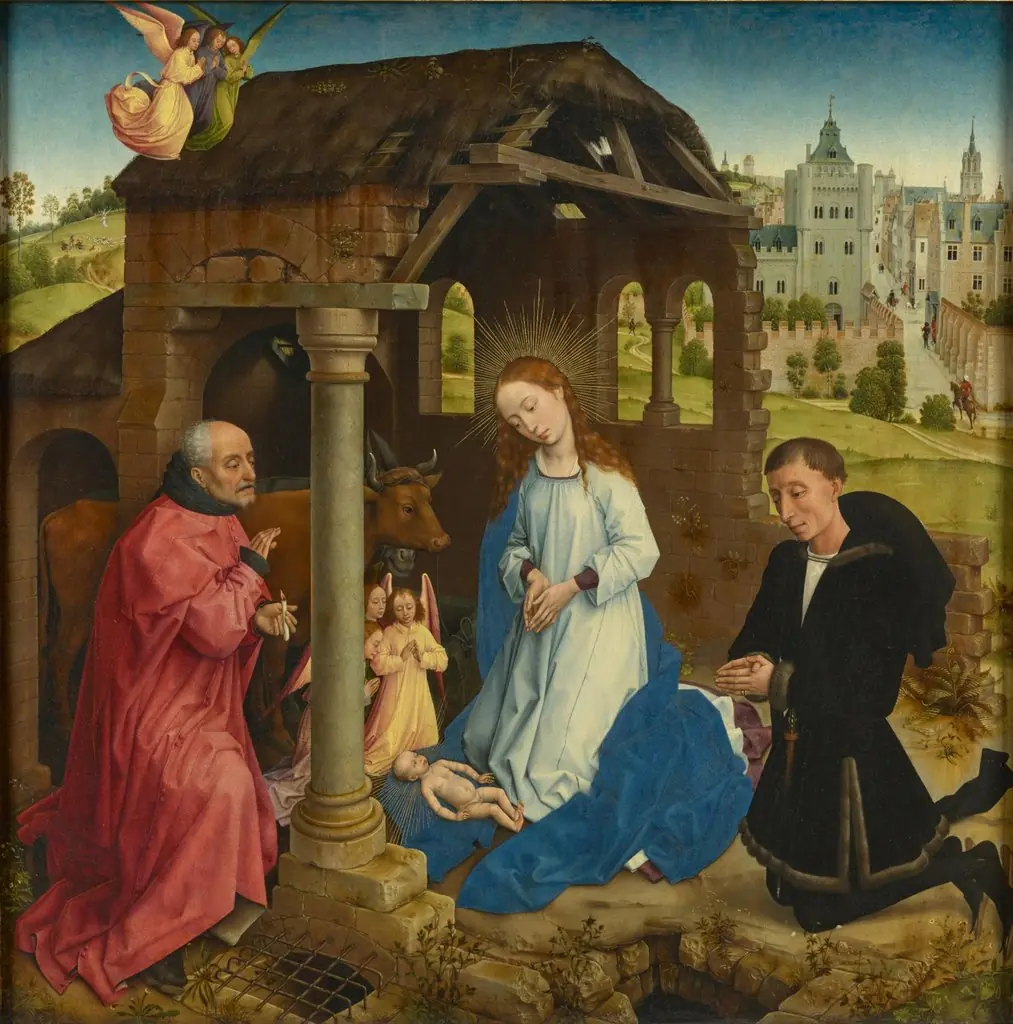 Bladelin Triptych Nativity (central panel)
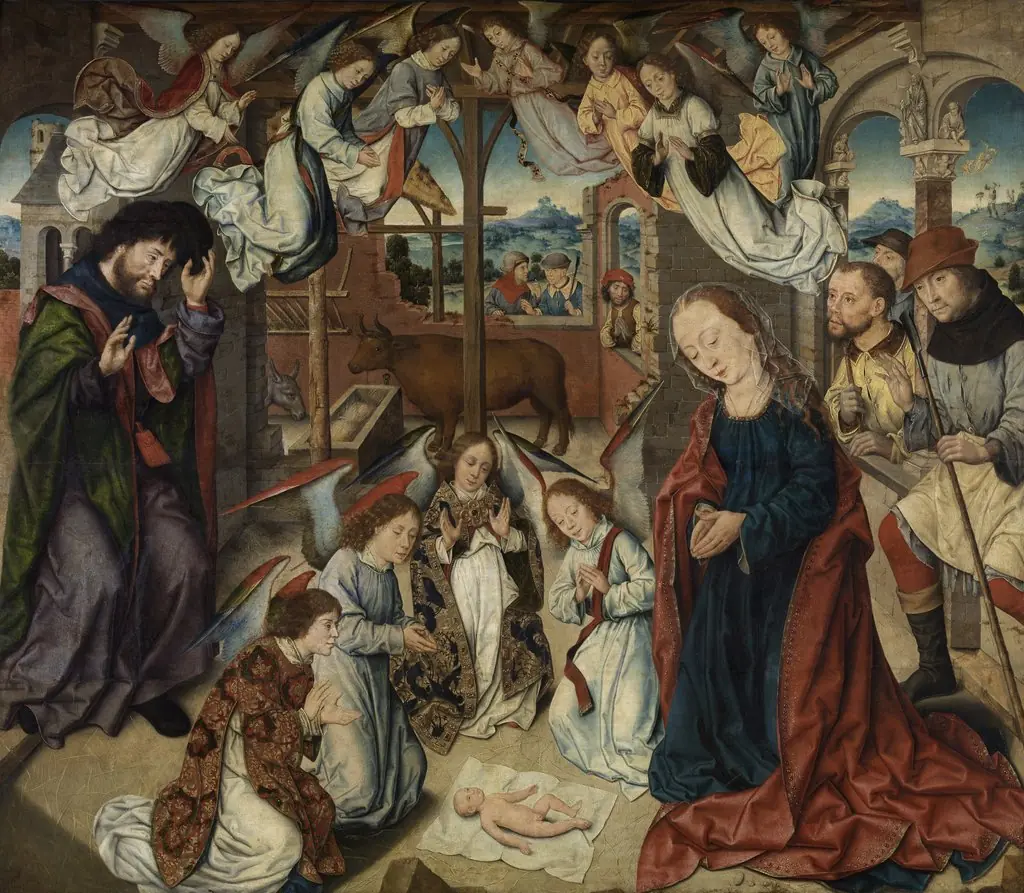 The Adoration of the Shepherds
 Madonna and Child with Saints in the Enclosed Garden