Allegory of Vanity (Vanitas) by Leonaert Bramer
Leonaert Bramer's *Allegory of Vanity (Vanitas)* (c. 1650) uses a dark, contemplative atmosphere to remind us of life's fleeting nature. The painting is a profound example of the vanitas tradition, urging viewers to consider the ephemeral quality of worldly pursuits and possessions.
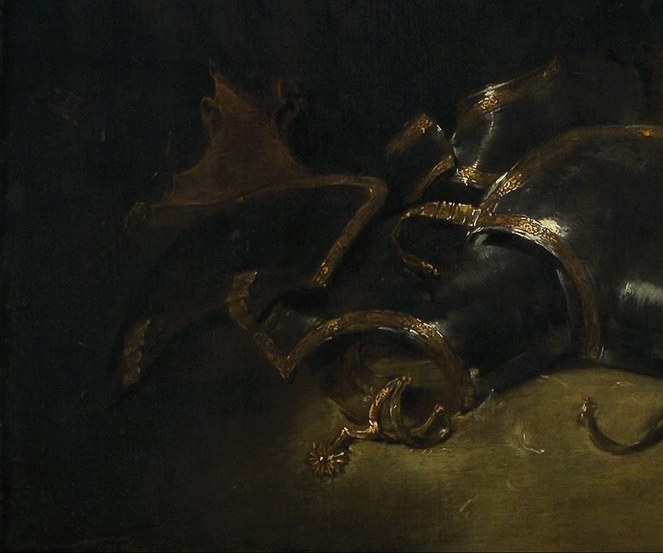
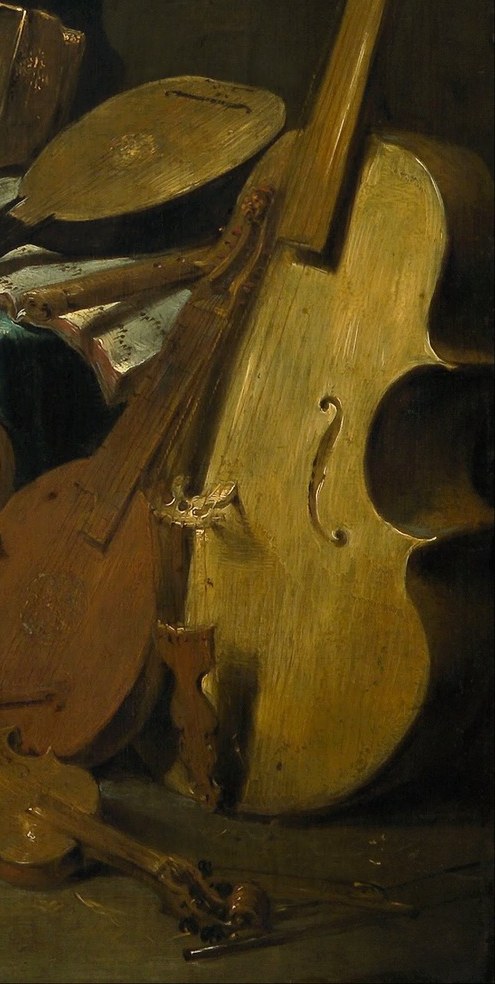
Observe the seated figure playing a lute, surrounded by symbols of transience. Broken musical instruments, armor, and symbols of wealth all point to the inevitable decay that awaits earthly pleasures. The dramatic chiaroscuro technique employed by Bramer intensifies the focus on these objects, drawing our attention to their allegorical significance.
Created during the Dutch Golden Age, this work reflects a common theme of mortality and the vanity of human endeavors. Bramer, known for his nocturnal scenes and allegorical themes, masterfully crafts a visual sermon on the ultimate futility of material wealth and earthly achievements when faced with the inevitability of death.
The painting serves as a powerful memento mori, a stark reminder that all material things and worldly accomplishments will eventually pass away.
Details

Transcript
This man plays a lute, lost in song. Instruments lie broken all around him. Wealth and power also fade away. Look closely at his jeweled goblet. Beneath it, the ultimate reminder. Leonaert Bramer painted this around 1650.