Indian File - Iowa by Catlin, George
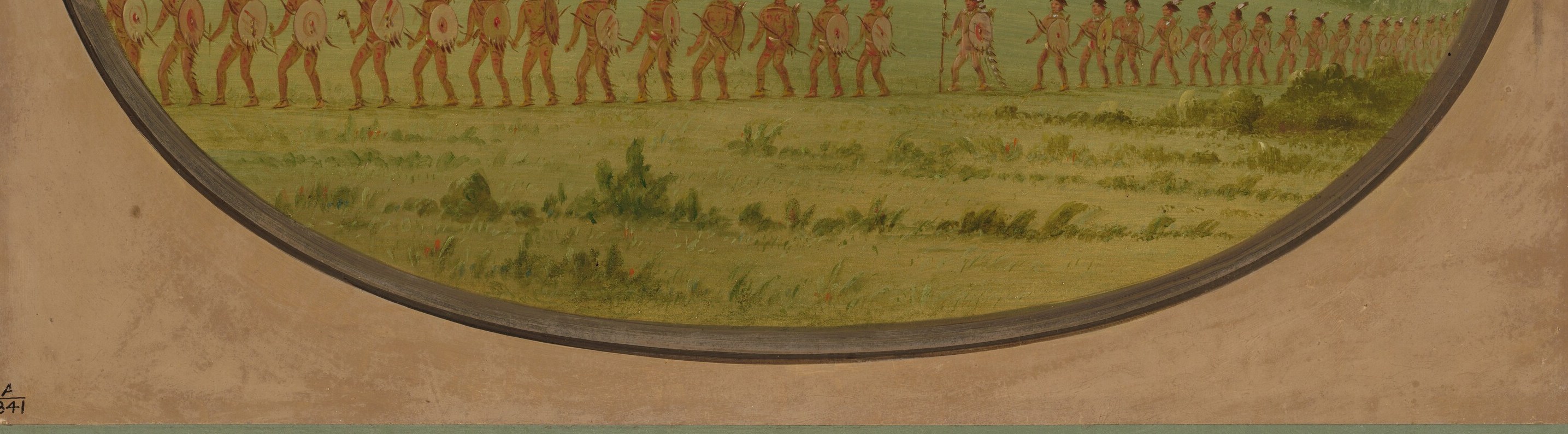
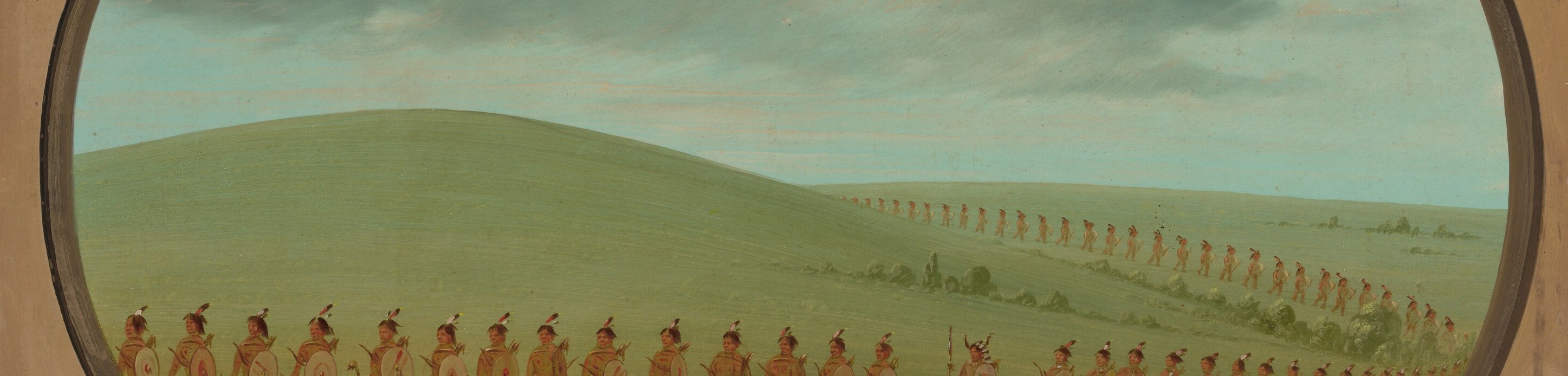
George Catlin's "Indian File - Iowa" (1861) at the National Gallery of Art depicts a line of Native American figures moving through the Iowa landscape, rendered in a straightforward folk-art style.
Catlin, an American lawyer turned painter, dedicated his life to documenting Native American cultures through his art during extensive travels in the 1830s. This piece, created later, continues his effort to record everyday life and landscapes.
Look for the faint inscription in the lower left corner. It reveals the artist's signature and the year 1861, a subtle detail that grounds the painting in its historical context and identifies the hand behind this unique visual record.
His work provides a crucial glimpse into a way of life that was rapidly changing during the 19th century. What details in the painting catch your eye?
Details

Transcript
This painter traveled widely to document Native American life. Here, figures move through the landscape of Iowa territory. The lead figure is depicted with a feathered headdress. He painted in a direct folk-art style, focusing on narrative scenes. But look closely in the lower left, at the faded grass. This faint inscription reads 'Catlin' and the year 1861.