明 錢榖 蘭亭修禊圖 卷|Gathering at the Orchid Pavilion by Qian Gu
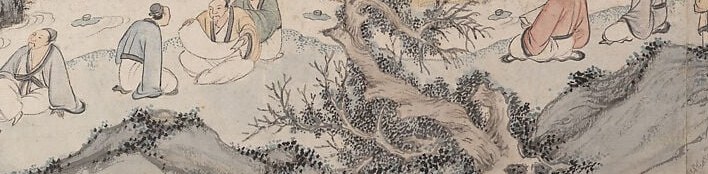
Qian Gu's handscroll, Gathering at the Orchid Pavilion, painted in 1560, remembers a legendary afternoon from 353 AD. On that day, 42 scholars gathered by a winding stream in Shaoxing to drink wine, write poems, and welcome spring. The game was simple: rice-wine cups were set adrift on the current; whoever received a cup before completing a poem had to drink. The verses from that day became a cornerstone of Chinese literary memory.
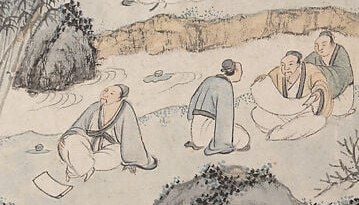
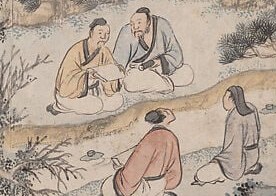
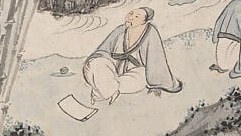
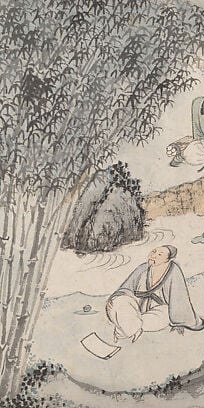
Qian Gu, working for the Wu School in Ming-dynasty Suzhou, wanted to feel that party again. He dotted the riverbank with robed scholars. The eye goes first to a figure in vermilion red near the center. But Qian Gu’s real tenderness is on the far left, where one scholar has stopped writing altogether. He reclines at the water's edge, listening. His stillness amid the animated groups contains the whole painting's mood.
The Orchid Pavilion gathering was already ancient history when Qian Gu unrolled his paper. He was not documenting an event; he was re-entering a friendship through ink. Wang Xizhi’s original preface to those poems laments that every joy must fade. Qian Gu’s quiet answer is this: a handscroll that lets the afternoon keep going, one slow unrolling at a time.
Details
Transcript
It began with a drinking game by a stream. 353 AD. Wine cups floated past. If one reached you without a poem, you drank. In 1560, a painter named Qian Gu remembered that day. He put a friend in red at the center, still writing. Look at the reclining scholar on the far left. He has stopped composing. He is simply listening. Qian Gu painted this to keep a perfect afternoon from ending. A friendship, outlasting the wine.