Grandmother's Treasure by Jozef Israëls
Jozef Israëls painted "Grandmother's Treasure" in 1889, and the title asks you to decide what the treasure actually is. The obvious answer is the book in the grandmother's lap, but Israëls was a storyteller who buried his meanings in posture and light. The painting lives at The Metropolitan Museum of Art and is one of the quietest arguments for intergenerational love in the Hague School canon.
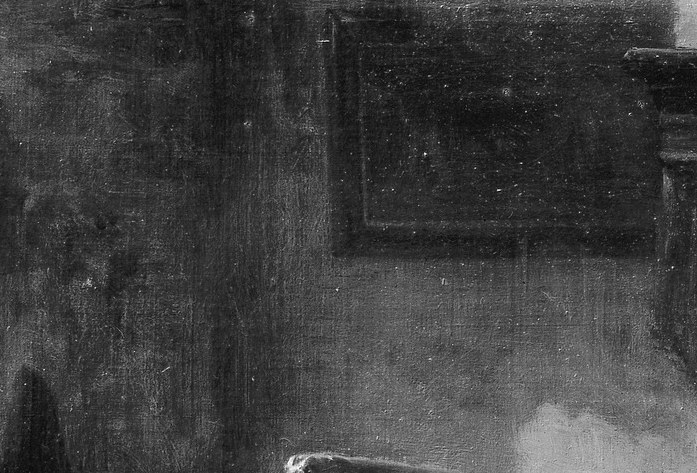
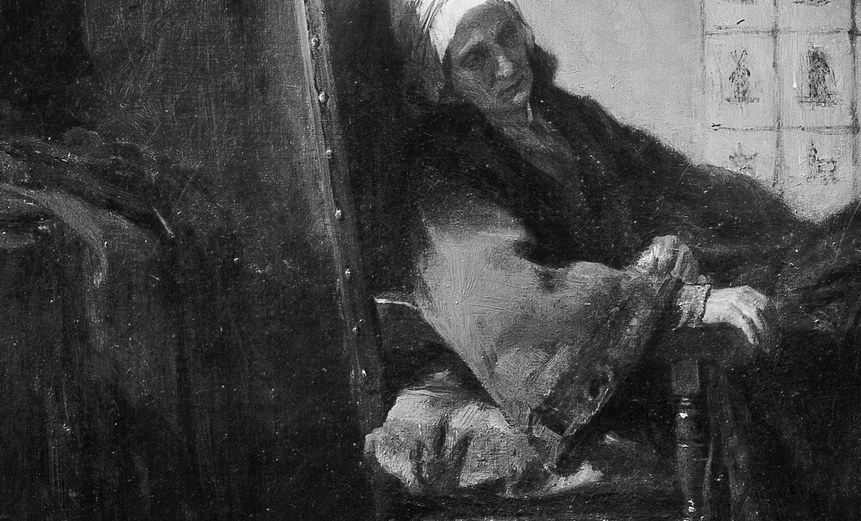
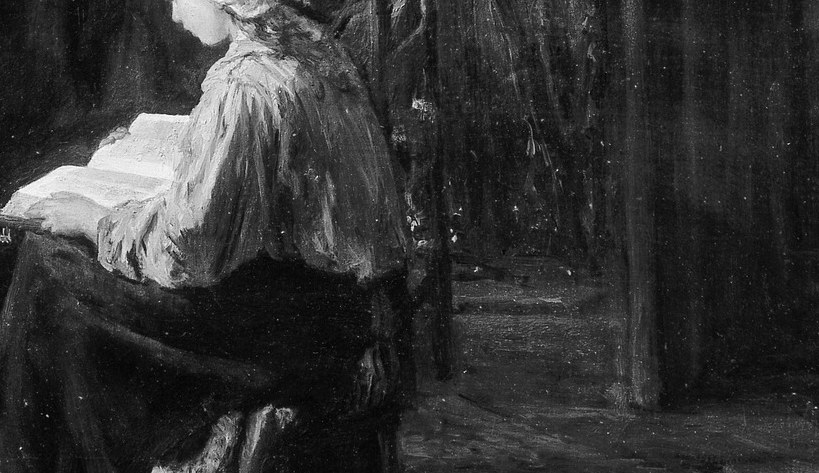
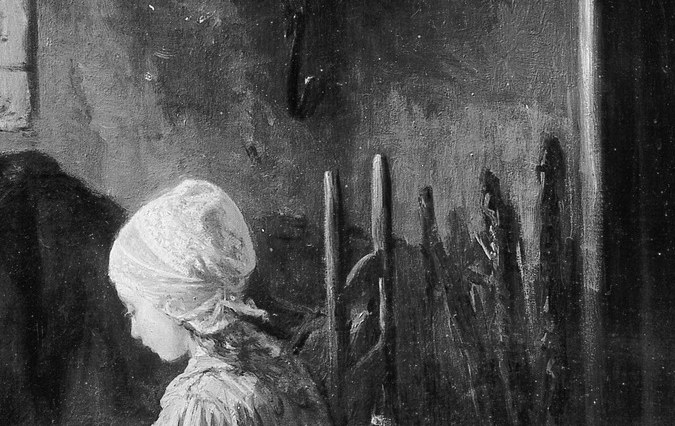
Watch the two white bonnets. The grandmother's cap sits high and still; the child's tilts low over the page. That angle is doing real work: it signals concentration, trust, and a willingness to receive something being handed down. The girl's hands rest on the text, her whole body leaning in. Every gesture is submission to learning, and Israëls frames it with a dark armchair and a dim hearth so no detail distracts from the faces and the page.
Israëls was the most respected Dutch painter of the late 19th century, but for years he was known mainly as a painter of peasants and fishermen. In 1863 his wife died of tuberculosis, leaving him with two children. Before her death his palette was brighter, his subjects more anecdotal. Afterwards the light goes grey, the interiors grow quiet, and he keeps returning to widows, mothers, and children reading. He painted grief as a kind of attention: the light that falls on a face when everything else in the room goes dark.
"Grandmother's Treasure" is probably a Bible or a family book, but the real treasure is the moment itself. The girl will remember this. Israëls made sure we do too. If you had to name the one thing an elder passed to you that you still carry, what would it be?
Details
Transcript
Jozef Israëls was called the Dutch Millet. He painted fishermen, seamstresses, and widows. Look at her face under the white cap. She taught someone to read from this book. Now look at the girl's hands on the page. Israëls lost his wife in 1863. He raised two children alone. After her death, his palette darkened to this quiet grey light. This is what he left them. Not gold. Words.