Preparing Dough, Tomb of Rekhmire by Nina M. Davies
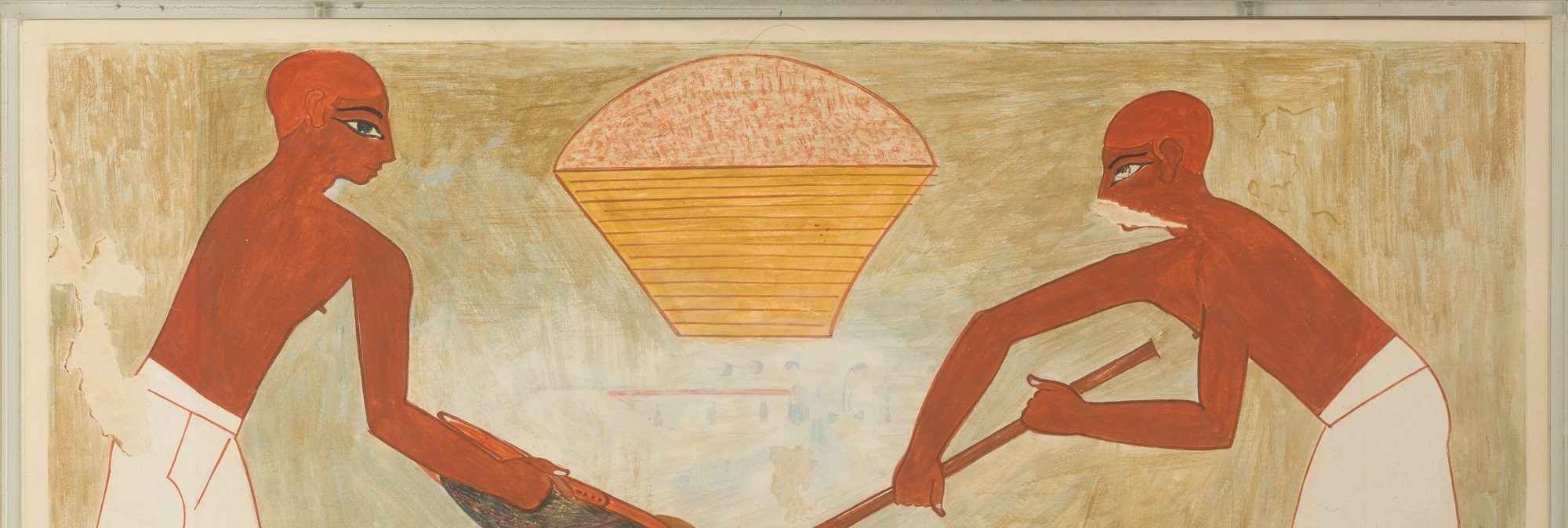
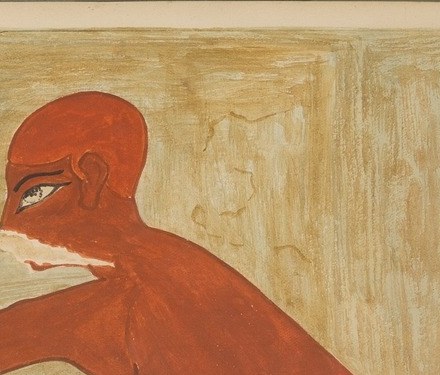
Preparing Dough, Tomb of Rekhmire is not an ancient Egyptian wall painting. It is a 1926 tempera facsimile painted by Nina M. Davies. She sat inside the Theban tomb of the vizier Rekhmire and copied this bread-making scene at a 1:1 scale, matching the original pigments, plaster tone, and brushwork stroke for stroke. The original painting, sealed in the tomb since roughly 1504 BCE, was already over 3,400 years old when she recorded it.
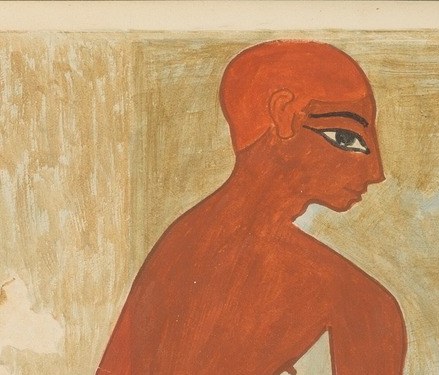
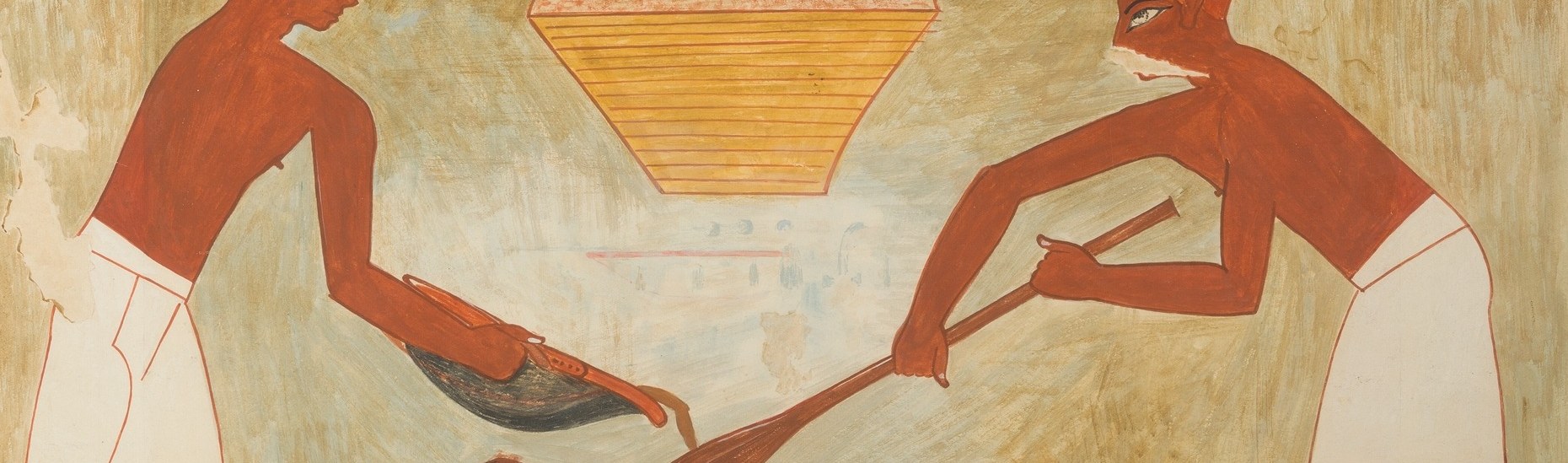
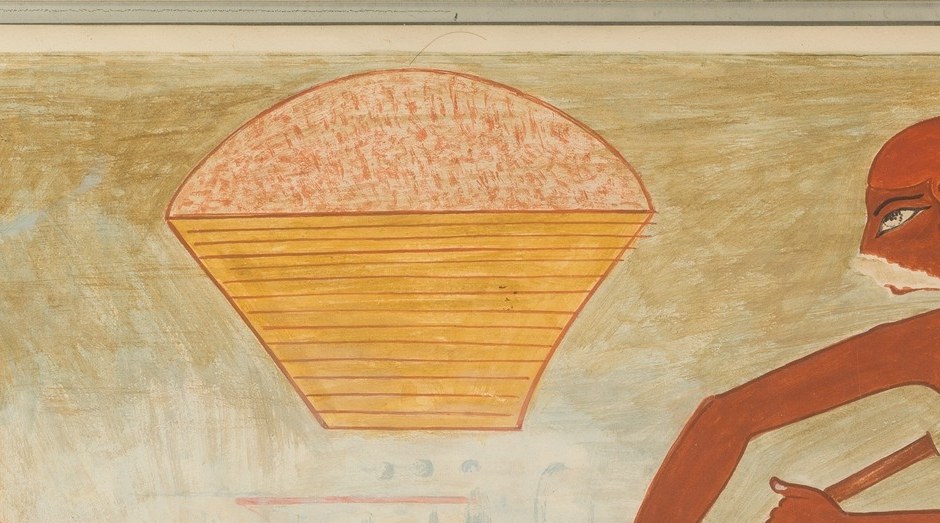
Look first at the golden dome of dough rising above the table. That gleam is a deliberate piece of ancient illusion, the tomb painter used egg tempera to make a shaped mound read as a finished, shining loaf. Davies captured that exact highlight, and she also preserved the darker raw-grain mass below it, so the painting still reads as a before-and-after in a single glance. The two bakers mirror each other with near-bilateral symmetry: one works a long kneading stick, the other presses the dough with bare hands, two stages of labor compressed into one frame.
Nina Davies and her husband Norman de Garis Davies worked for the Egyptian Expedition of the Metropolitan Museum of Art, producing meticulous facsimiles of tomb paintings that were already deteriorating from tourism and humidity. Their copies doubled as archaeological documents: the exact ochre of the plaster, the precise red outlines, the skin tones, each detail a data point. Today many of their originals are at the Met, still used by researchers studying New Kingdom material culture.
A temple copyist working in a tomb in 1926, matching the hand of another painter who worked in darkness three and a half millennia before her. Both of them believed the bread was for the afterlife.
Details
Transcript
It looks like a single ancient painting. It is two paintings, separated by thirty-five centuries. The original lies in a dark tomb in Thebes, dated to 1504 BCE. This exact ochre is the plaster wall's own color, matched by hand. In 1926, Nina M. Davies sat in the tomb and copied every line. The red-brown skin is a pigment choice that survived in the sealed darkness. Now look at the dough. She recorded the exact gleam the ancient painter built with egg tempera.