Old Annapolis, Francis Street by Francis Blackwell Mayer
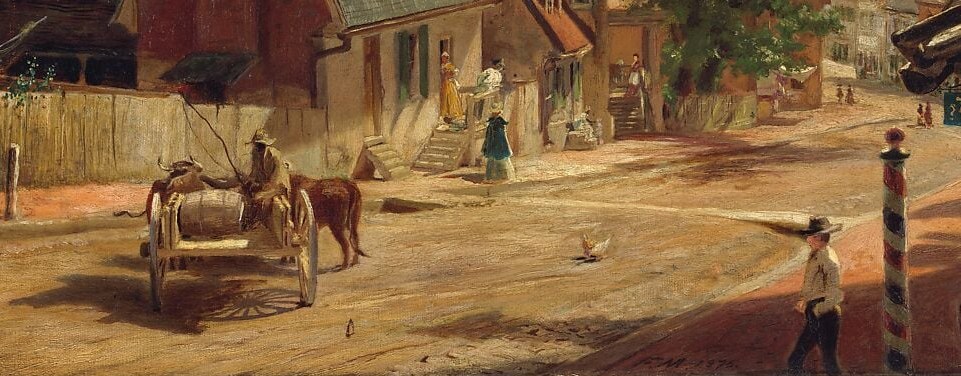
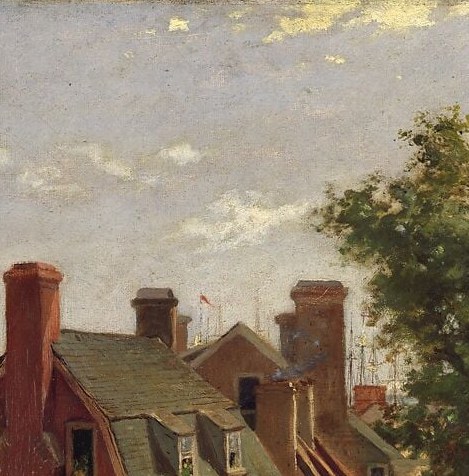
In 1876, for the United States Centennial, Francis Blackwell Mayer painted a street in Annapolis, Maryland, and made it look like it was still the 1700s. The painting is called Old Annapolis, Francis Street, and it hangs today as a deliberate act of colonial preservation in paint.
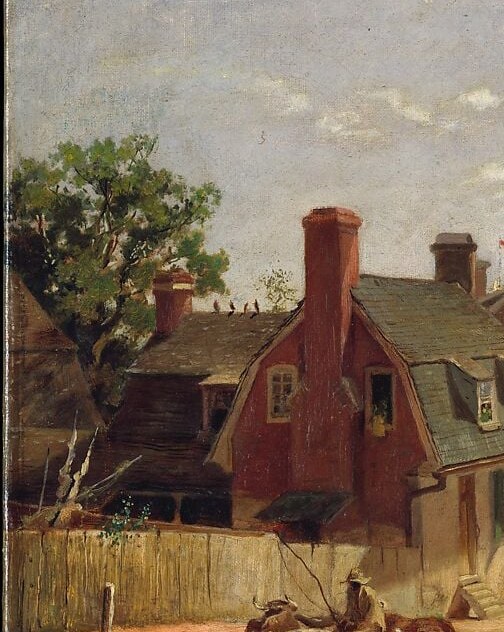
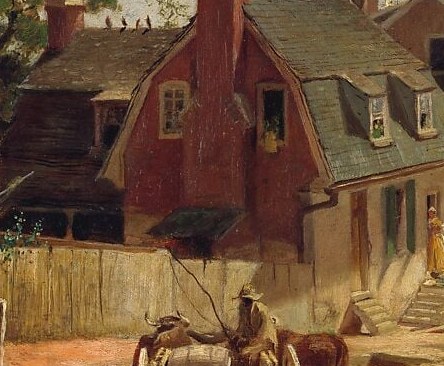
The road tells the first lie: it is warm ochre dirt, unpaved and sun-baked. By 1876, macadam and cobblestones were common, but Mayer edits them out. The colonial red-brick buildings on the left were already beginning to disappear when he painted them; he recorded them precisely before alteration or demolition took them.
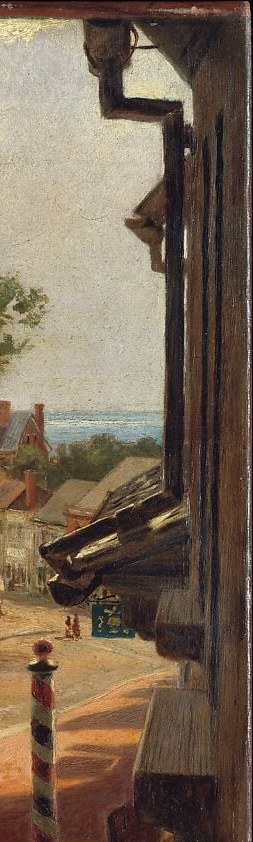
The real painter's trick is the dark building on the right edge. It frames the entire scene in deep shadow, a repoussoir device that seventeenth-century Dutch painters perfected. That darkness makes the street behind it read as luminous, even though Mayer never painted a hard cast shadow or a visible beam of light. The glow is an optical illusion created entirely by contrast.
Next time you see a streetscape that feels bathed in gentle nostalgia, check the edges. The mood is often being manufactured by something the painter placed in shadow.
Details
Transcript
1876. America is one hundred years old. But this painting shows something older. No cobblestones, no asphalt. Just sun-baked dirt. Mayer hunted for every colonial detail still standing. The darkness on the right is the real trick. That shadow makes the street glow without painting a single ray of sun. He borrowed a technique the Dutch invented two hundred years before.