Saint Lucretia by Dossi, Dosso
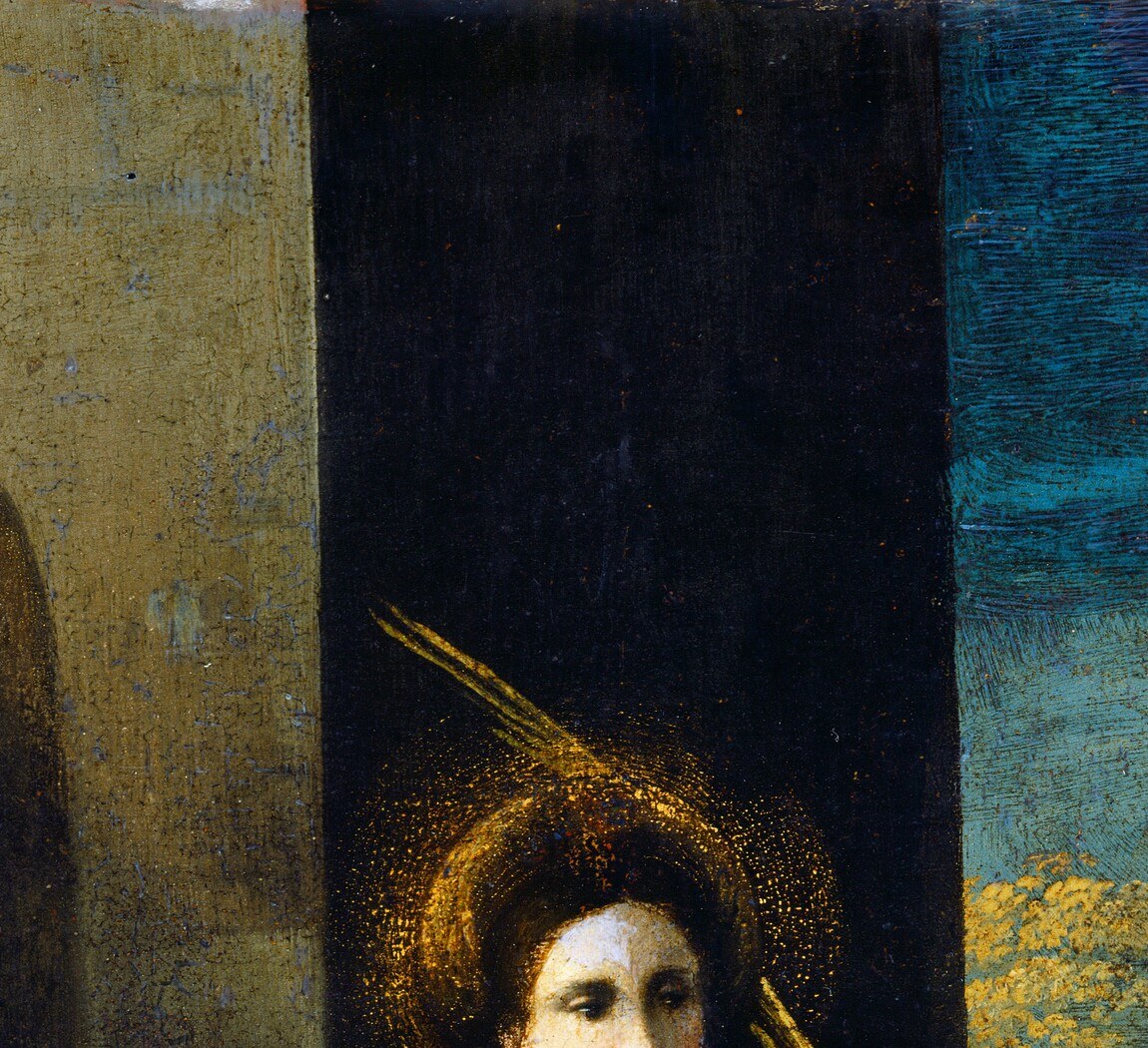
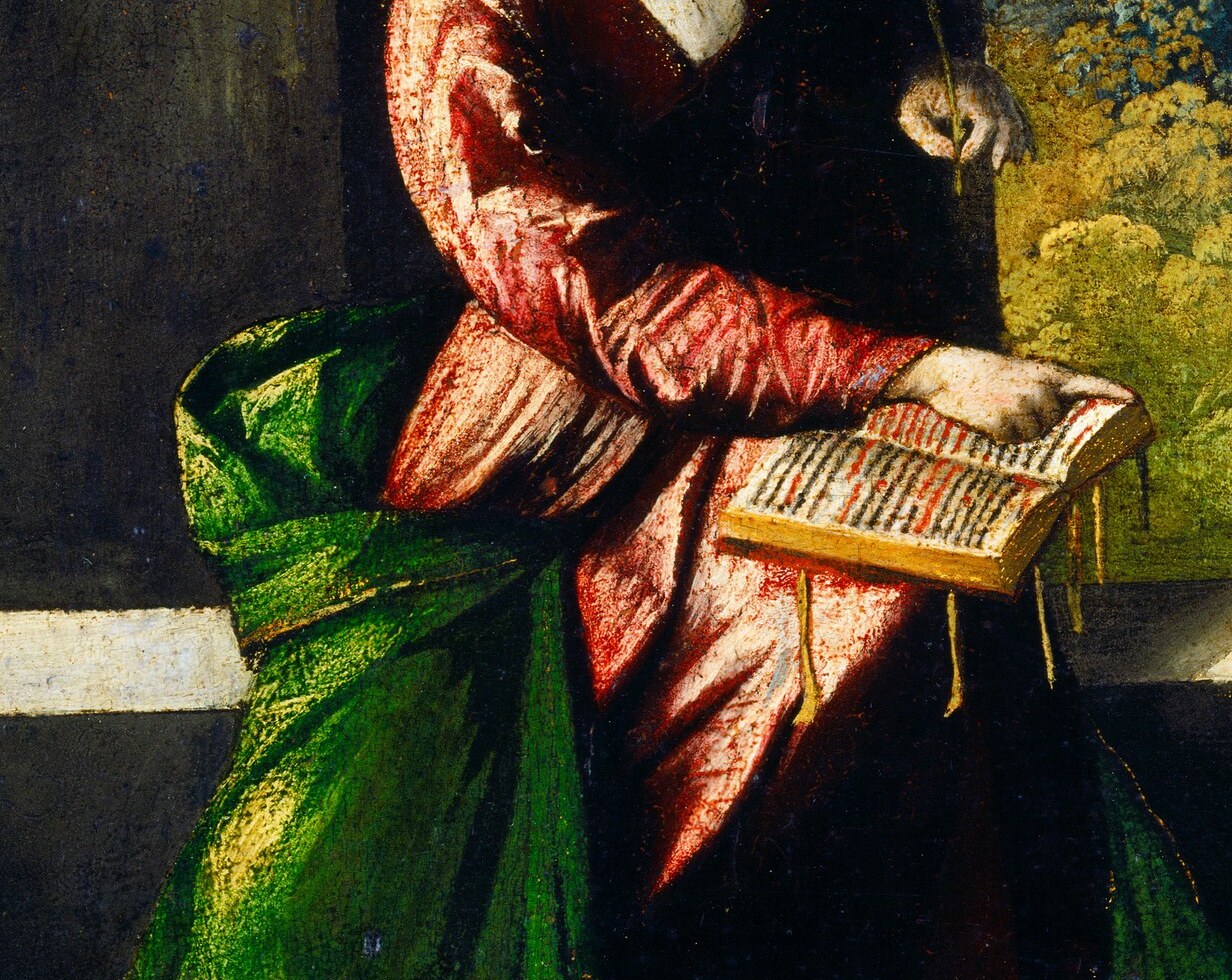
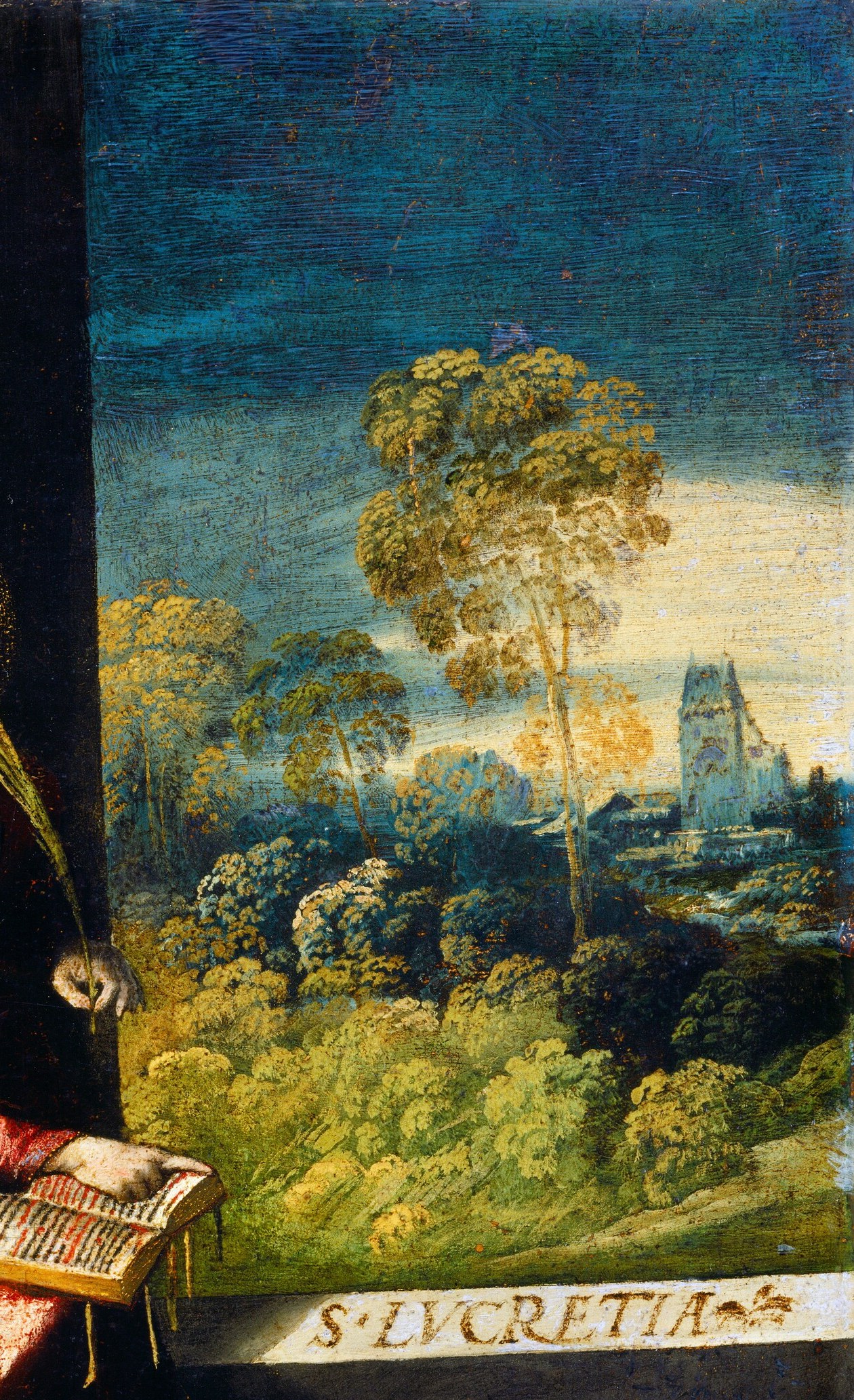
This is "Saint Lucretia," painted by the Italian Renaissance artist Dosso Dossi around 1520. At first glance, it's a straightforward and serene portrait of a martyred saint holding a book and a palm branch. But this painting contains a quiet mystery that is easy to miss if you're scrolling.
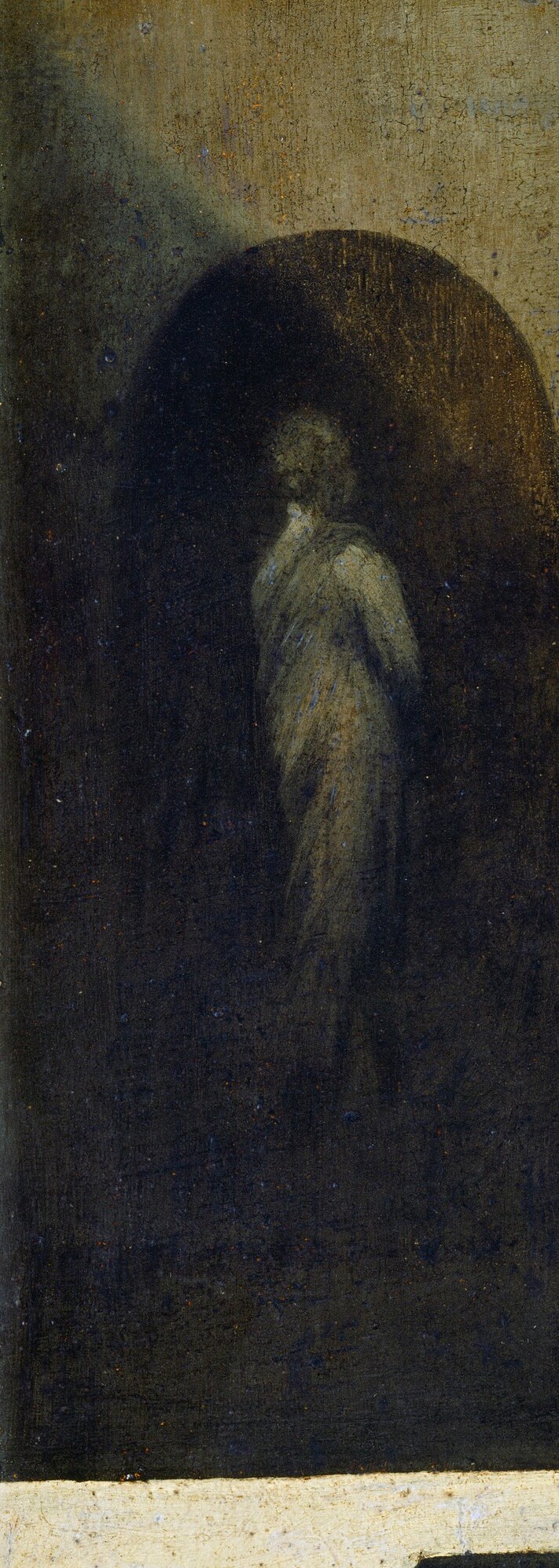
Look closely at the shadowed archway to the left of Lucretia. A dark, barely visible male figure stands there, watching. He is not mentioned in the painting's title, and his identity is a matter of quiet scholarly debate. Is he a menacing observer referencing her martyrdom, or simply a donor who commissioned the work, tucked into the shadows? The painting refuses to give a definitive answer.
Dosso Dossi worked for the court of Ferrara and was known for his inventive, poetic style. While other artists of the time depicted saints in dramatic moments of violence or ecstasy, Dossi chose a different path here. He puts Lucretia in a state of tranquil thought, which makes the appearance of the second figure in the shadows feel even more like an intentional, psychological puncture of the peace.
Every time you look at this painting, your eye is torn between the serene, illuminated saint and the question of who is standing in the dark. You can see it for yourself at the National Gallery of Art in Washington, D.C.
Details
Transcript
You've scrolled past her a thousand times. She looks like a quiet study of a saint. Her name is carved into the stone: S·LVCRETIA. But now look into the archway behind her. A second figure is standing in the dark. The museum never names him in the title. Is he a witness, a threat, or something else entirely?