The Cheney Family by American 18th Century
"The Cheney Family," painted around 1795 by an unknown American artist, at the National Gallery of Art in Washington, D.C., isn't just a portrait; it's a careful composition reflecting 18th-century ideals of family structure and virtue.
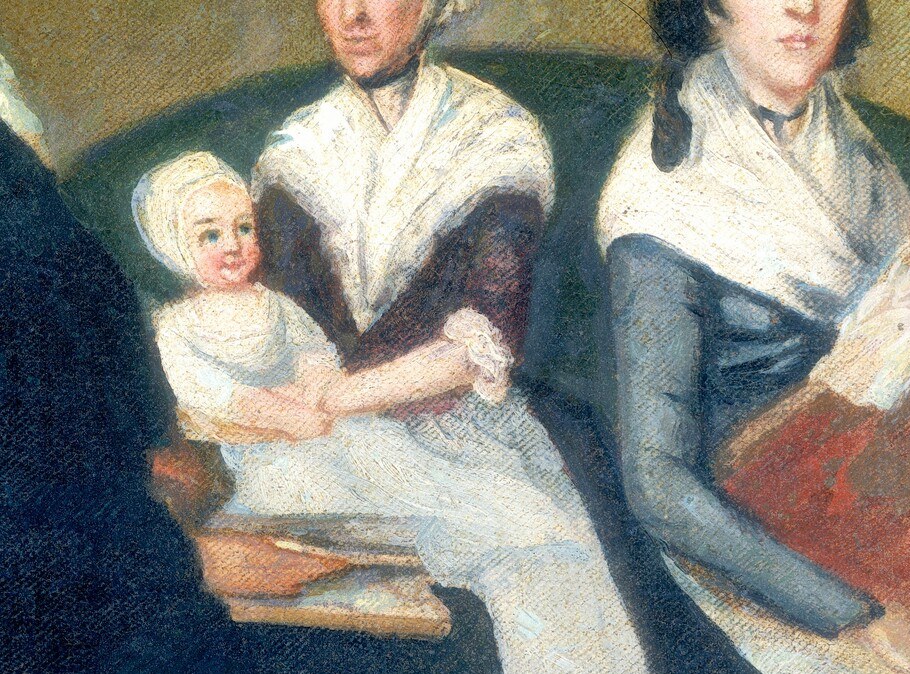
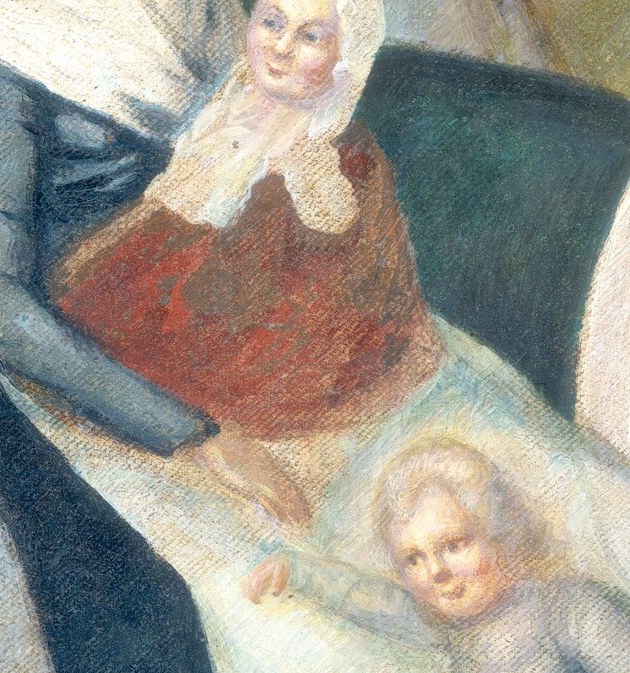
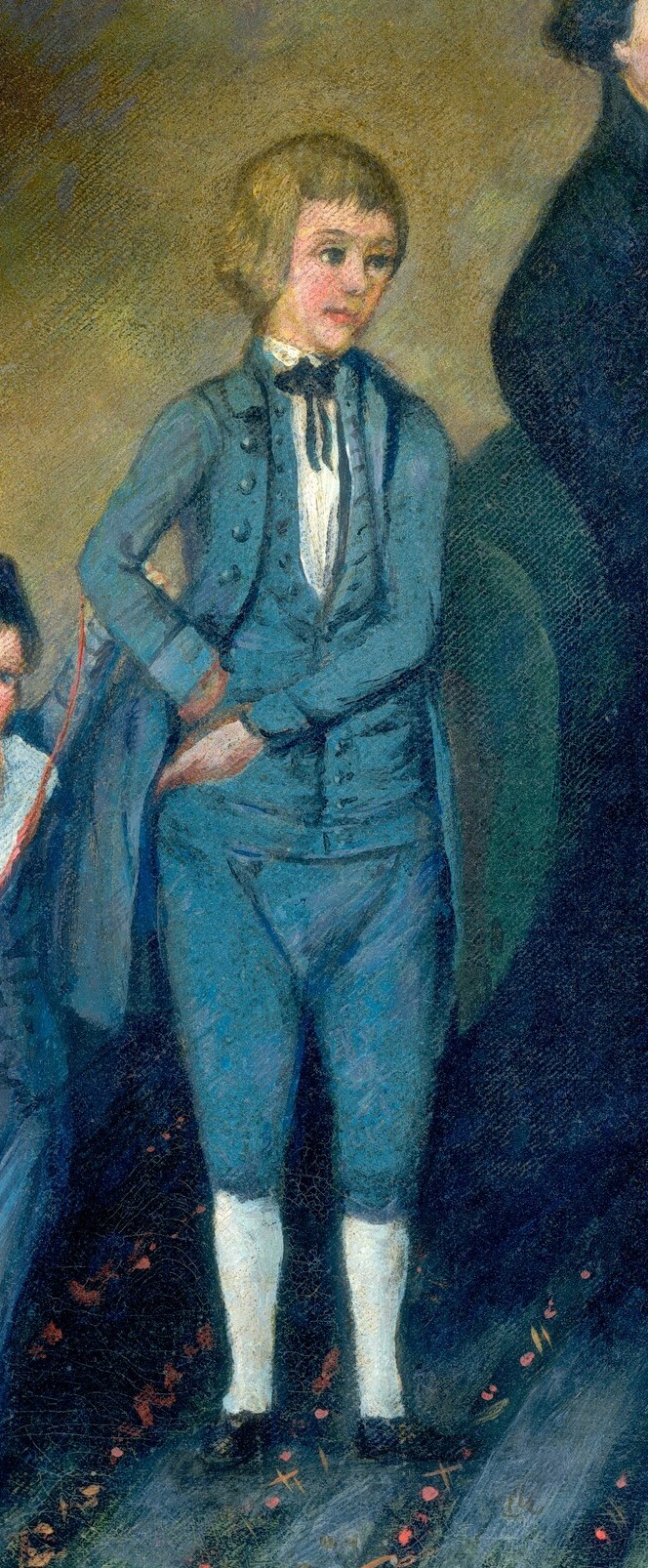
Notice how each figure contributes to this message. The mother's gentle expression and her tender embrace of the infant emphasize maternal love and the preciousness of new life. The father’s protective hand on his son’s shoulder conveys guidance and patriarchal presence, while the older daughter's pose, holding another baby, subtly teaches her nurturing role.
This painting uses the arrangement and interactions of its figures to express the contemporary understanding of domestic harmony and familial bonds. The artist employs chiaroscuro, illuminating faces against a dark background, to draw attention to these carefully staged expressions and gestures, making the family unit the undeniable focus.
It's a fascinating look into how families presented themselves, and how their public image reinforced societal expectations of the time.
Details
Transcript
This 18th-century painting looks like a simple family portrait. But every pose here signals 18th-century family ideals. The mother's serene face highlights her nurturing role. She cradles the infant, symbolizing new life and vulnerability. The father's hand on his son's shoulder shows paternal guidance. The older daughter, too, holds a baby, learning her future role. Every figure works together, creating a unified household ideal.