The Misfortunes of Cephalus by Luini, Bernardino
Bernardino Luini's fresco, "The Misfortunes of Cephalus," painted around 1520-1522, is a compelling example of classical mythology depicted in the High Renaissance. This work, currently in a private setting, reveals a dramatic moment from a tale of jealousy and misunderstanding.
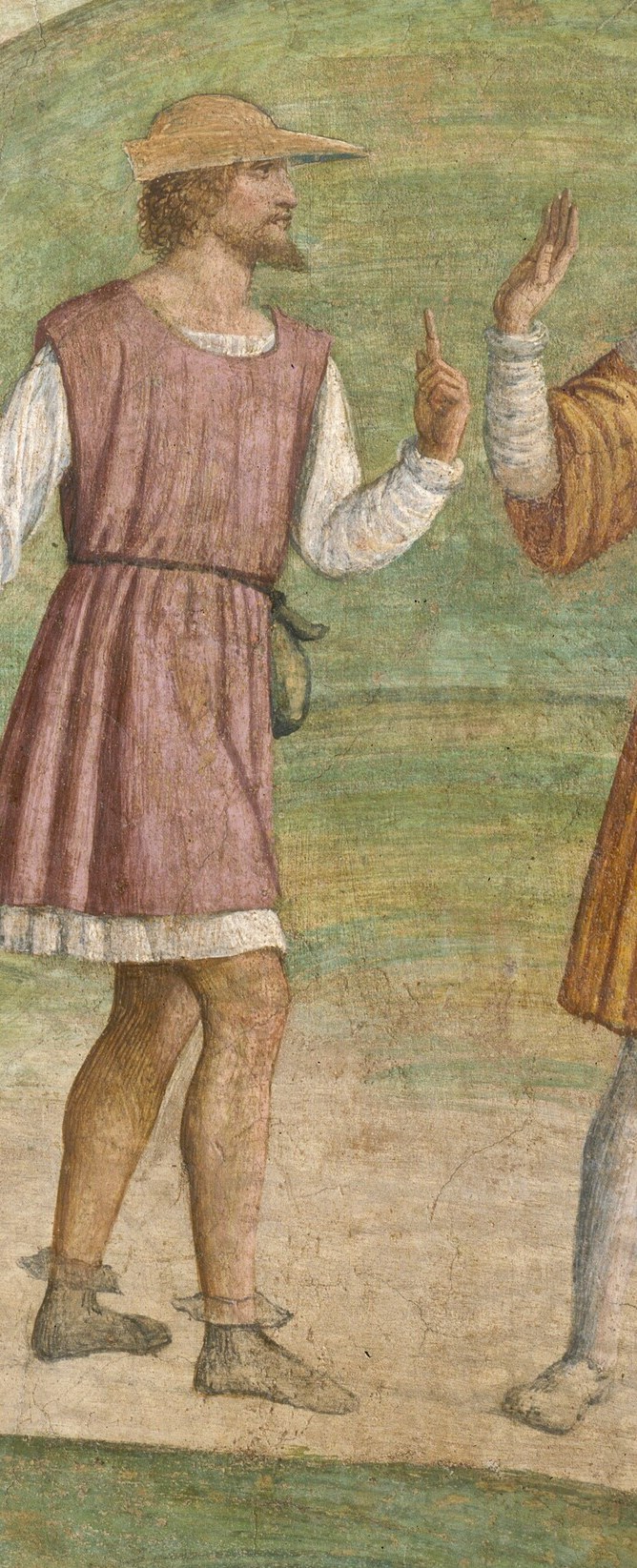
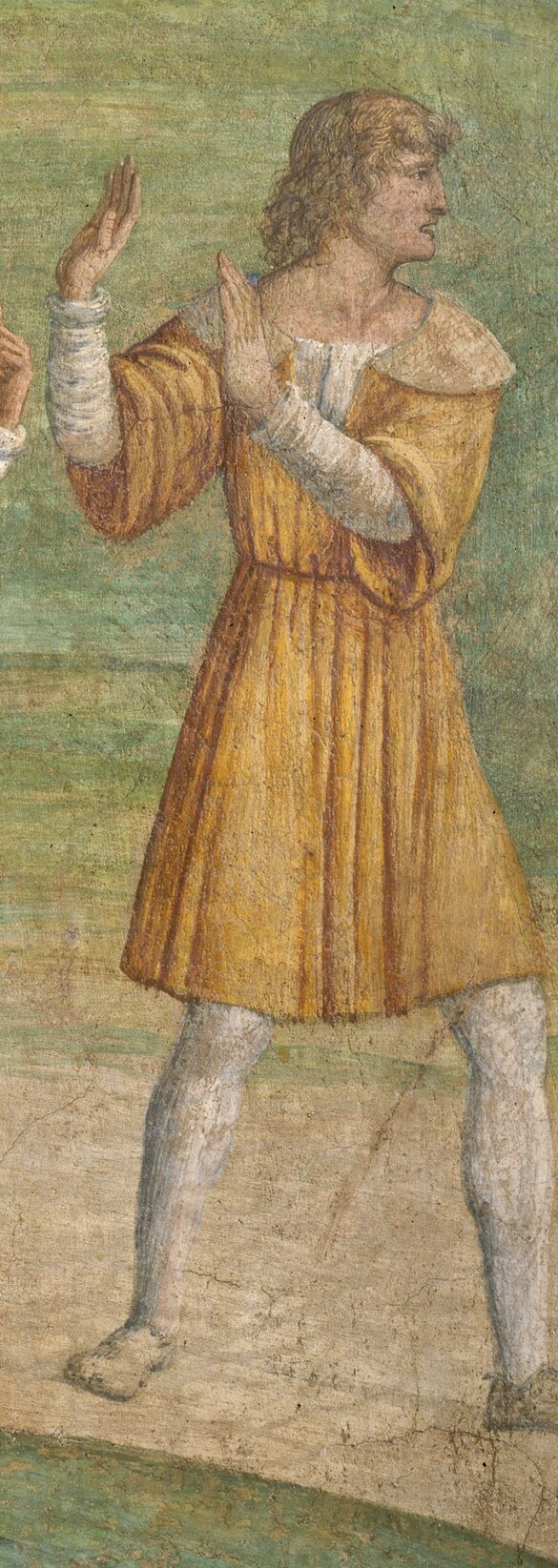
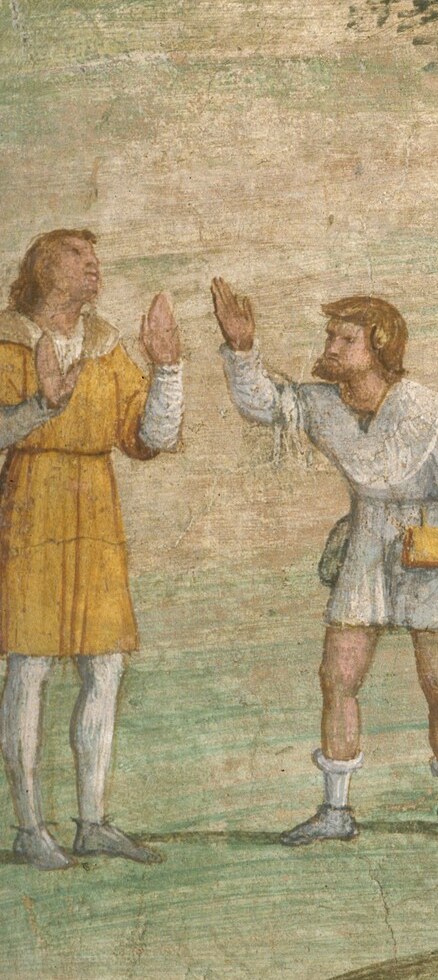
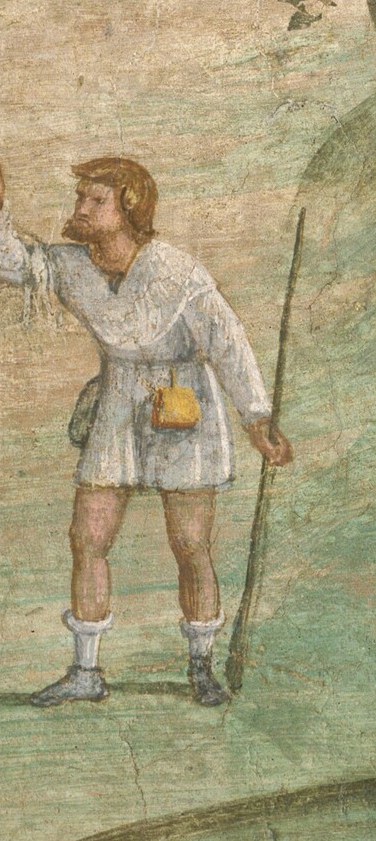
Look closely at the figures: the hunter Cephalus, shown with wings, confronts his wife Procris. Her gesture of shielding herself vividly conveys her fear, while the dark clouds above heighten the sense of impending misfortune. The painting's distinctive style, with its sharply delineated figures, was a departure for the time.
Luini, a Lombard painter influenced by Leonardo da Vinci, created this fresco using pigments on wet plaster. This technique results in a matte finish that integrates seamlessly with the wall, making it a permanent part of the interior it adorns. Originally, such works often served as moral exempla in private settings.
This painting invites us to consider how classical stories were brought to life through art, and how artists interpreted dramatic narratives.
Details

Transcript
In the early 1520s, this painting told a classical myth. It shows Cephalus, a hunter, misunderstanding his wife Procris. He suspects her unjustly, hence her fearful, shielding gesture. His raised spear is a dramatic symbol of his suspicion. The dark, rolling clouds reflect the story's tragic tension. Luini's fresco uses sharp lines, departing from softer Renaissance styles.