A Woman Gathering Faggots at Ville-d'Avray by Jean Baptiste Camille Corot
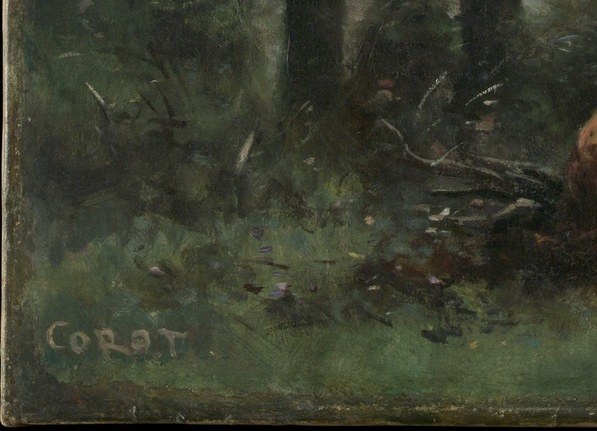
Jean-Baptiste-Camille Corot painted A Woman Gathering Faggots at Ville-d'Avray in 1871, four years before he died. He was 75, and the young painters who would soon be called Impressionists were struggling to find their footing. Corot saw to it they ate. He gave Monet money. He bought a canvas from a starving Pissarro. He told them the truth they needed: light could be the subject.
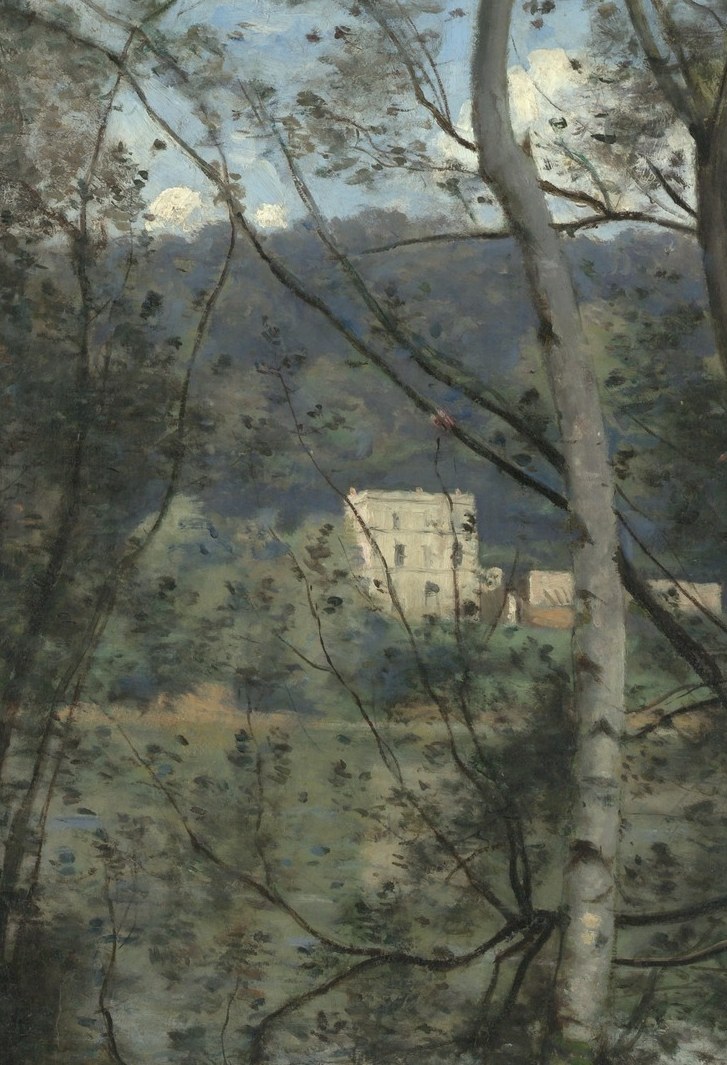
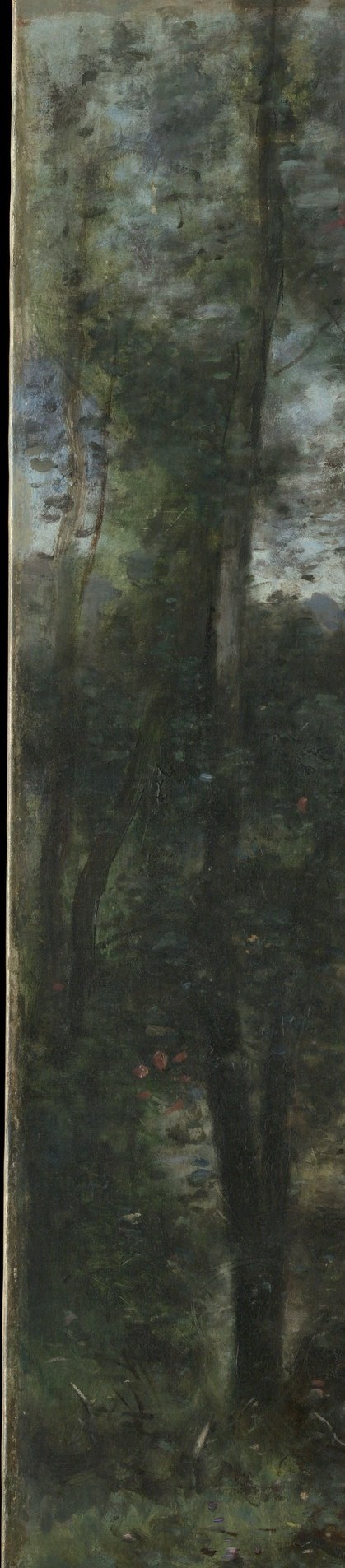
Watch the silvery passage between the birch and the dark frame trees. That's the bit his contemporaries called 'Corot's fog.' There is no fog painted there. It is tone, cool gray-green laid beside a paler value, an edge left unblended. Your eye assembles the air. Corot understood that distance doesn't sharpen; it softens, and he had the nerve to let the brush stop.
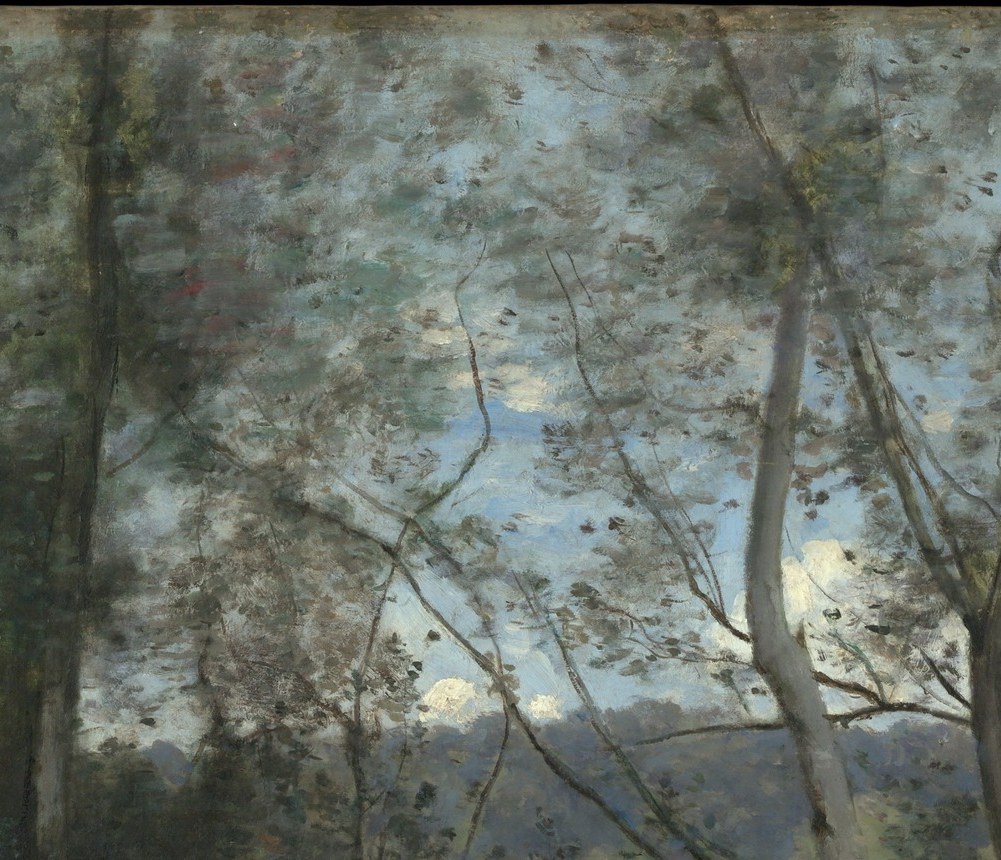
Move your eye up to the bare branches scratched across the sky opening. Those marks are calligraphy, not description. A thin brush, a loaded wrist, one pass each. The speed reads as wind and winter. A studio critic of the time would have called them sloppy. Corot left them alone because they were true to what he had seen outside, on a winter gathering day near Ville-d'Avray, where Paris suburban houses sat just behind these trees.
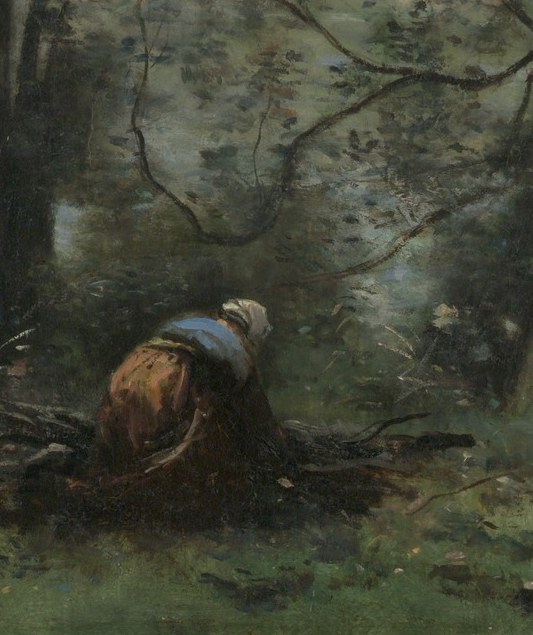
The woman in the foreground bends to her work in clothes that blend into the soil. Corot doesn't make her a heroine; he makes her part of the light. The same cool haze that models the depth touches her shoulders. In 1874, at the first Impressionist exhibition, the critics who attacked Monet didn't yet see the debt. But Monet did.
Details
Transcript
He was the quiet man in the corner of French art. Corot gave money to keep Monet painting when no one else would. Look at the haze between the trees. That's not mist. That's paint. Tone laid beside tone. Now the branches laced against the light. Thin, calligraphic strokes: fast, exact, done once. A studio critic called his work unfinished. The Impressionists called it the way forward.