Virgin and Child by Hans Memling
Hans Memling's Virgin and Child, completed around 1496, holds a full theological argument inside the simplest of compositions. It is now in the collection of The Metropolitan Museum of Art.
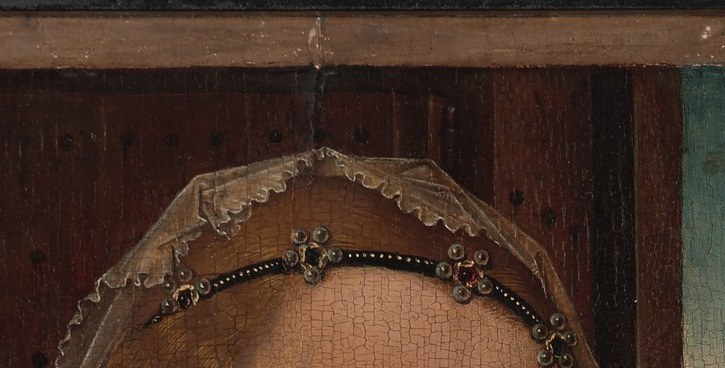
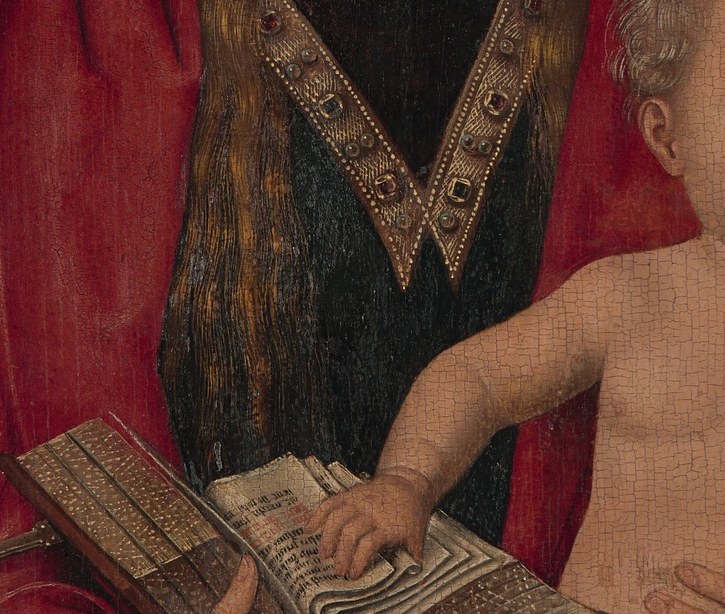
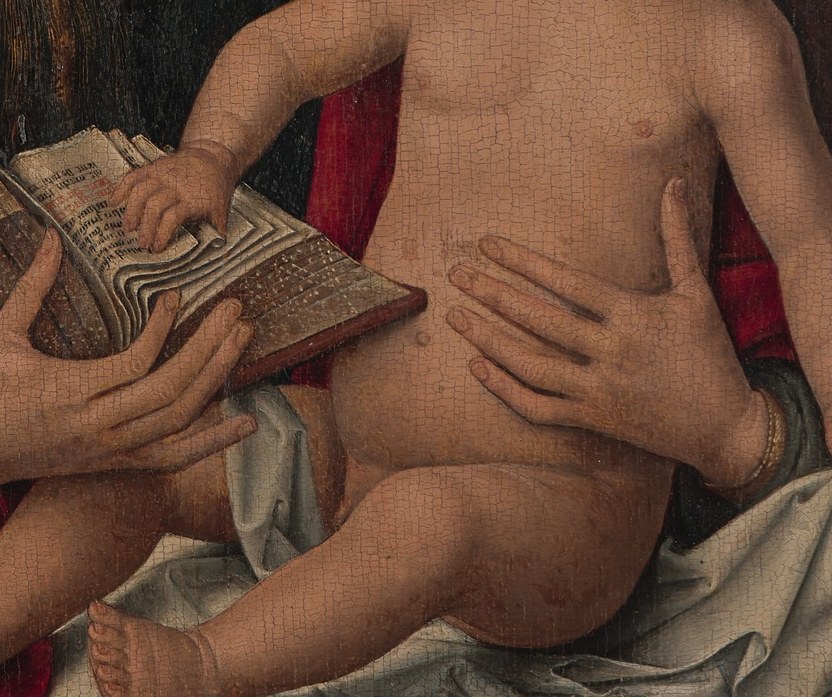
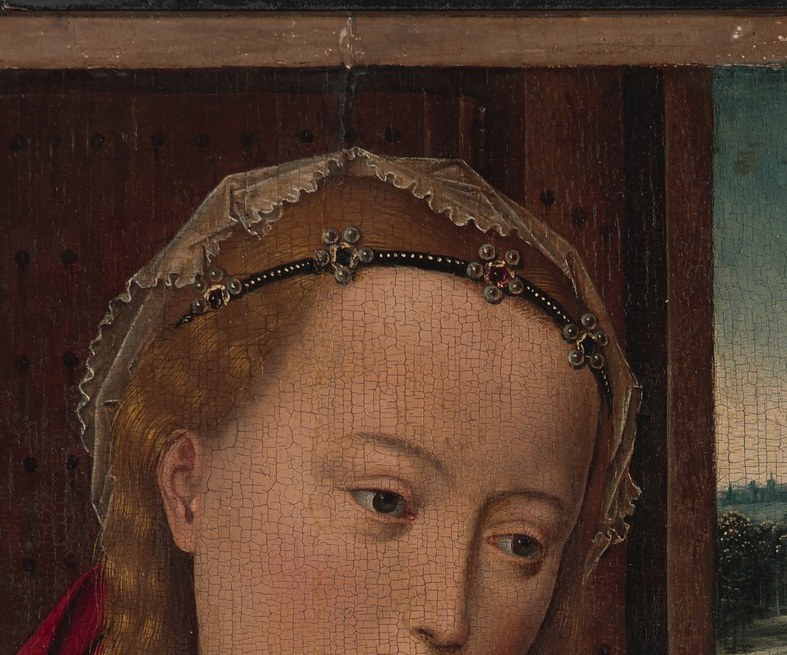
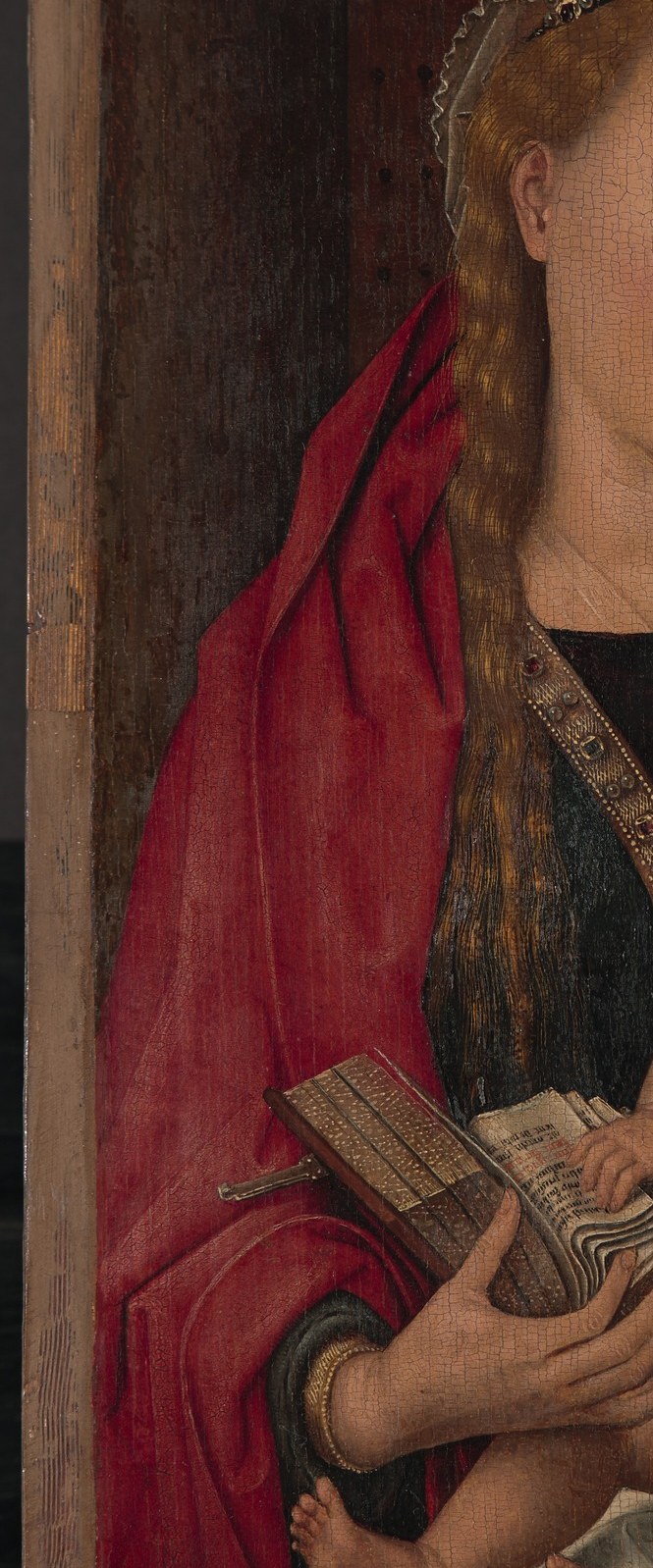
The code is easy to miss. Look for three objects: the jeweled crown on Mary's head, the open illuminated manuscript between them, and the crisp white linen folded across the Christ Child's lap. The crown names her Queen of Heaven. The open Book of Hours, a prayer book for laypeople, signals that the divine Word is already present and accessible. The linen prefigures the burial shroud.
Memling ran the most successful workshop in Bruges, counting bankers and aristocrats among his patrons. A tax record from 1480 lists him among the wealthiest citizens of the city. He was building devotional objects for a clientele trained to read symbols, and he painted with the precision of a goldsmith.
The painting compresses time into one frame: a queen, a teacher, and a mother holding the body her son will become. What detail in a Northern Renaissance painting has changed how you see the whole work?
Details
Transcript
She wears a crown, but she is not the queen of this painting. The book in their hands is a Book of Hours, a prayer guide for the laity. It's wide open. The Word is already here, present and being offered to you. The white linen draped across his lap is a burial shroud in waiting. The crown, the book, the shroud, in a single moment, this is a queen, a teacher, and a mother holding the body her son will become.