Going Home by Fritz von Uhde
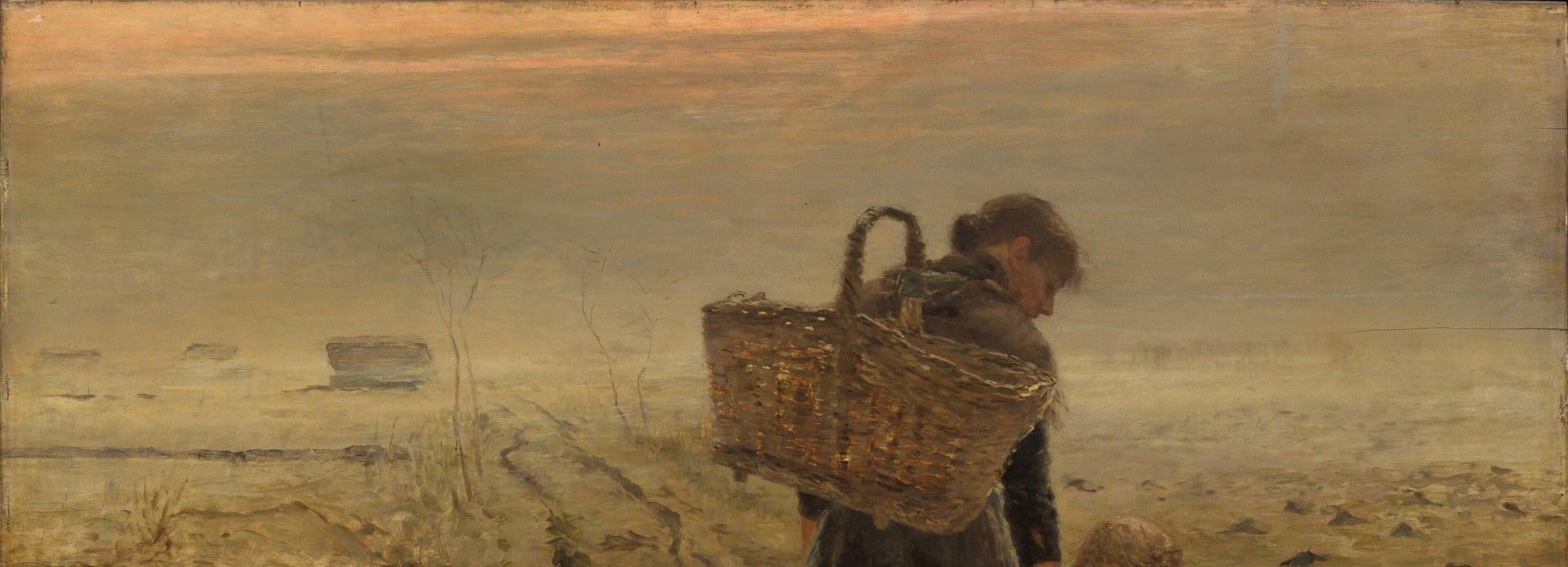
Fritz von Uhde painted Going Home in 1895, and the woman in it never shows her face. That absence is the painting's whole argument. This is not a portrait of a person; it is a portrait of a daily fact. The basket, the path, the child, the low light. All of it adds up to one thing: a working life, seen from the outside, treated as worthy of serious attention.
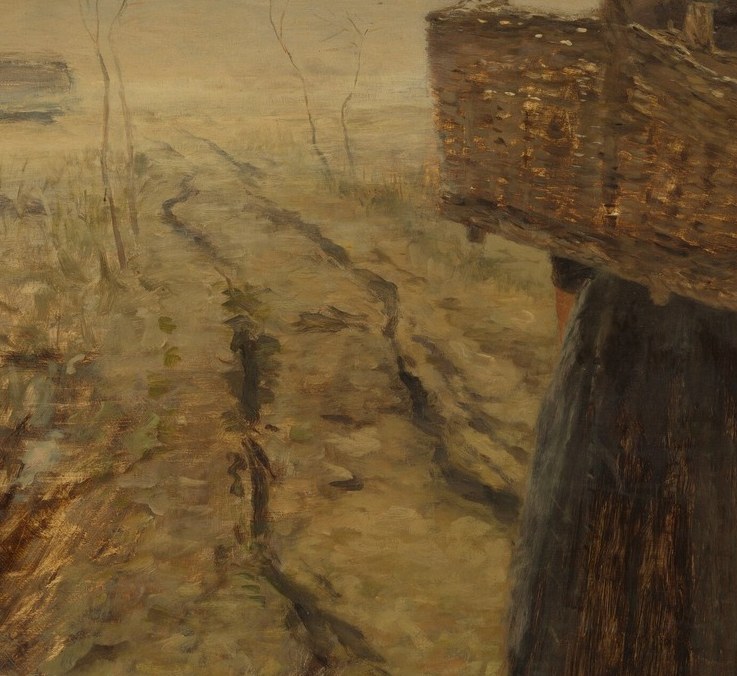
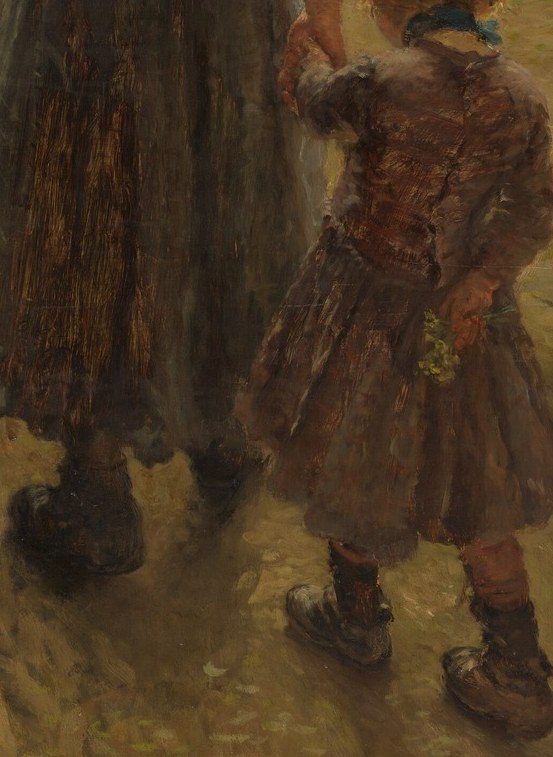
Look at how the composition buries you in her physical world. The dirt path recedes sharply in single-point perspective, pulling the eye toward a vanishing point lost in haze. The basket strapped across her back is enormous. Her daughter walks beside her with the same steady stride, already learning the rhythm. The sky is warm amber, but the light is thinning. The walk home is almost over, but it will happen again tomorrow.
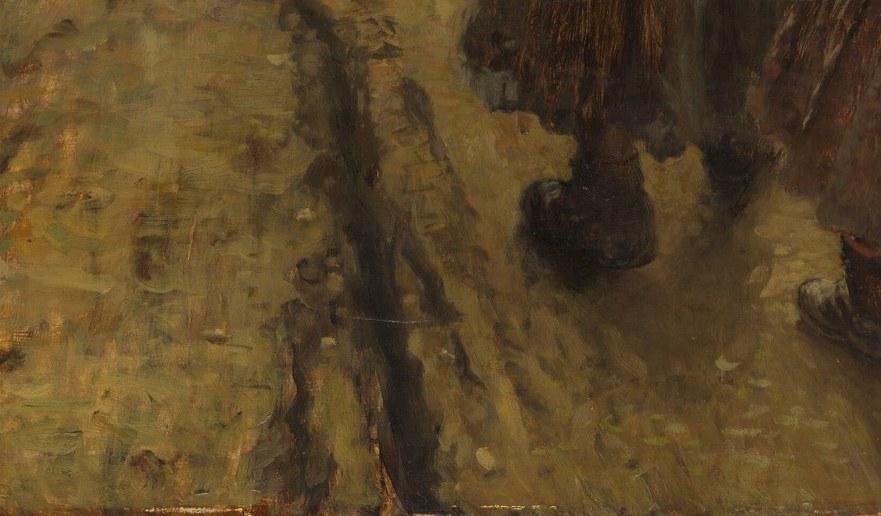
Uhde was a German painter who had seen what was happening in France. He became the first artist to introduce plein-air painting to Germany, moving his easel outdoors to work in natural light. That decision is all over this canvas: the muted earth tones, the thick brushstrokes in the woman's skirt, the thin bright band at the horizon line. Before this, German genre scenes were often staged in studios. Here, the dust and the fading sky feel real because they were real.
Going Home hangs in the Metropolitan Museum of Art. Like much of Uhde's work, it treats an ordinary laboring figure with the same compositional seriousness a history painter would give a saint. What do you notice first: the weight of the basket, or the face you never get to see?
Details

Transcript
She doesn't turn to face us. This is not a portrait. It's a record of the day's last walk. The basket's weight is the whole story: burden, provision, home. Her child has learned the same pace. When Fritz von Uhde painted this in 1895, he worked outside in the real light. He was the first painter to bring French plein-air technique to Germany. This path has been worn into the earth by the same walk, every day. No face needed. The whole life is here.