The Martyrdom of Saint James by Francisco de Zurbarán
Francisco de Zurbarán's The Martyrdom of Saint James, painted in 1640, is a stunning example of his dramatic use of light and shadow, known as tenebrism. This oil painting, held at the Museo del Prado, draws the viewer into a pivotal moment of intense piety and impending tragedy.
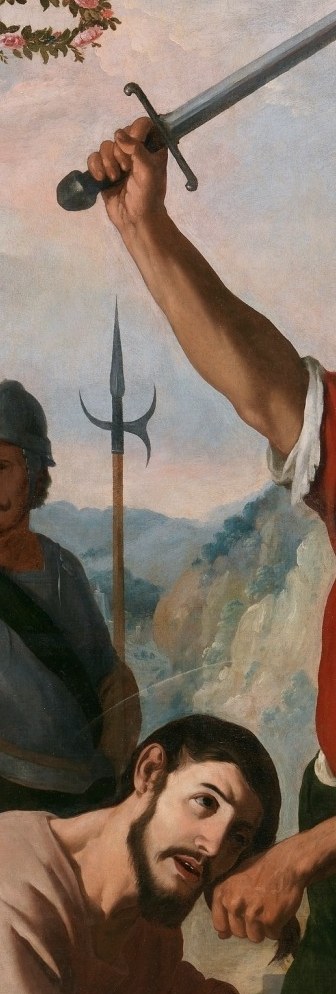
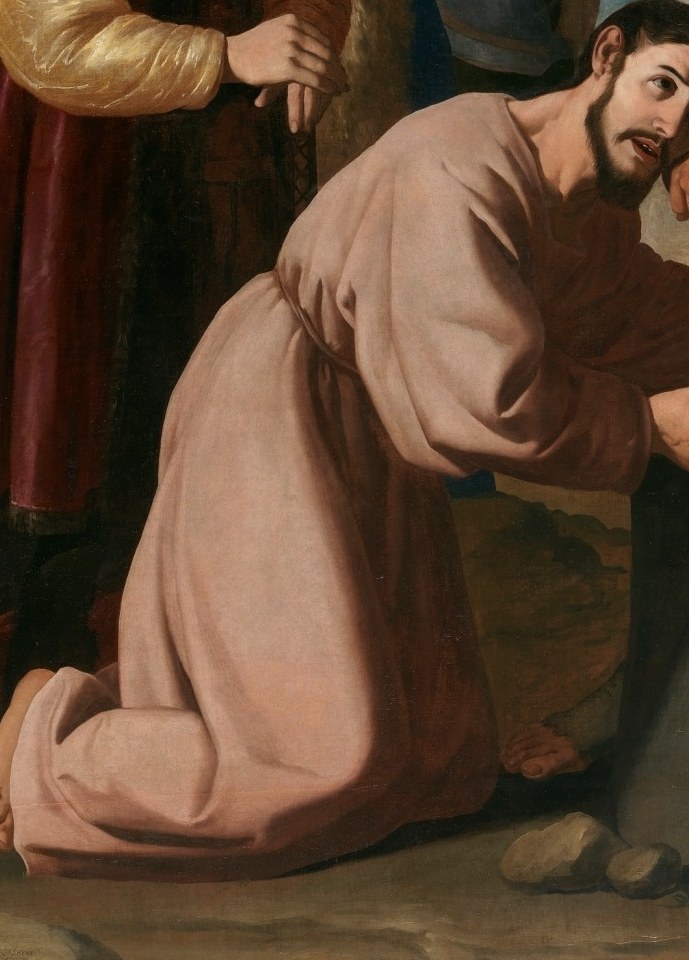
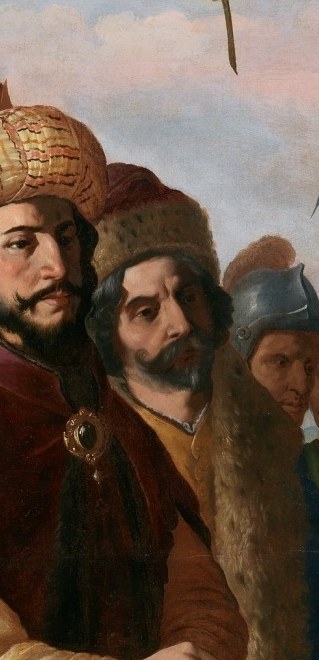
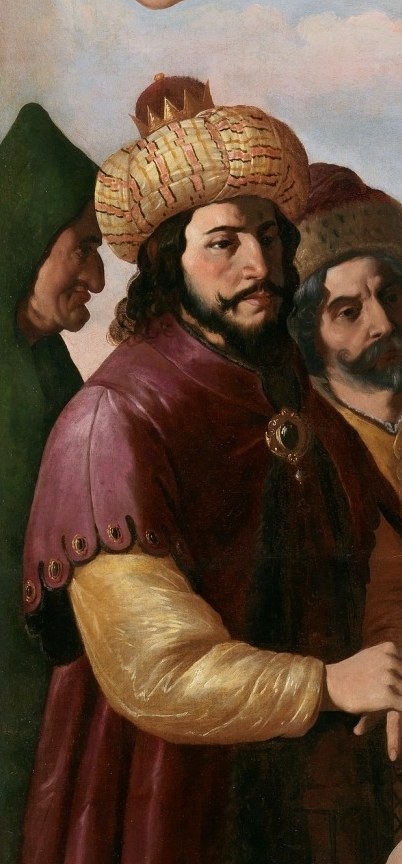
Notice how the light singles out Saint James's face and his luminous white robe, making them almost glow against the deep shadows. The executioner's straining arm and the rich textures of the surrounding figures' garments are rendered with remarkable three-dimensionality, a testament to Zurbarán's mastery.
Zurbarán, often called the "Spanish Caravaggio," was a master of religious realism during the Spanish Golden Age. His works were instrumental in the Counter-Reformation, designed to inspire devotion through vivid and emotionally resonant imagery. The stark contrasts in this piece amplify the solemnity and spiritual focus.
What details in the interplay of light and shadow stand out most to you?
Details
Transcript
This Spanish painter knew how to make light work. He uses shadow to make figures leap out. See how light sculpts the executioner's arm. The saint's robe glows against the darkness. This technique, tenebrism, was his signature. Every fold of cloth feels utterly real.