A Peasant Girl Knitting by Jules Breton
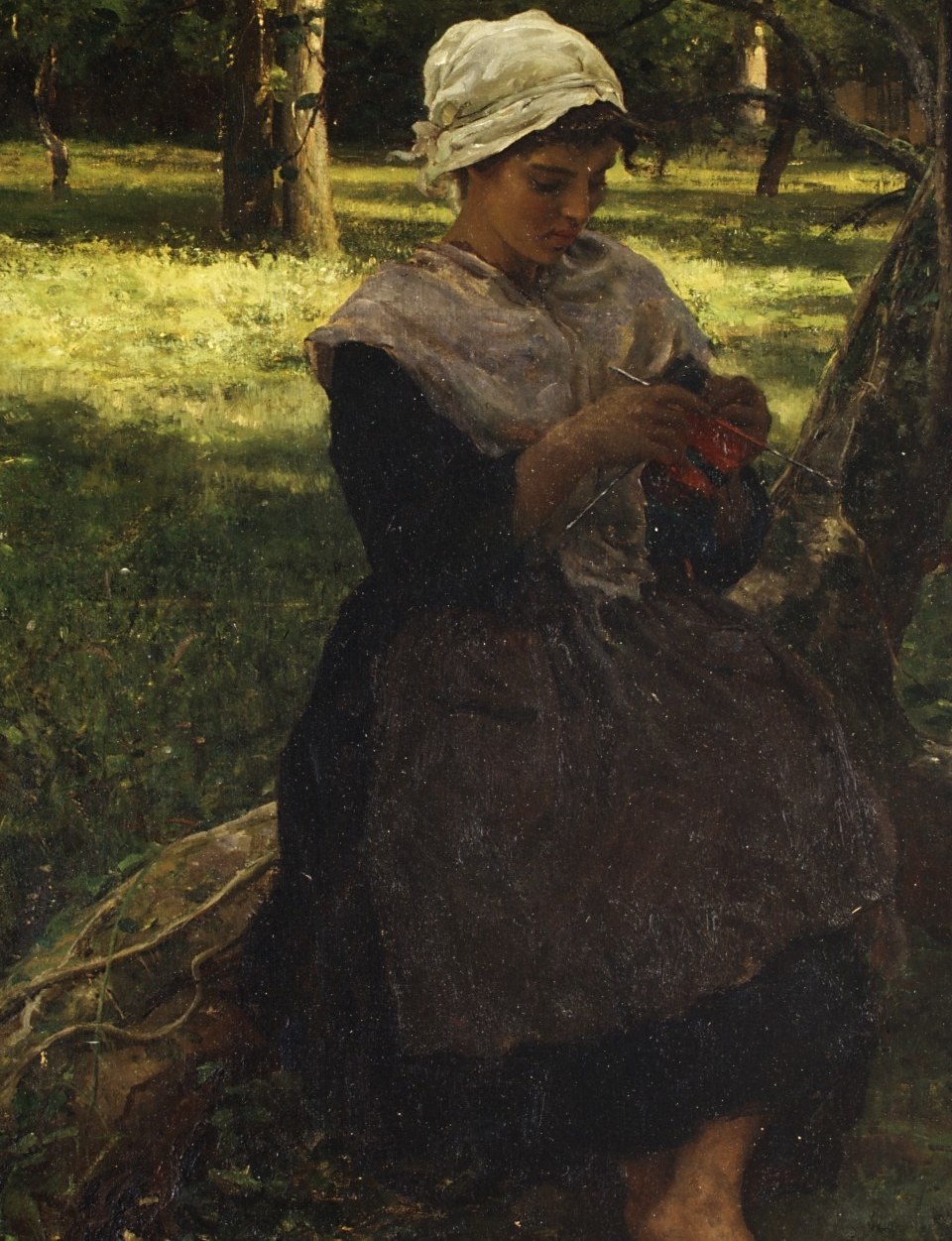
This is Jules Breton's 'A Peasant Girl Knitting,' painted in 1870 and now at the Metropolitan Museum of Art. For much of the 19th century, Breton was one of France's most celebrated painters. His dignified scenes of rural labor won medals at the Paris Salon and made him a wealthy man.
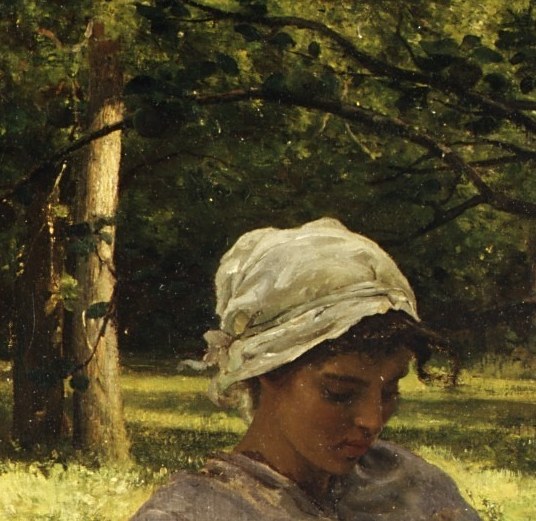
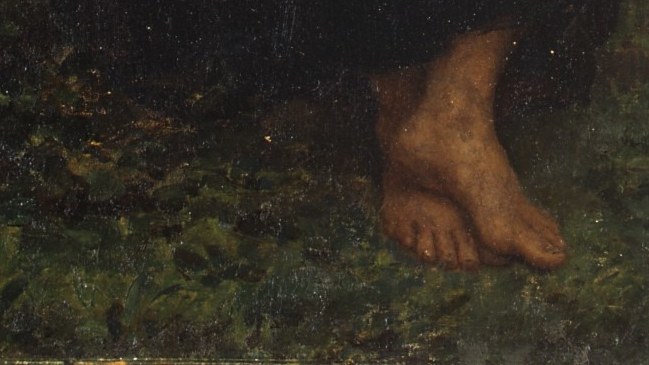
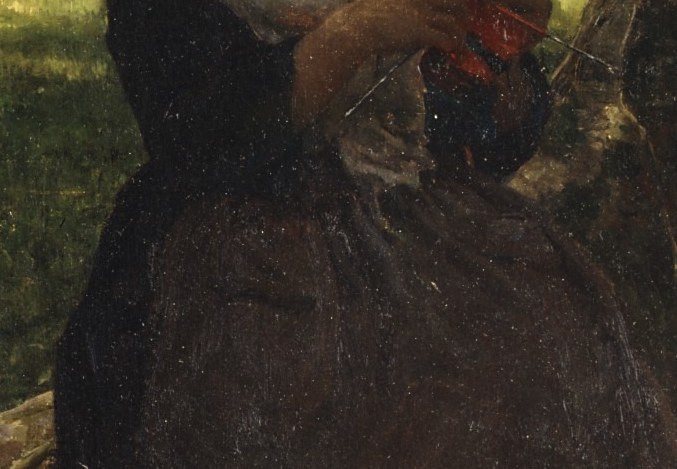
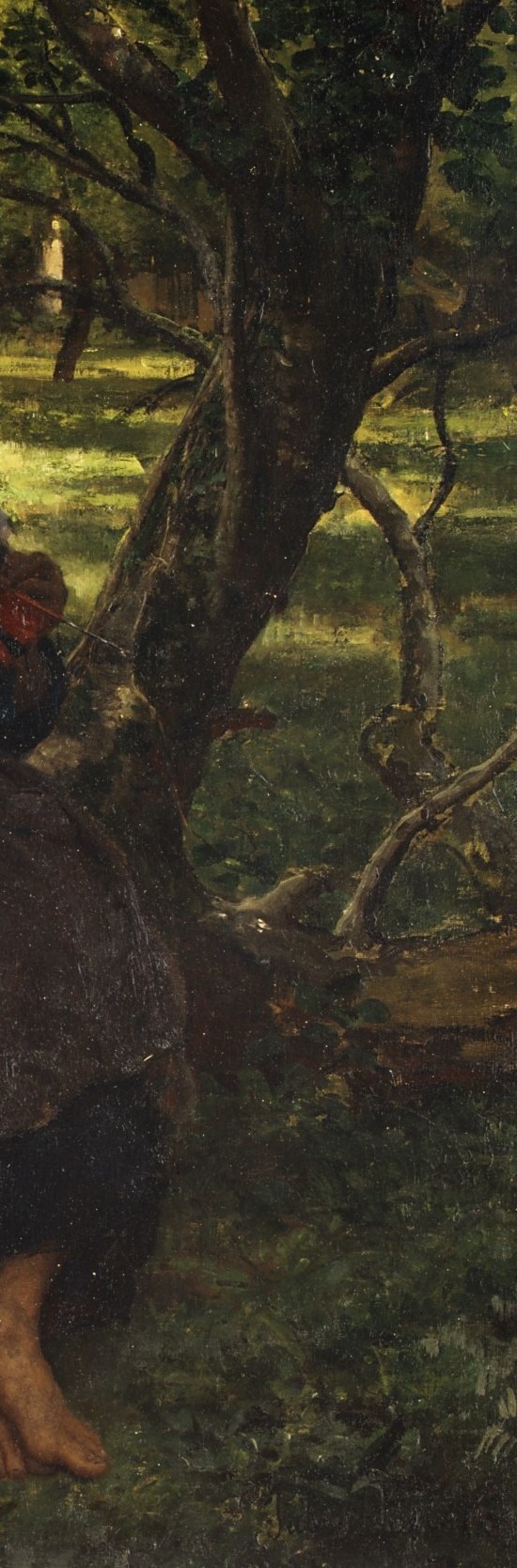
Look at how carefully he frames her face under the white bonnet, the brightest spot in the whole shaded foreground. Her hands are caught mid-motion, knitting red yarn in her lap. Every detail, the coarse dark dress, the bare feet on the earth, the gnarled tree root she's made into a seat, is meant to read as honest, virtuous, and timeless.
But by the 1880s and 1890s, tastes had shifted hard. A new wave of realist and naturalist painters argued that Breton's peasants were a fantasy, too serene, too clean, too dignified. The real French countryside was marked by brutal poverty and backbreaking labor that his paintings never showed. The work that made him famous became the very thing his critics used to dismiss him.
Breton kept painting his vision anyway, long after it fell from fashion. The question his critics raised still hangs in the air: does an artist owe the world a hard truth, or are they allowed to show it as they wish it could be?
Details
Transcript
For forty years, France loved his peasants. Jules Breton filled Salons with girls like this. Barefoot, quiet, absorbed in simple work. A dignifying vision of rural life that made him famous. Then a new generation called it a beautiful lie. Real peasants weren't serene. They were hungry. By the 1890s, his idyllic vision was deeply out of fashion. The paintings that built his name nearly buried his reputation.