Cannon Rock by Winslow Homer (American, 1836–1910)
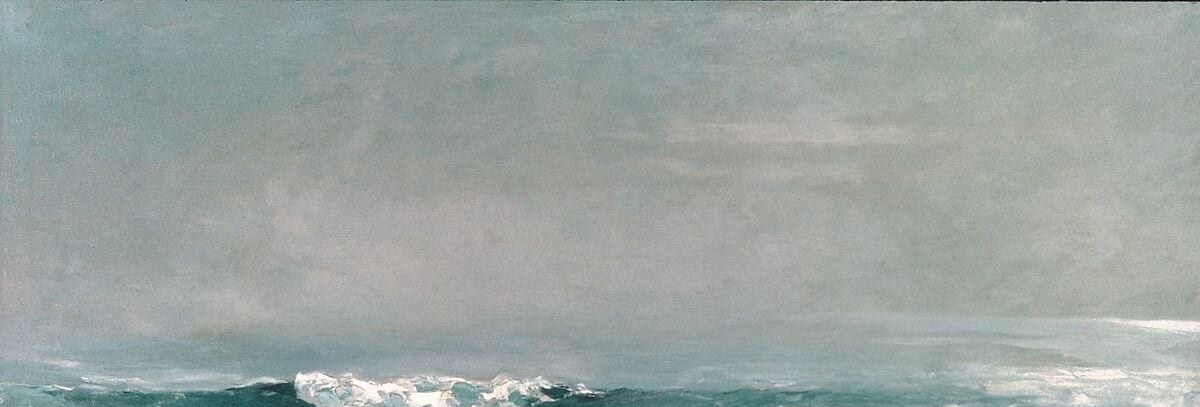
Winslow Homer painted Cannon Rock in 1895, but he did not stand on a beach to do it. He built this storm from memory inside his studio on the coast of Maine, a practice that allowed him to distill years of observation into a single, concentrated image of the sea's power. It now hangs in the American Wing of the Metropolitan Museum of Art.
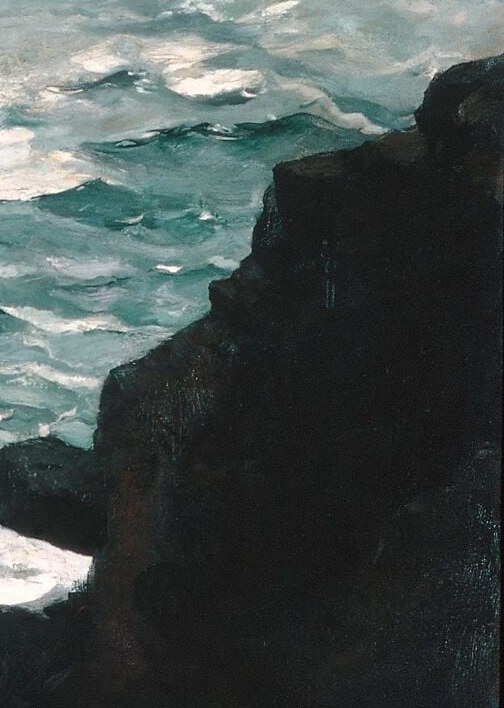
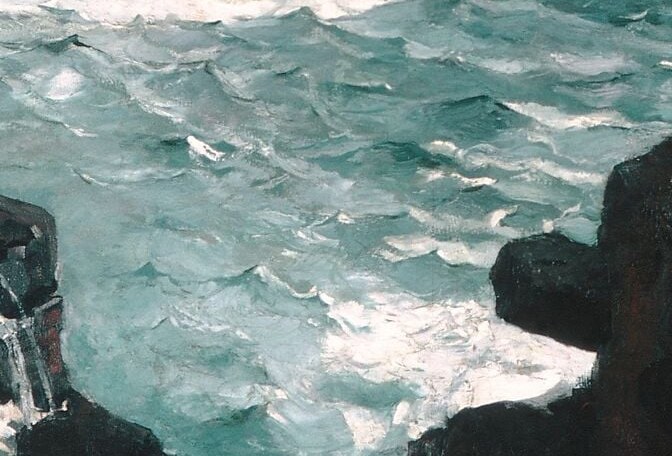
The painting is named for a real navigational hazard, a jagged rock formation known for wrecking ships. Homer anchors the scene on that dark, immovable cliff on the right, then throws the full weight of the Atlantic against it. Watch the thick white paint at the base of the rock, applied with a palette knife to physically sculpt the churning foam.
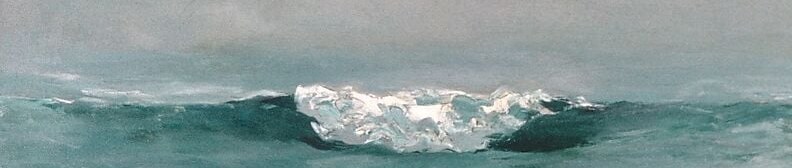
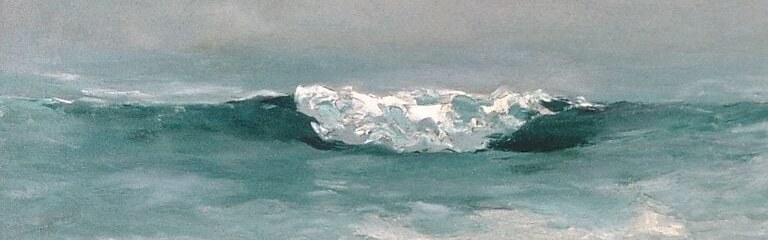
Once you see the cresting wave, shift your gaze to the horizon. Most people miss what Homer placed there: a line of small, distinct whitecaps running all the way to the edge of the canvas. The storm is not one dramatic breaker. It is a system of violence stretching beyond sight.
The horizon turns a single wave into a world with no escape. What details do you notice when you sit with a painting for a full minute that you missed on the scroll?
Details
Transcript
It looks like one powerful wave breaking on a rock. A notorious shipwreck hazard called Cannon Rock. Homer painted this entirely from memory in his studio. He used thick impasto to sculpt the force of the water. And he gave you a key to the storm's full reach. Faint whitecaps stretch to the very edge of the world. The danger is not local. It is total and inescapable.