Ancient Rome by Giovanni Paolo Panini
In 1757, the painter and architect Giovanni Paolo Panini completed a staggering oil painting simply called Ancient Rome. It hangs today in the Louvre. The painting is not a record of any real gallery but a capriccio, an architectural fantasy that gathers the most famous monuments of Roman antiquity into one impossible interior. For educated Europeans on the Grand Tour, it was a visual encyclopedia of everything they had come south to see.
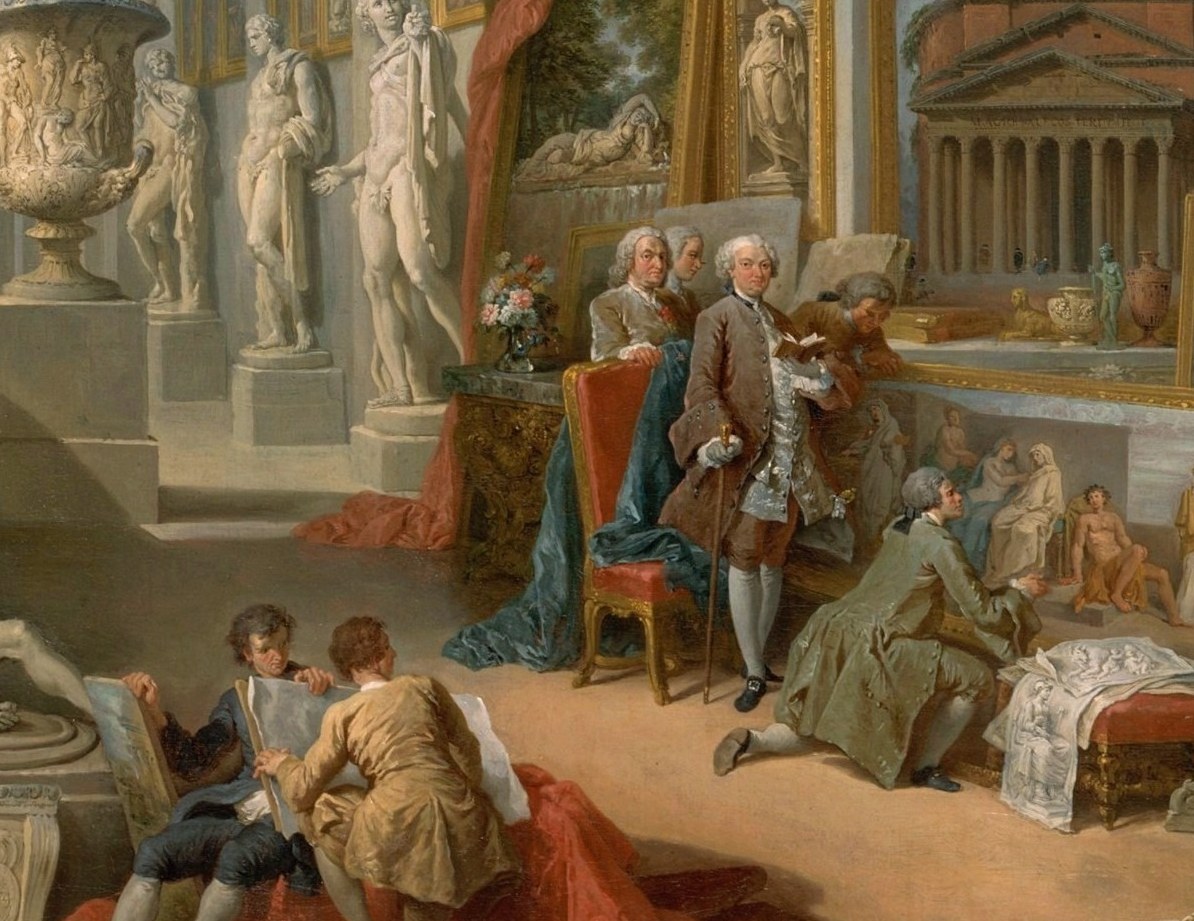
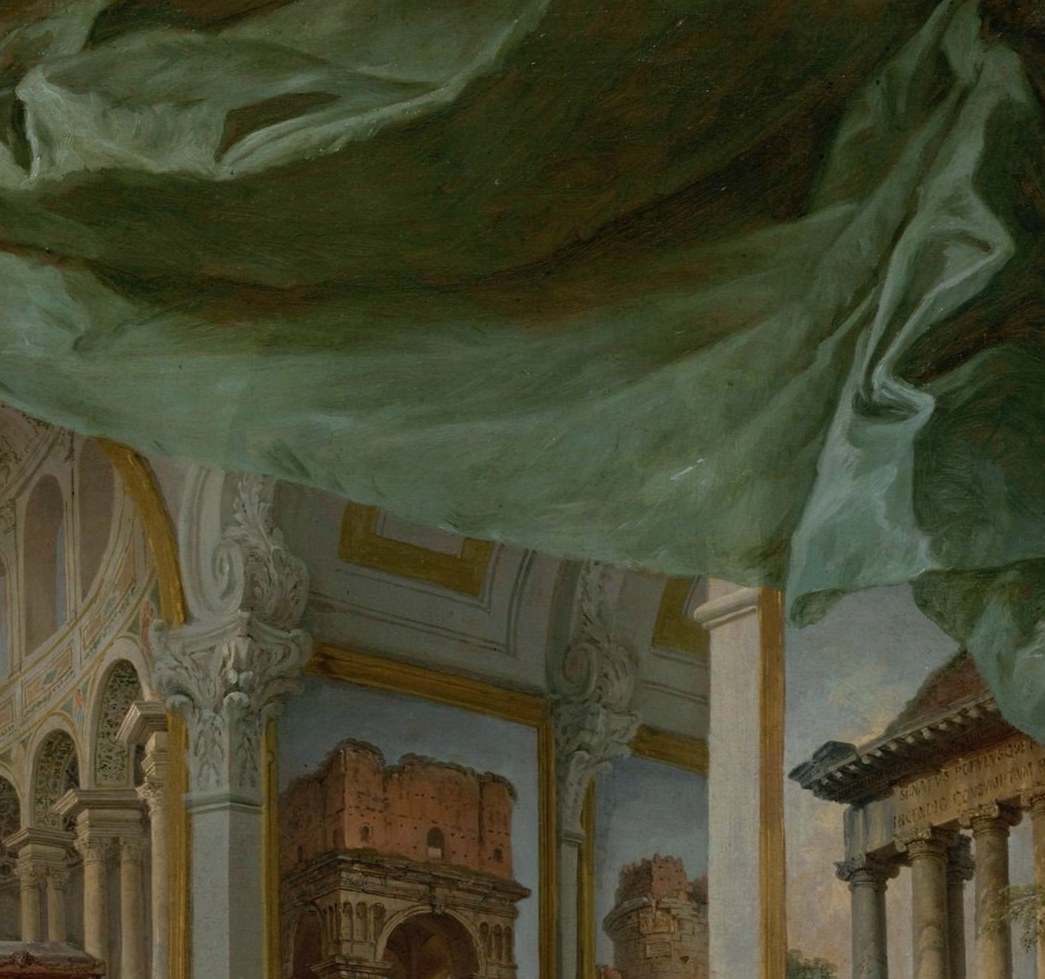
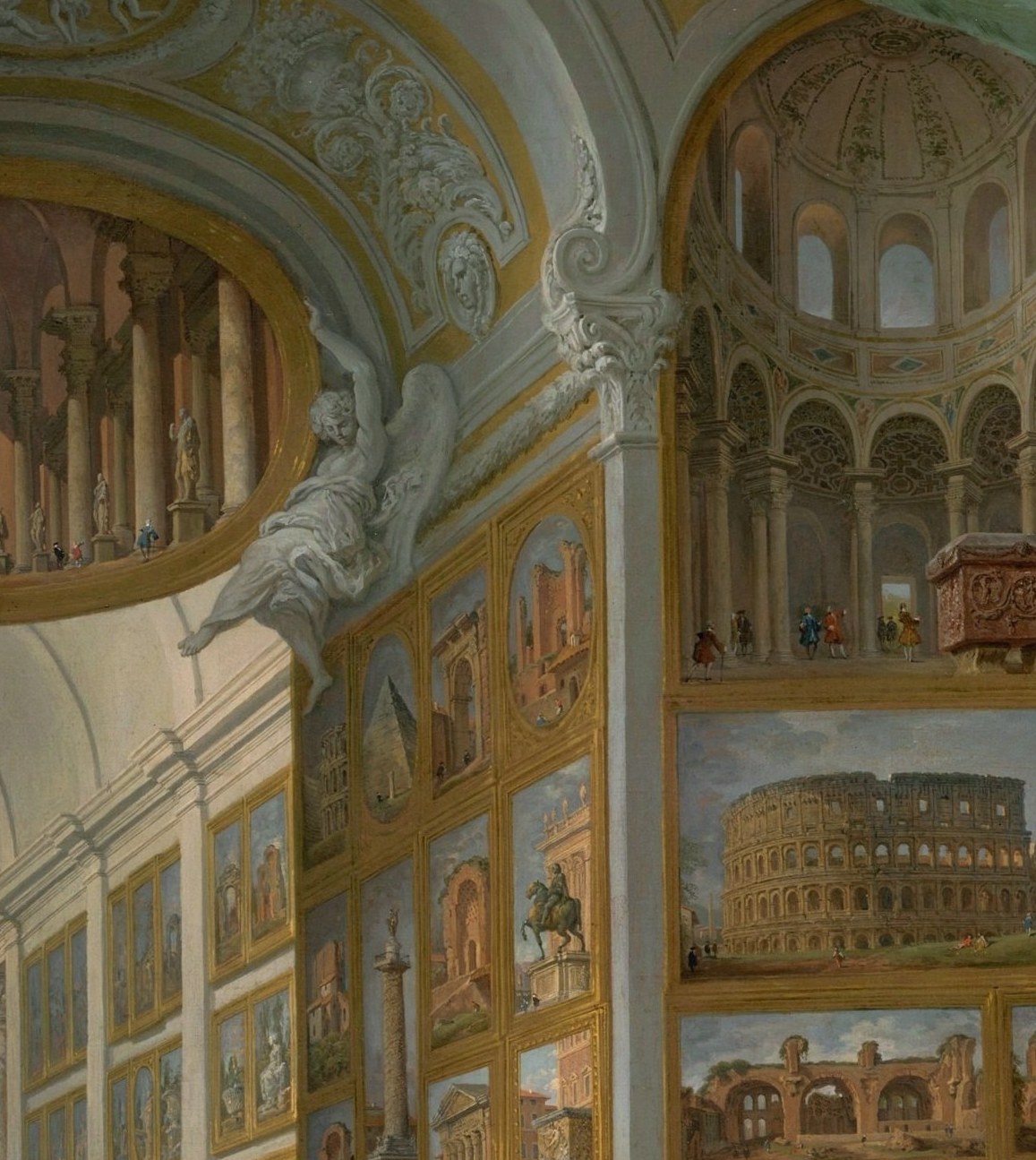
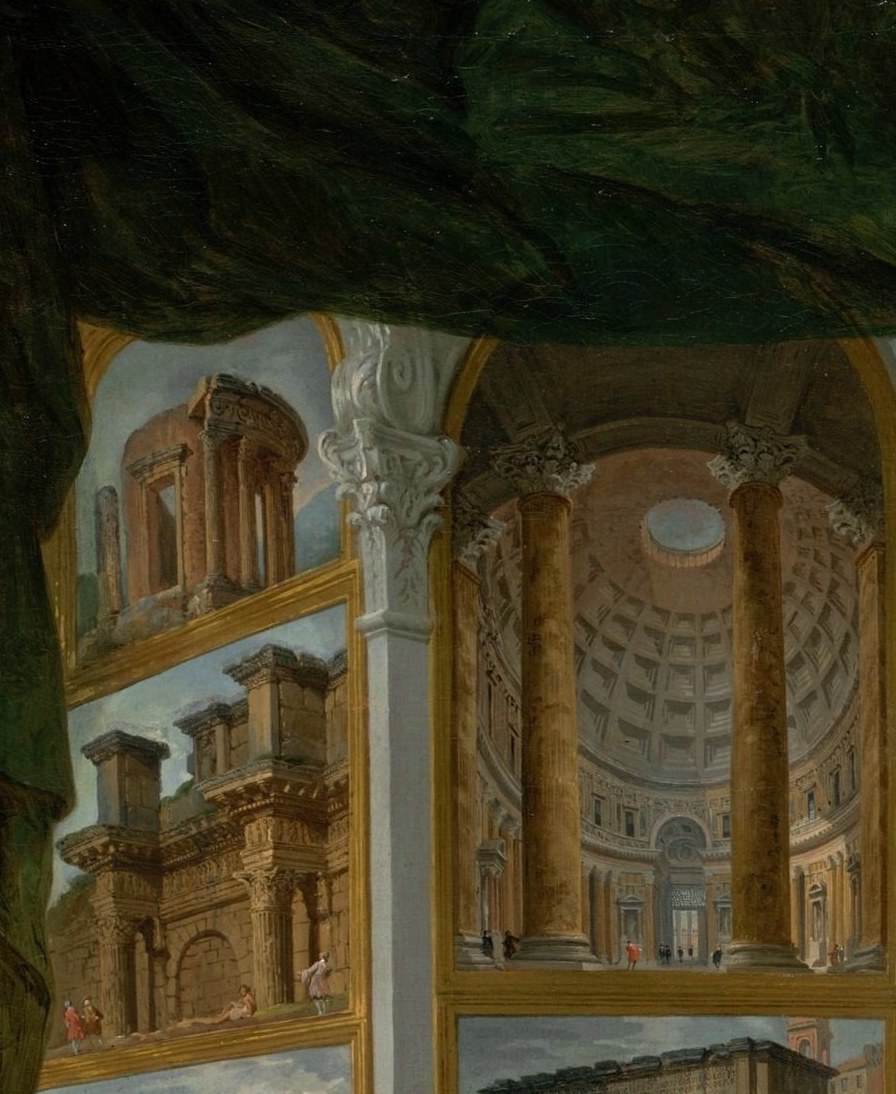
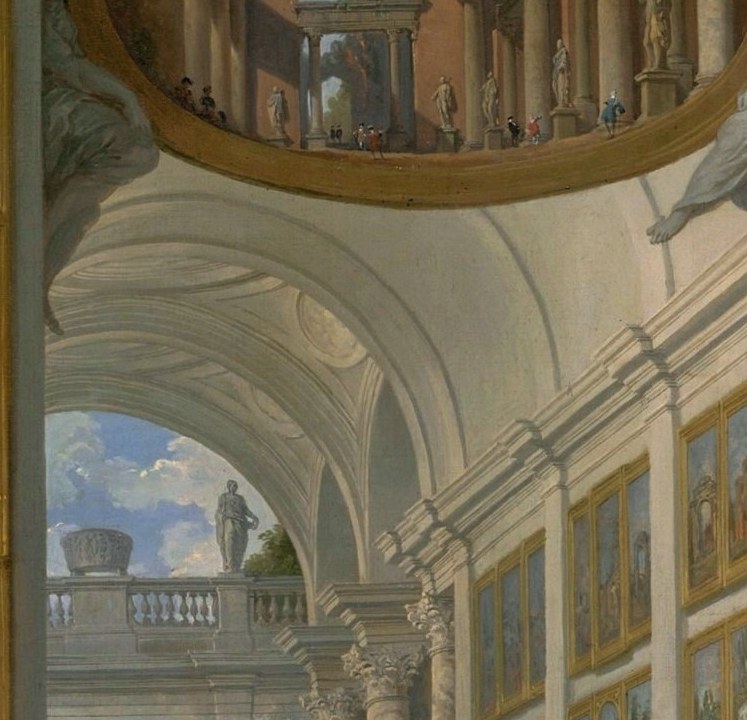
Look first at the scale. Elegantly dressed visitors in red-cushioned alcoves sit dwarfed by the statuary around them. Colossal marble figures rise on pedestals while paintings of the Colosseum and Trajan's Column cover the walls like windows into other worlds. The deep vanishing point pulls the eye toward a distant Pantheon-like rotunda, and a small Bernini elephant obelisk is hidden in the mid-ground, a reward for patient looking.
Panini knew Rome intimately. He worked there all his life, painting vedute for patrons who wanted to carry the city's grandeur home. Here he layers painting-within-painting so obsessively that the room itself seems to breathe. Loose architectural drawings scattered on the foreground floor suggest a working studio, yet the space is pure invention, a memory palace constructed on canvas.
This was the 18th-century imagination at work: antiquity framed, catalogued, and staged for a new audience. What monument would you want gathered into a room like this?
Details
Transcript
Rome, 1757. The Grand Tour is in full swing. The young and wealthy come to study antiquity. They sit where ancient gladiators once bled. Panini paints a gallery that could never be built. It holds Trajan's Column alongside the Colosseum. And a hidden echo of Bernini's elephant obelisk. Loose drawings on the floor call this a workshop. But the whole thing is an impossible fantasy of memory.