The Apotheosis of the Spanish Monarchy by Giovanni Battista Tiepolo
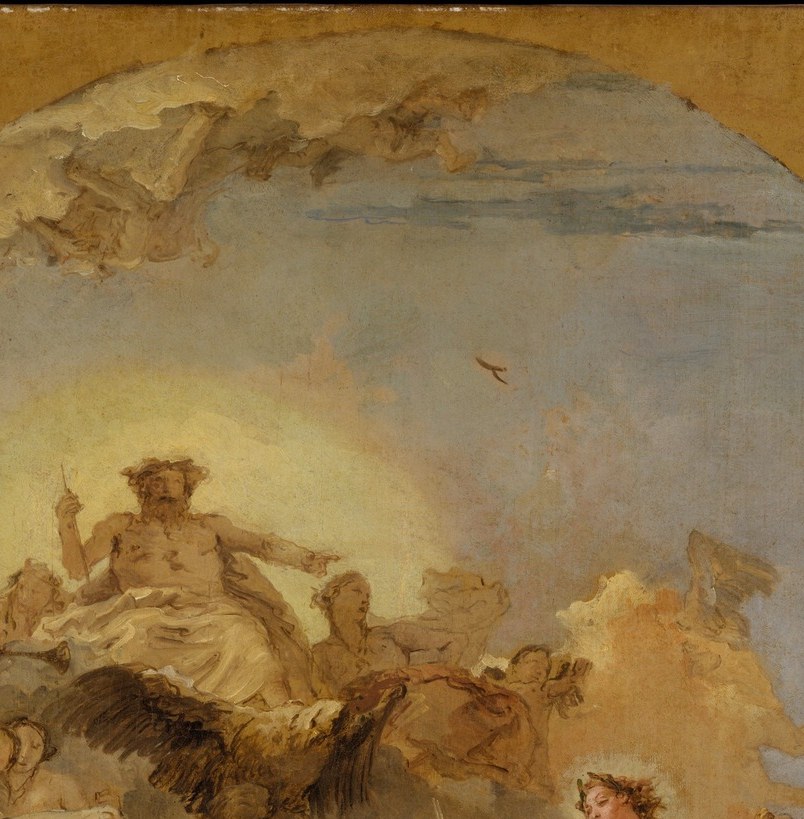
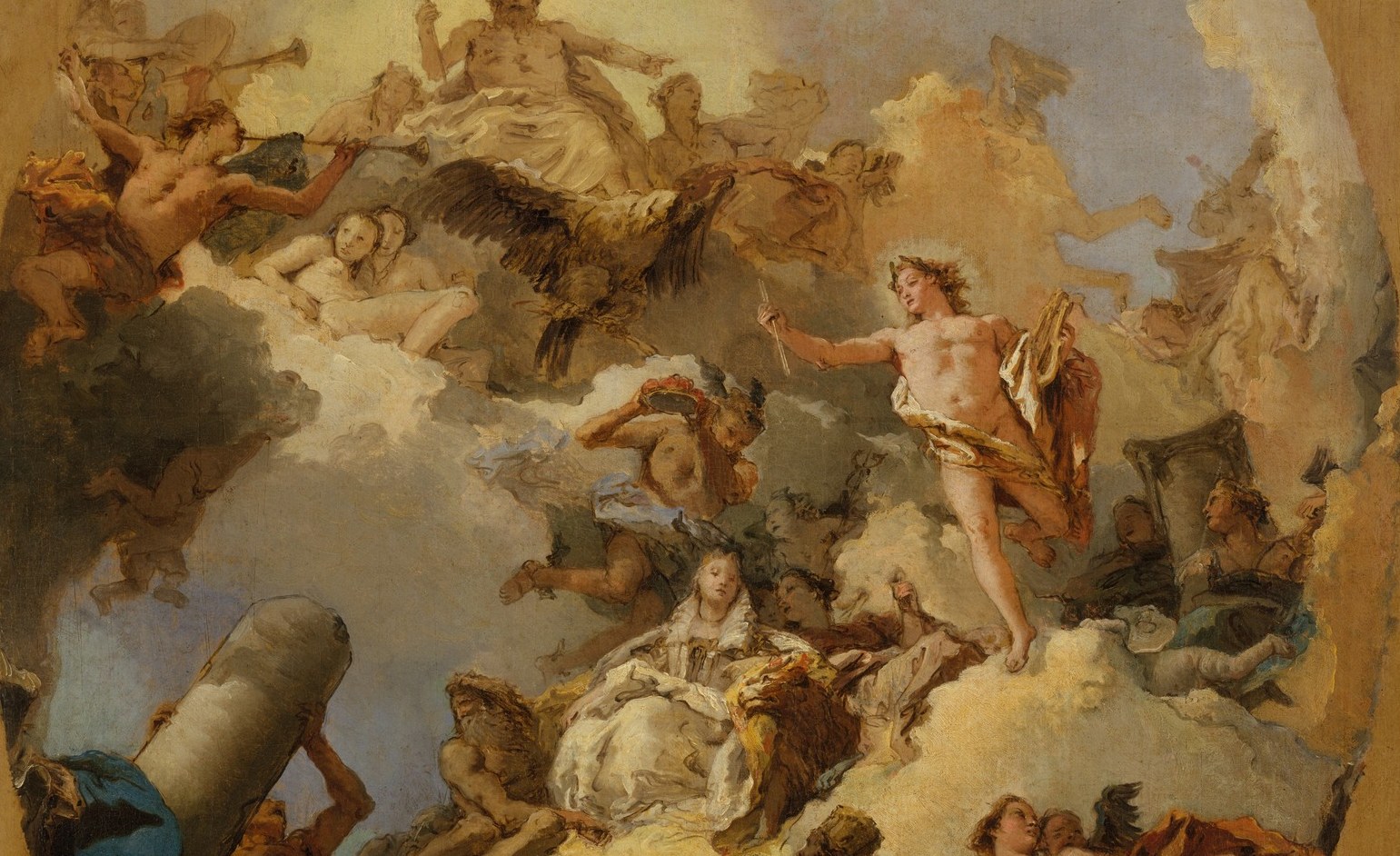
This is the oil sketch Giovanni Battista Tiepolo painted to win the most important commission of his life. Known as The Apotheosis of the Spanish Monarchy, it was made in 1764 as a modello, a final presentation piece, for King Charles III of Spain. It is now in the collection of The Metropolitan Museum of Art.
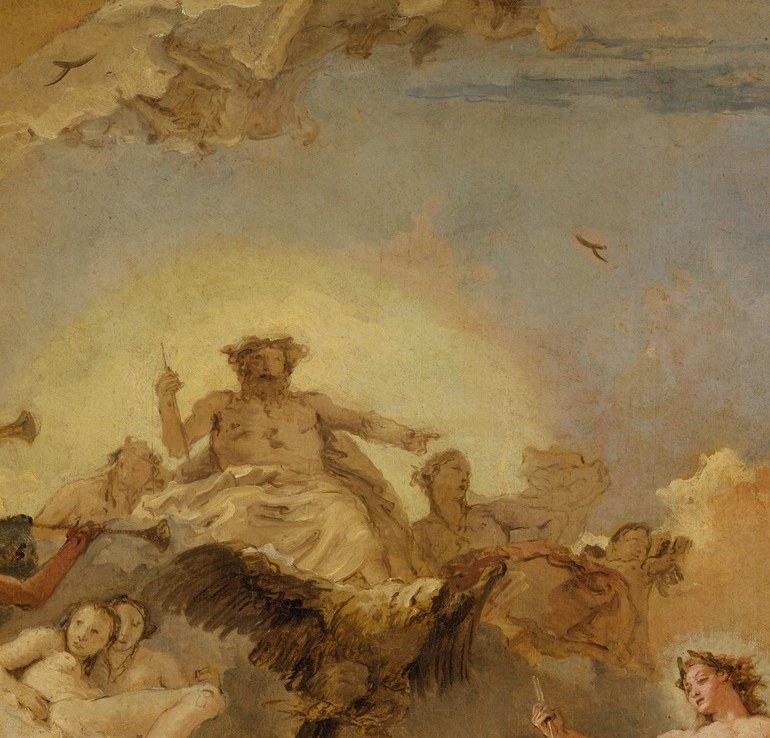
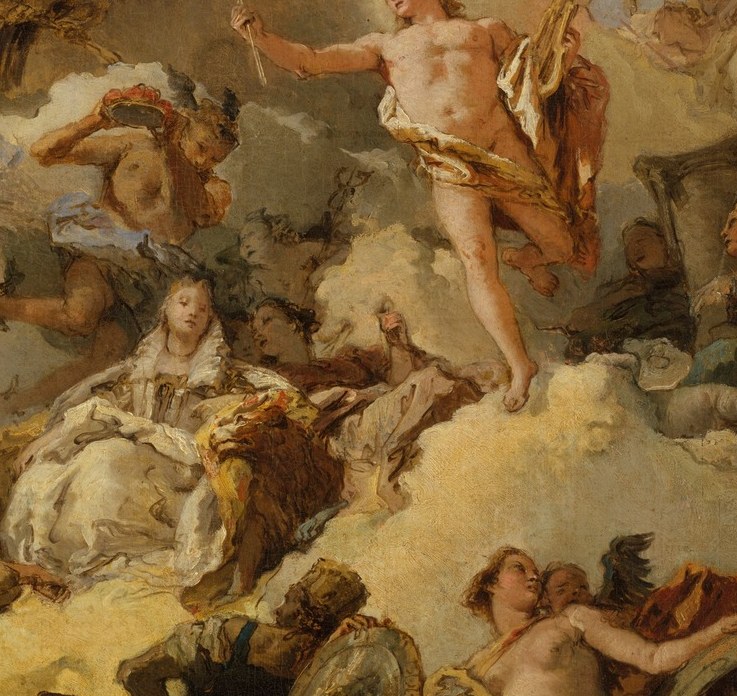
Look at how the composition funnels upward into a cone of pure light around Apollo at the apex. Every figure, Jupiter on his eagle, the allegory of the Spanish Monarchy, the armored warrior, is arranged to support the single argument: earthly crowns are sanctioned from above. The eagle does double duty as Jupiter's attribute and the Habsburg imperial symbol, a single brushstroke carrying centuries of dynastic freight.
Tiepolo was nearly seventy when the king's invitation came. He was already the most celebrated ceiling painter in Europe, his di sotto in sù figures convincing the eye that heaven had opened through the plaster. This sketch sealed the deal. He and his sons packed up and moved from Venice to Madrid, where he spent his remaining years painting three vast ceiling frescos in the Royal Palace.
He died in Spain in 1770, never having returned to Venice. The sketch that launched that final chapter now lives in New York, a small, luminous record of the price a painter paid for one last shot at glory.
Details
Transcript
In 1762, a letter arrived in Venice from Madrid. The new King of Spain wanted the most famous painter alive to decorate his throne room. So Tiepolo painted this, a sketch to win the job. The message was simple: the Spanish crown answers only to heaven. He got the commission. Three ceilings. A fortune. And he never came home. Tiepolo died in Madrid in 1770.