Untitled by Bhadrabahu
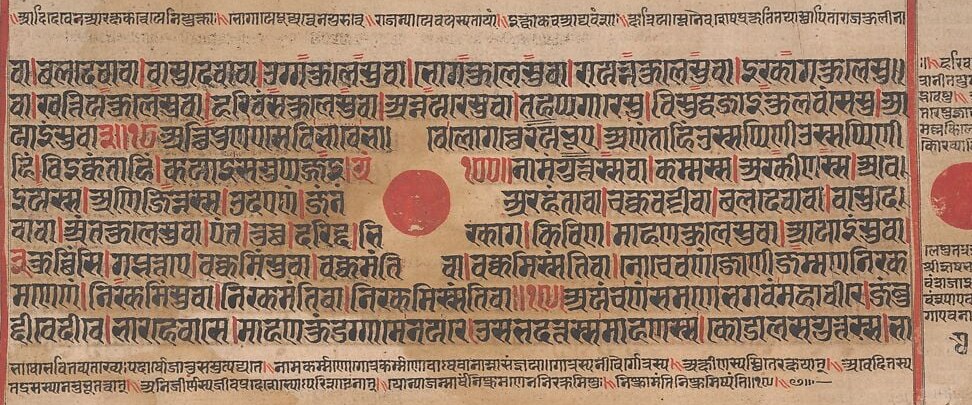
This untitled manuscript, created by Bhadrabahu in 1449, is a remarkable example of Jain religious art from 15th-century Gujarat, now at The Met. It combines ink, opaque watercolor, and gold on paper to illustrate spiritual teachings.
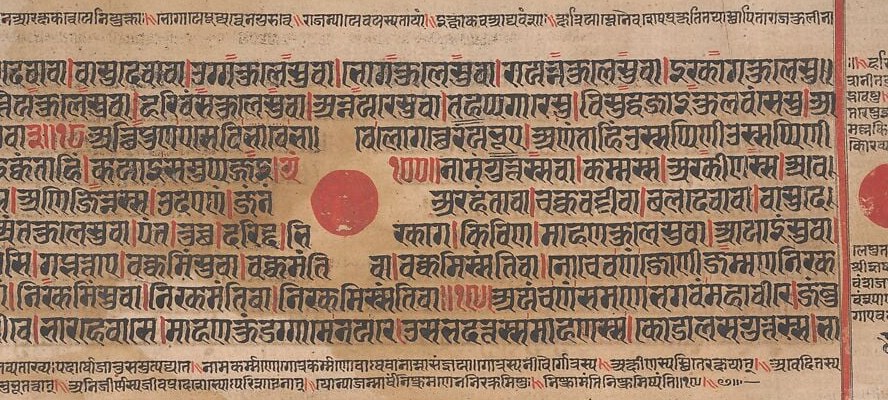
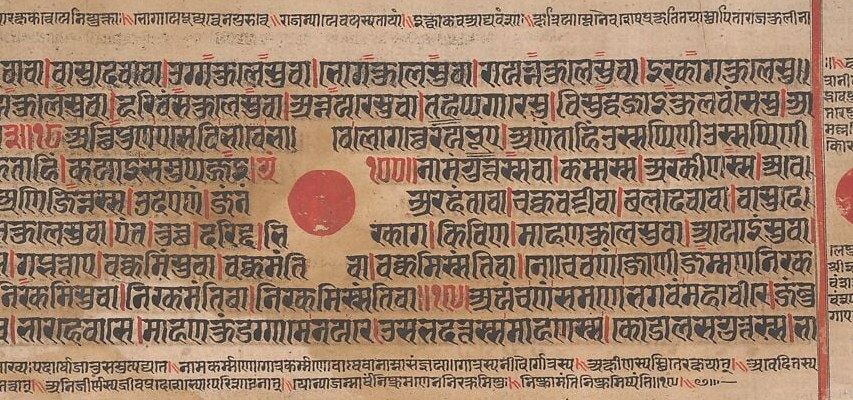
Look closely at the various visual cues the artist employs. Red ink highlights important characters and sections, while prominent red circles act as visual markers, guiding the reader through key passages. Subtle gold leaf accents also catch the light, emphasizing significant words and enriching the manuscript's overall aesthetic.
The use of different scripts and the deliberate layout suggest that this work is more than just a transcribed text; it's a visual tool designed to aid contemplation and reflection, characteristic of Jain artistic traditions where empty space often encourages personal interpretation. While unsigned, this piece reflects a rich tradition of manuscript painting where collective spiritual understanding often took precedence over individual authorship.
What other visual clues do you notice that might guide the reader?
Details
Transcript
This ancient manuscript from 15th-century India looks complex. It illustrates a spiritual text from Jainism. Red ink highlights specific characters, drawing the eye. These prominent red circles mark key sections of the text. Gold leaf accents add richness, making important words glow. The multiple scripts may indicate different layers of meaning. It's a visual guide for contemplation, not just a story.