The Sacrifice of Isaac by Giovanni Domenico Tiepolo (Italian, 1727–1804)
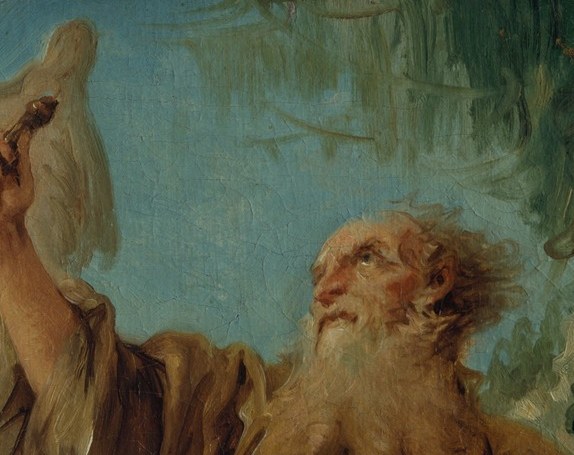
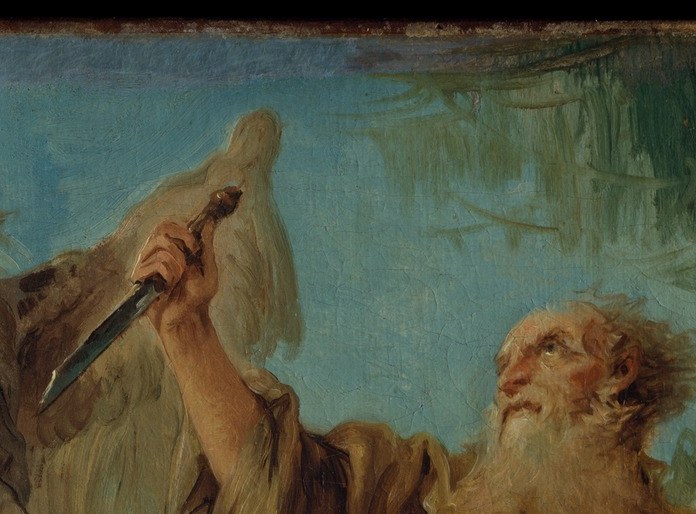
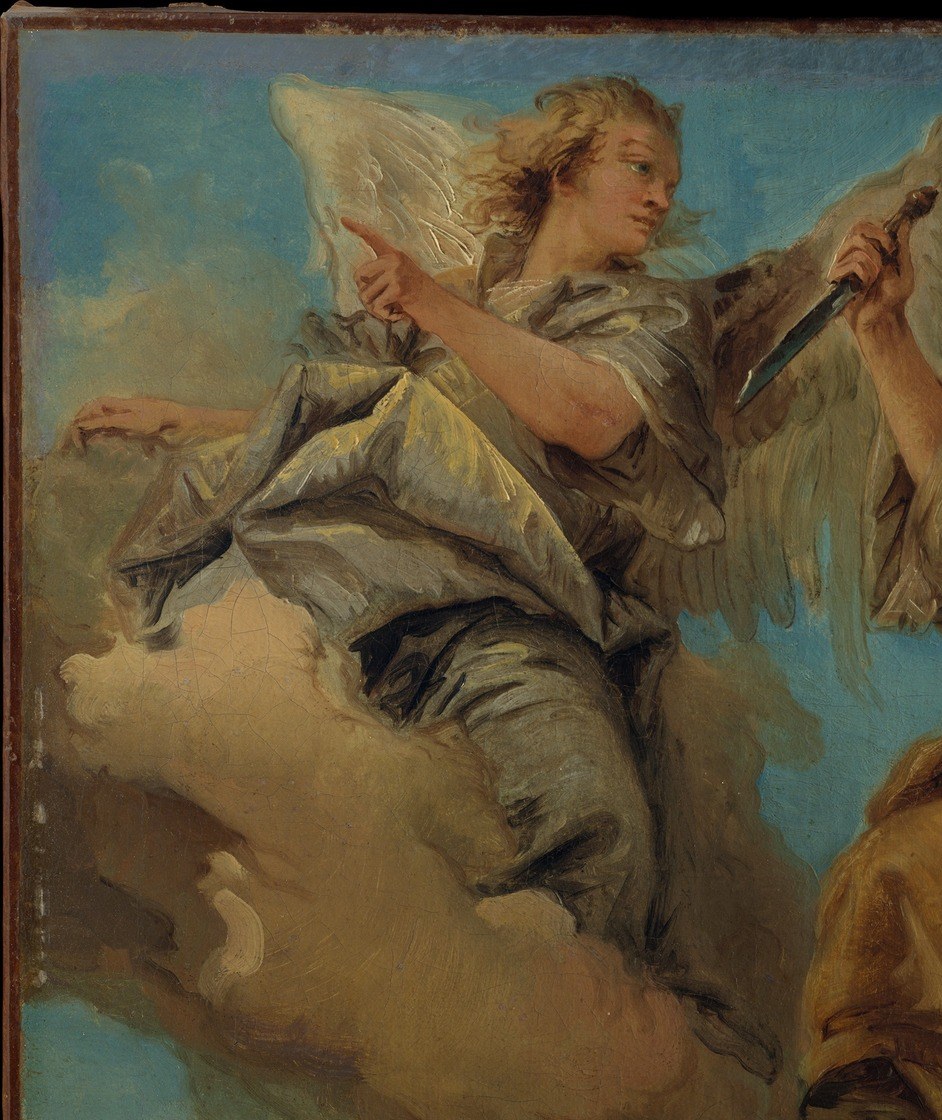
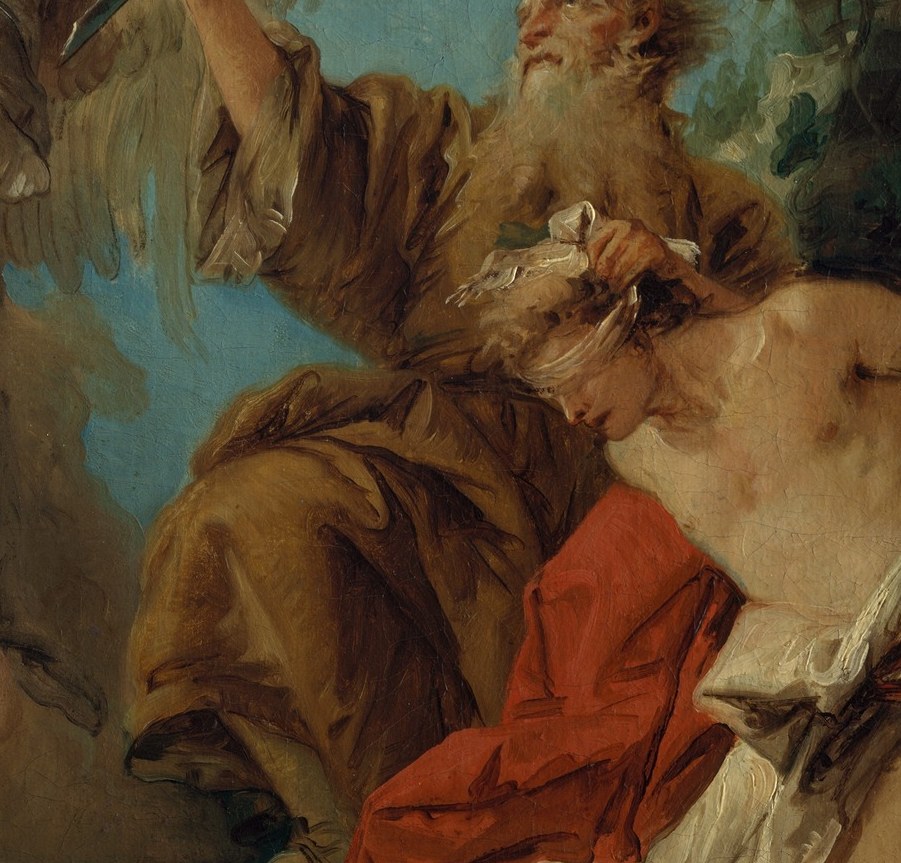
This is Giovanni Domenico Tiepolo's *The Sacrifice of Isaac*, painted around 1750. It shows the moment Abraham, about to kill his son at God's command, is stopped by an angel. The canvas lives at The Metropolitan Museum of Art.
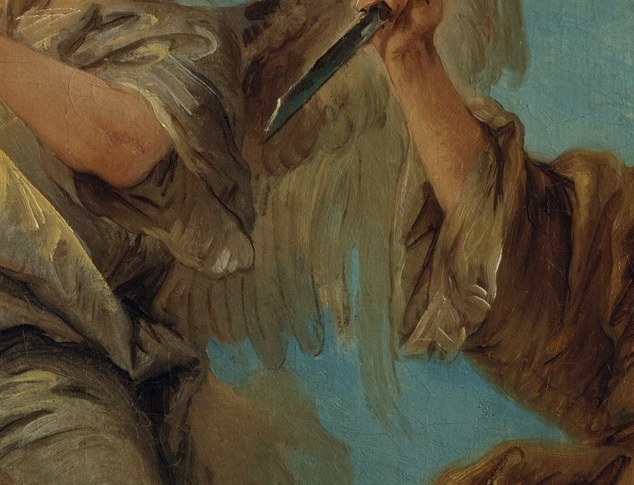
Watch the space between the angel's hand and Abraham's raised arm. That gap is the painting's entire argument: divine will meeting human obedience in midair. Isaac kneels on the altar with his back exposed, a shroud that will not be needed. The red drapery is Tiepolo's loudest color choice here, saturated, urgent, the blood that never spills.
Tiepolo was the son of the more famous Giovanni Battista Tiepolo, and he worked in a Venice where religious art was supposed to be restrained and decorous. A scene of a father raising a knife over his own child, painted with this much physical tension and swirling, smoky sky, struck contemporaries as indecently theatrical. Rococo was meant for ballrooms, not biblical terror.
The painting survived the criticism. Domenico outlived the Rococo era entirely, dying in 1804. This work now reads as a tight, honest piece of storytelling, a father caught between command and conscience, and a painter who refused to soften the moment.
Details
Transcript
A father, a knife, and his own son. The biblical story of Abraham and Isaac. God commanded the sacrifice. Abraham obeyed. Look at his face. Terror and trust at once. But the church in 1750 did not want this much feeling. The knife stops here, by the angel's hand. Critics called it theatrical. Too real, too Rococo. Tiepolo painted it anyway.