Christ on the Cross between the two criminals by Anthony van Dyck
This painting, Christ on the Cross between the Two Criminals, by Anthony van Dyck (circa 1620), offers a powerful depiction of the Crucifixion. Initially intended for the church of the Convent of the Friars Minor Recollect in Antwerp, the work carries immense religious and historical weight.
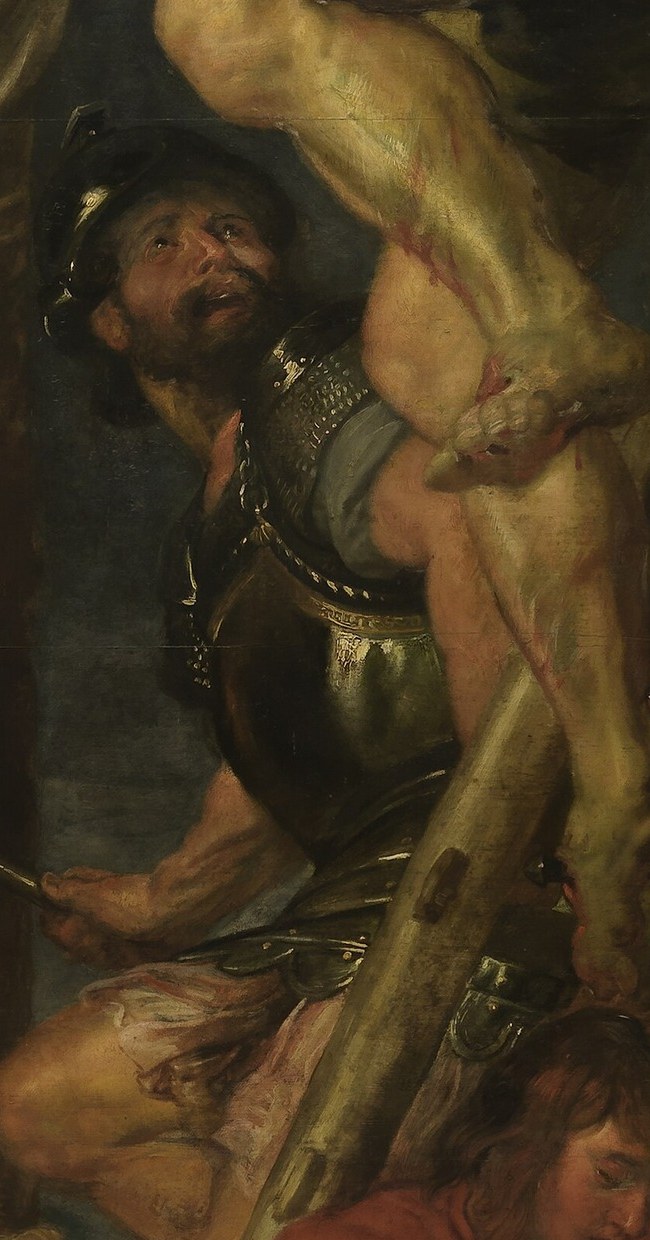
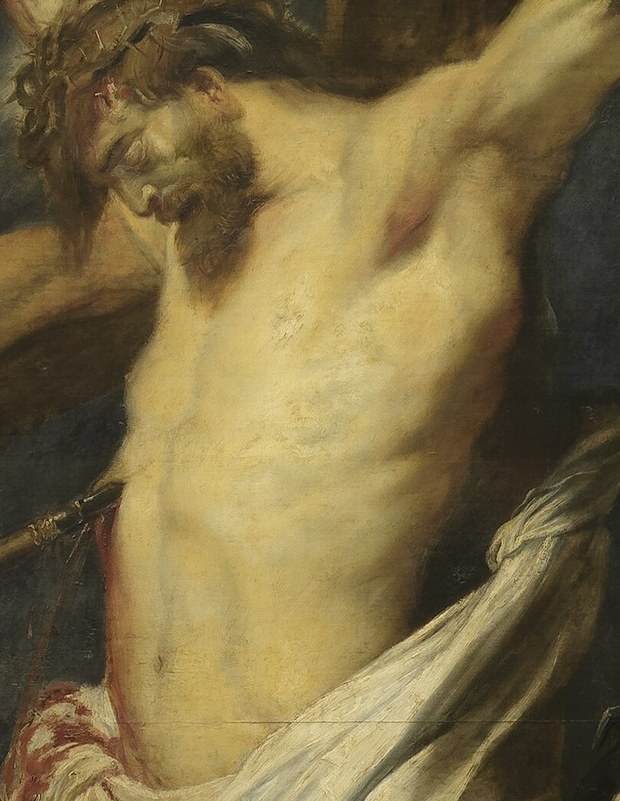
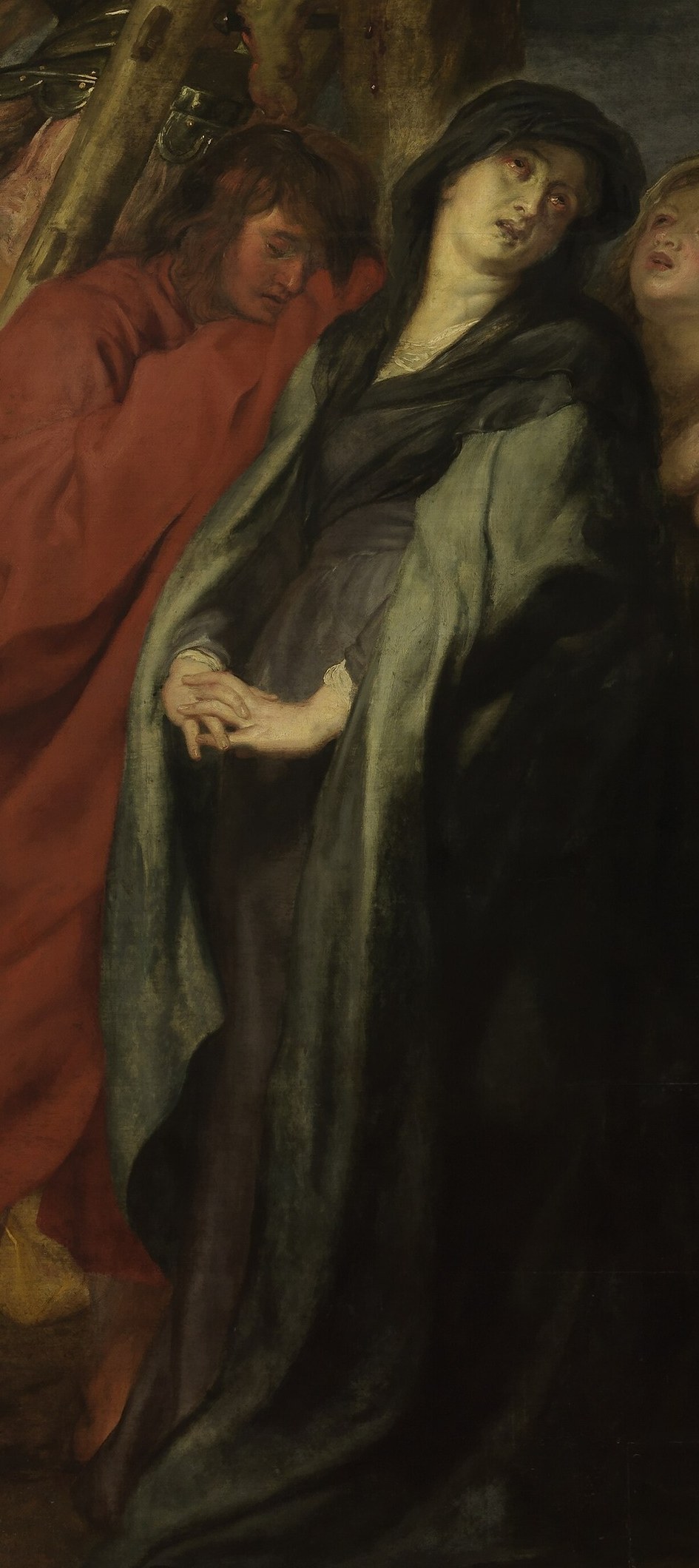
Observe the central figure of Christ, whose face conveys a profound sense of suffering and resignation. To his sides, the two criminals writhe in agony, their bodies contorted in pain. The Roman soldier with his spear embodies the earthly force carrying out the event, his action brutally confirmed by the wound on Christ's side. Above, the dark, cloudy sky amplifies the scene's dramatic and somber atmosphere.
Interestingly, for many years this piece was attributed to Peter Paul Rubens, another master of the Baroque. However, contemporary scholarship has led to its reattribution to Anthony van Dyck, highlighting the evolving nature of art historical research. The inscription on Christ's cross, proclaiming 'Jesus of Nazareth, King of the Jews', anchors the theological significance of this pivotal moment.
The painting serves as a testament to the enduring power of sacred art to convey deep emotion and provoke contemplation.
Details
Transcript
A Roman soldier thrusts a spear into Christ's side. He makes sure Christ is dead. A brutal action. Christ's face shows suffering and resignation. The sky darkens, enhancing the scene's somber mood. This was commissioned for a church in Antwerp. For years, it was thought to be by Rubens. Now, art historians attribute it to van Dyck. Look at the inscription on Christ's cross.