Roundel with Saint Lambrecht of Maastricht by http://www.wikidata.org/.well-known/genid/c279cc35beca6c1ce0dbdab2f9367cfc
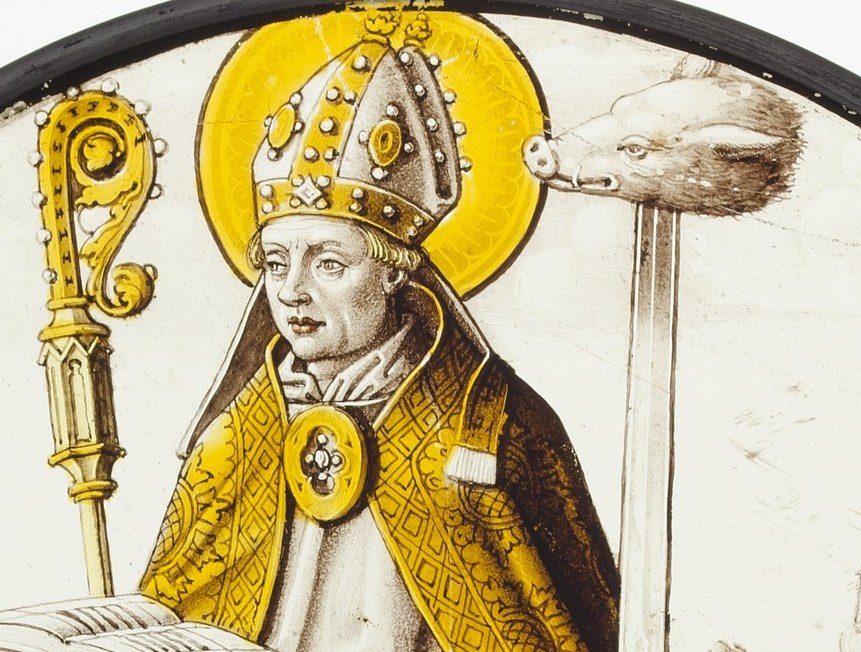
This is a roundel depicting Saint Lambert of Maastricht, painted around 1515 by an artist known only as the Master of the St. Lambrecht Roundel. At first glance it looks like a standard portrayal of a bishop-saint, but the composition quietly insists on his murder, and includes a detail found in almost no other image of Lambert.
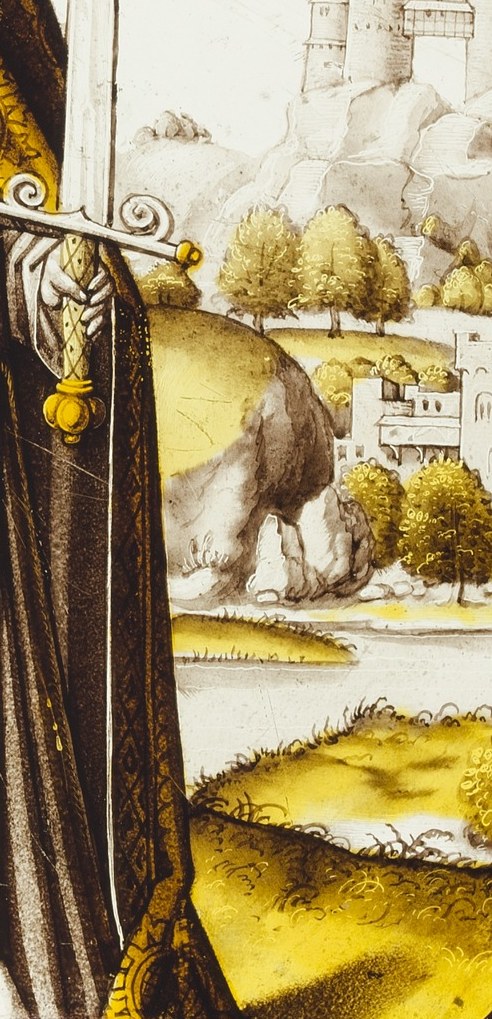
Look at the sword he holds upright at his right side. Every bishop carries a crozier, but Lambert’s sword is the attribute of his martyrdom. He was killed around 705 AD in Liège, likely on the orders of a political rival who resented his denunciations. The painting doesn’t show the violence; it just shows the weapon, and trusts you to know the story.
The strangest detail is the small pig in the lower middle ground. Lambert’s standard iconography has nothing to do with pigs. When a local animal wanders into a saint’s panel, it usually means a local miracle story, something the parishioners in Maastricht would have recognized immediately but that was never written into the official lives of the saint. For us, five centuries later, the pig is a locked door we can see but can’t fully open.
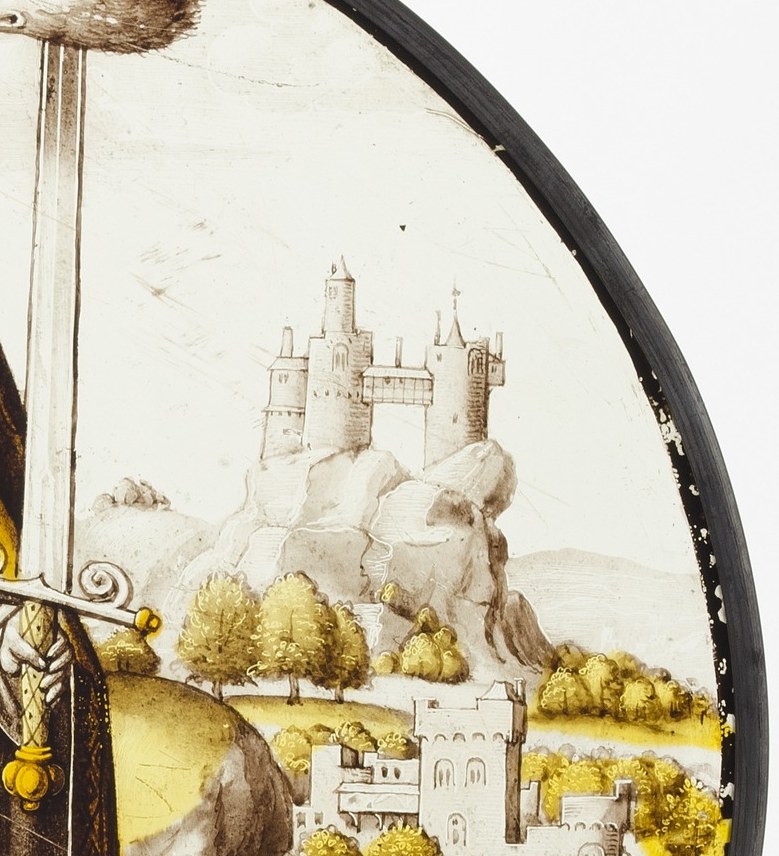
The roundel was made around 1515, when Maastricht was a walled city navigating the printing revolution and the shifting politics of the Holy Roman Empire. The castle in the upper right may represent Maastricht itself, or the heavenly city Lambert was believed to have entered. Either way, the painter wanted you to know: this saint belongs to this place.
Details
Transcript
He looks like any bishop-saint: mitre, book, staff. But Lambert of Maastricht was murdered. The sword says so. The year is about 1515. Maastricht is printing books and fighting wars. Now look at the lower background. There is an animal. A pig. It appears in no standard life of Lambert. Likely a local Maastricht legend, painted for the people who knew it.