Christ on the Cross [reverse] by Andrea di Bartolo
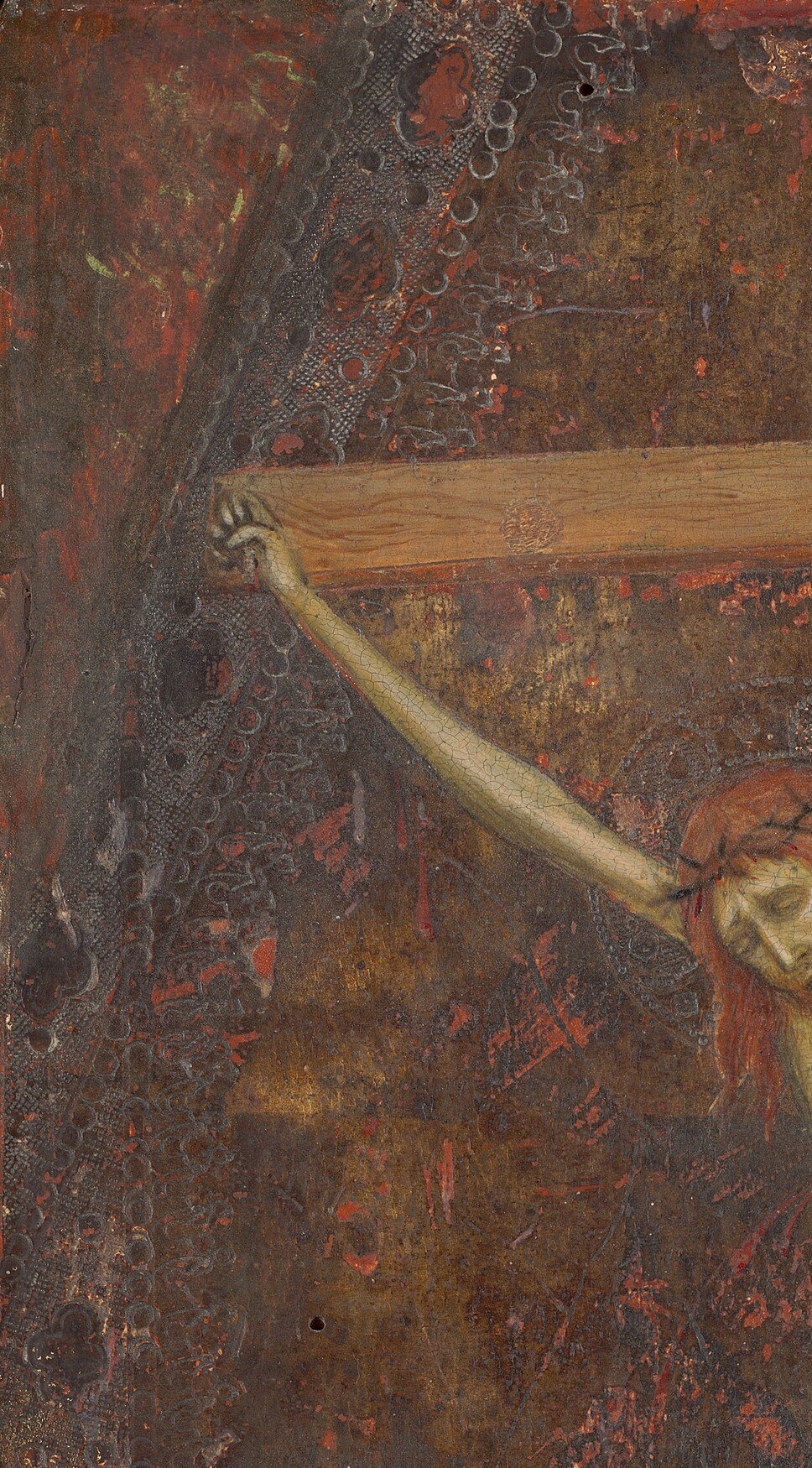
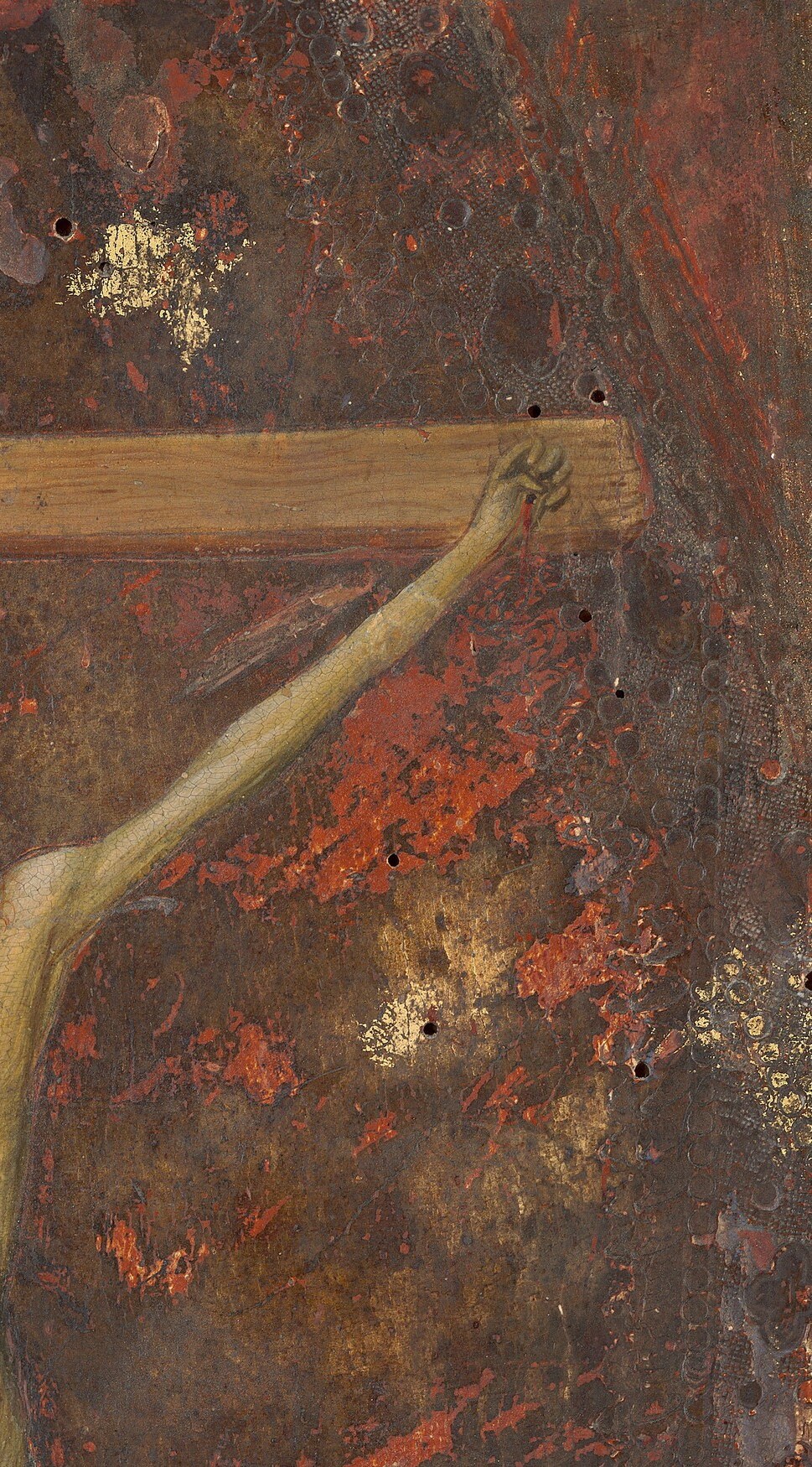
This is Christ on the Cross [reverse] by Andrea di Bartolo, painted in tempera on panel around 1385. The most interesting thing about it is that it is the back of another painting. The front, which showed a Crucifixion scene, would have faced a congregation or a private owner. This side was pressed against a wall and seen by almost no one.
Look first at the background. Instead of the gold leaf or dark void you expect behind a Sienese Crucifixion, there is a dense jewel-toned garden of purple, red, and orange foliage. The cross itself is bare, unpainted wood, its plain grain a deliberate contrast to the floral decoration. Scan across the image and you will find no INRI titulus above Christ's head, just more of that decorative program.
Andrea di Bartolo was active in Siena in the late fourteenth century, working in a tradition of panel painting that prized elaborate surfaces and rich tempera color. Painting both sides of a panel was unusual but not unheard of; what is rare is this degree of decorative ambition on a surface intended to be hidden. The garden may allude to the hortus conclusus, an enclosed garden symbolizing purity.
Somebody paid for this. Somebody directed this painter to spend hours on leaves nobody would see. It was an act of devotion, a prayer worked in pigment and egg yolk, whose only intended audience was the divine.
Details



Transcript
Look at this background. Purples, reds, oranges packed into dense foliage. This is not a normal Crucifixion. The painting is a panel, and this scene is on its reverse. The front showed a Crucifixion hung against a wall. This garden was hidden, seen only if the panel was turned. Every leaf pressed into wet tempera with a tiny brush. A devotional secret, made for God, not for us.