Oedipus at Colonus by Fulchran-Jean Harriet
Fulchran-Jean Harriet's 'Oedipus at Colonus,' painted around 1798, captures a profoundly poignant moment from ancient Greek tragedy. This oil painting, held at The Cleveland Museum of Art, tells a story of devotion, exile, and human suffering.
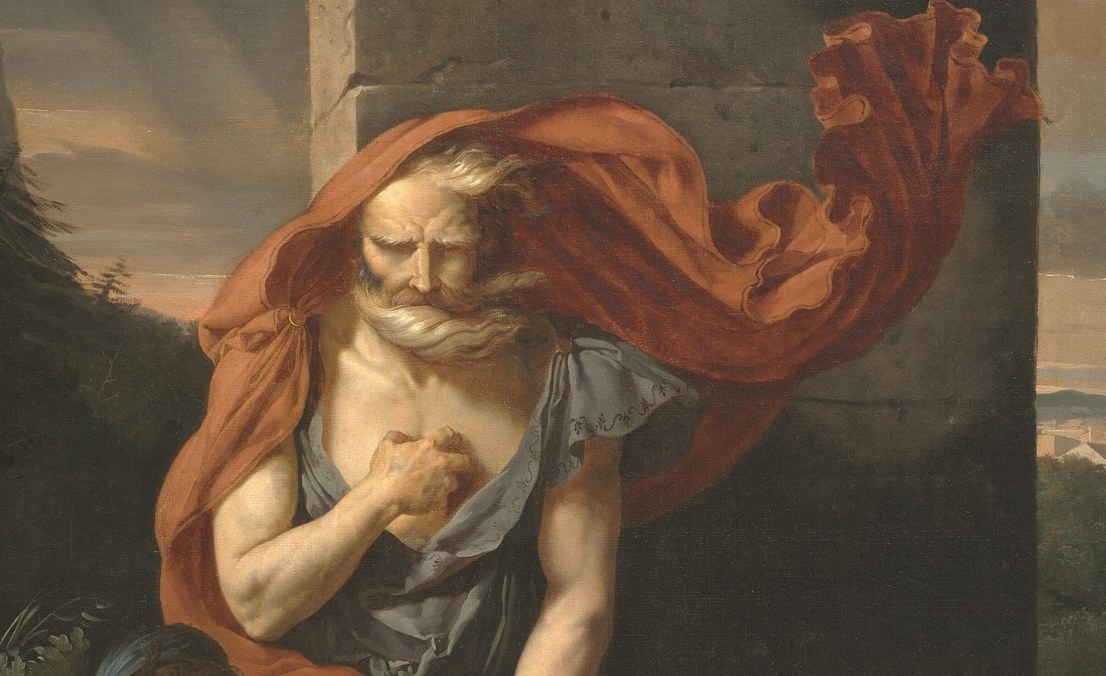
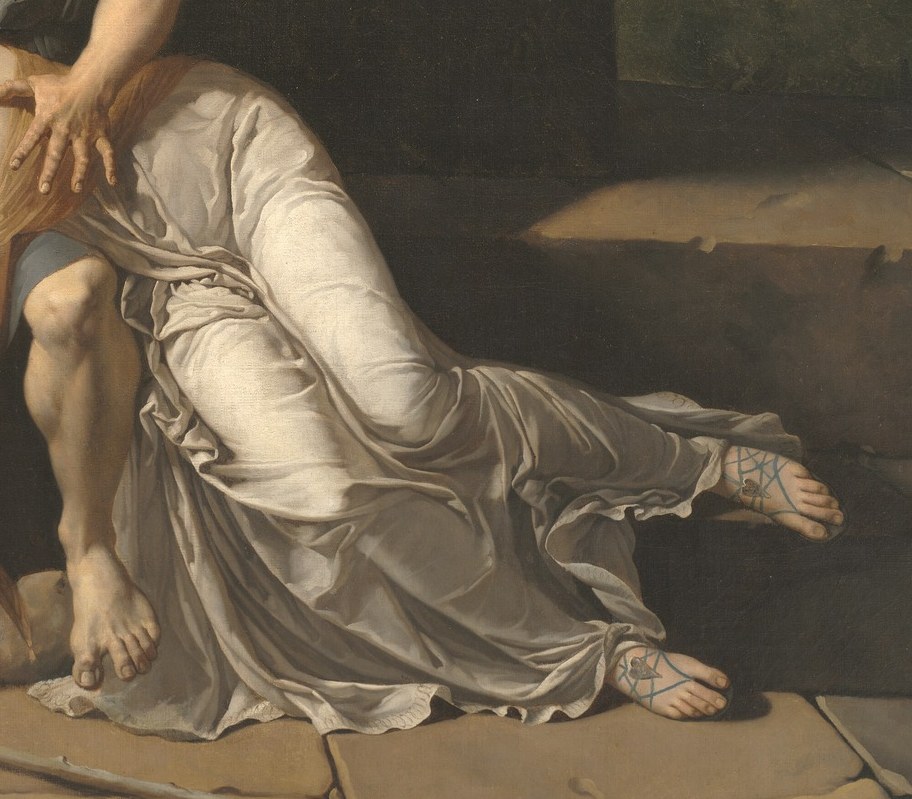
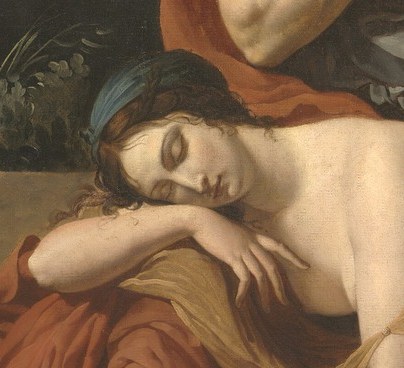
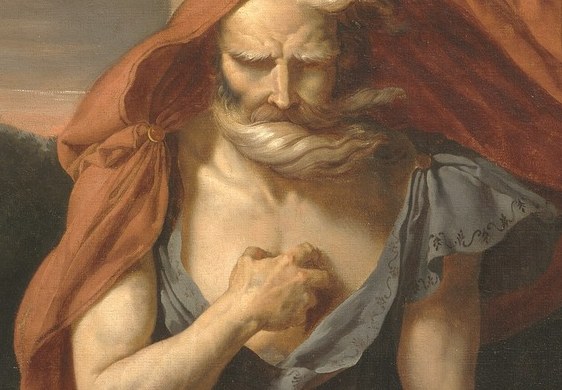
Here, we see Oedipus, the disgraced king, now blind and banished, supported by his devoted daughter, Antigone. Harriet powerfully conveys their bond and the weight of their fate through Oedipus's anguished expression and Antigone's protective stance. Every detail, from Oedipus's hand clutching his chest to Antigone's vulnerable bare foot, amplifies their distress.
Harriet, a French artist, masterfully uses a somber palette and dramatic composition to emphasize the emotional intensity. The massive stone wall and dark, cloudy sky further underscore the melancholic atmosphere, highlighting their isolation from the distant cityscape. It is a testament to enduring love amidst overwhelming sorrow.
What emotions does this powerful depiction stir in you?
Details
Transcript
This painting tells a story of exile and devotion. Oedipus, once king, is now blind and banished. His daughter, Antigone, guides him through the wilderness. She has become his eyes, his only support. Look at the pain etched on his face, a king fallen. His hand clutches his chest, bearing unbearable sorrow. This French artist painted the depth of their human tragedy.