The Artist's Dog Flèche by Toulouse-Lautrec, Henri de
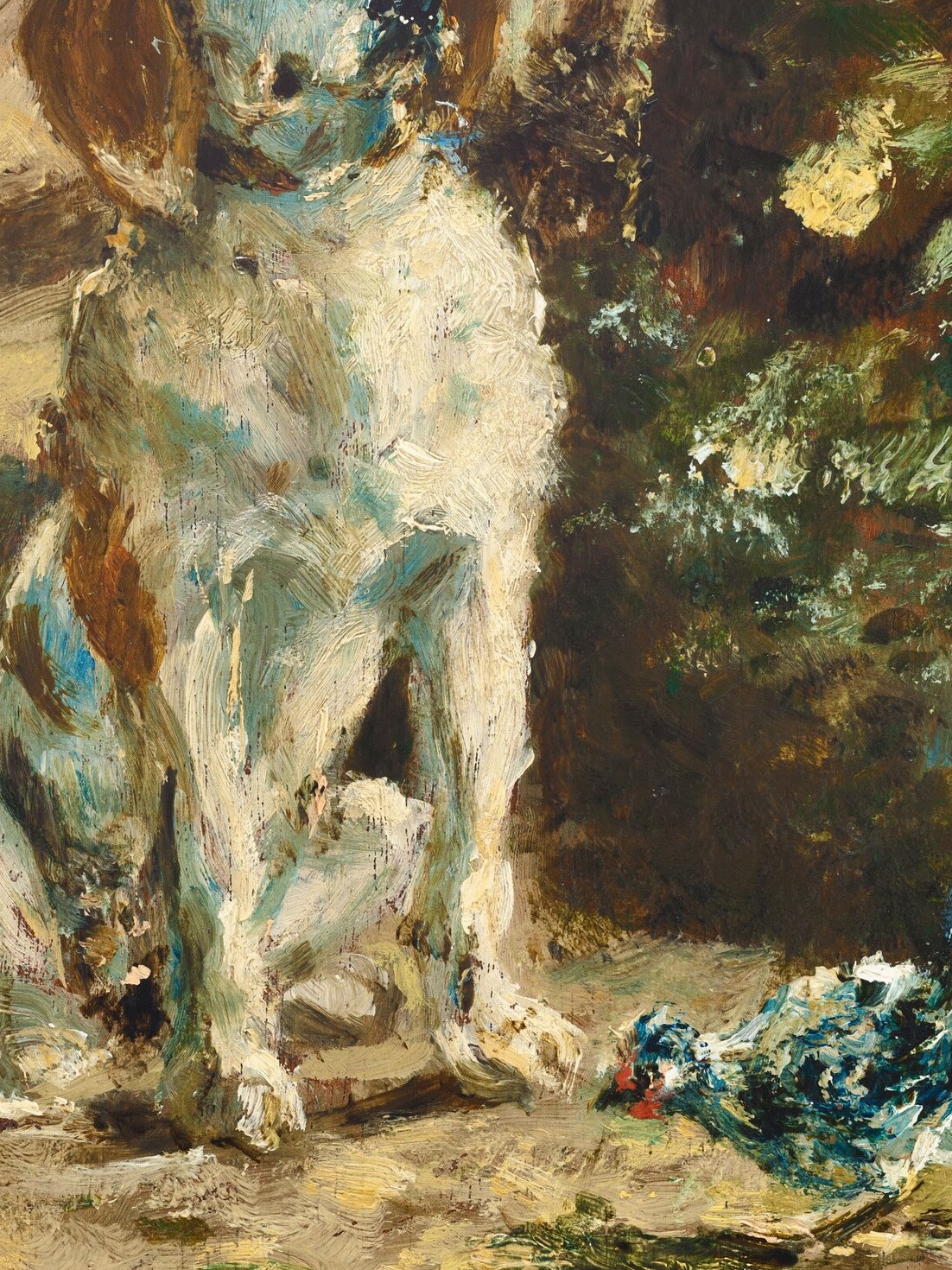
Henri de Toulouse-Lautrec, known for his vibrant depictions of Parisian nightlife, also created intimate portraits like "The Artist's Dog Flèche," painted around 1881. This oil on wood painting, held in a private collection, offers a glimpse into the artist's personal world.
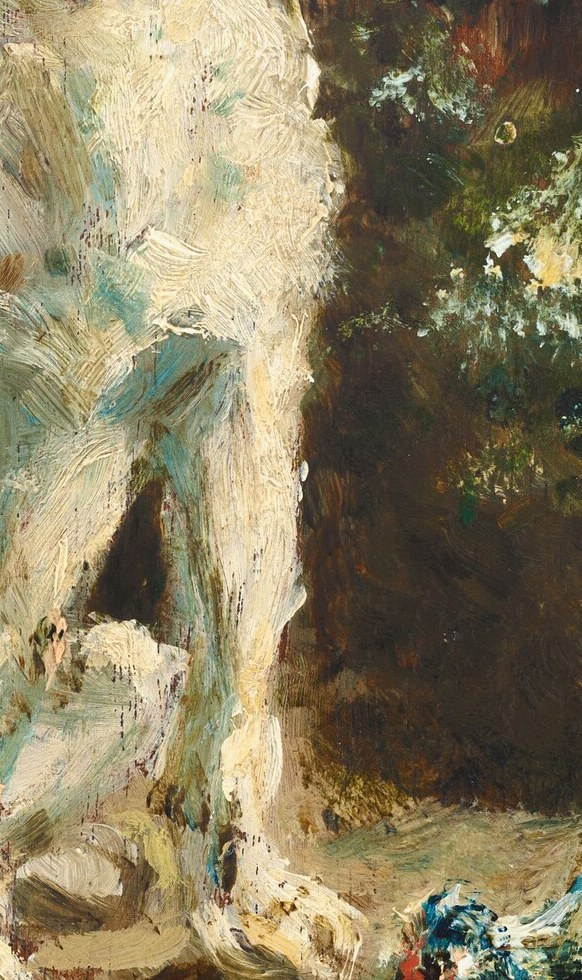
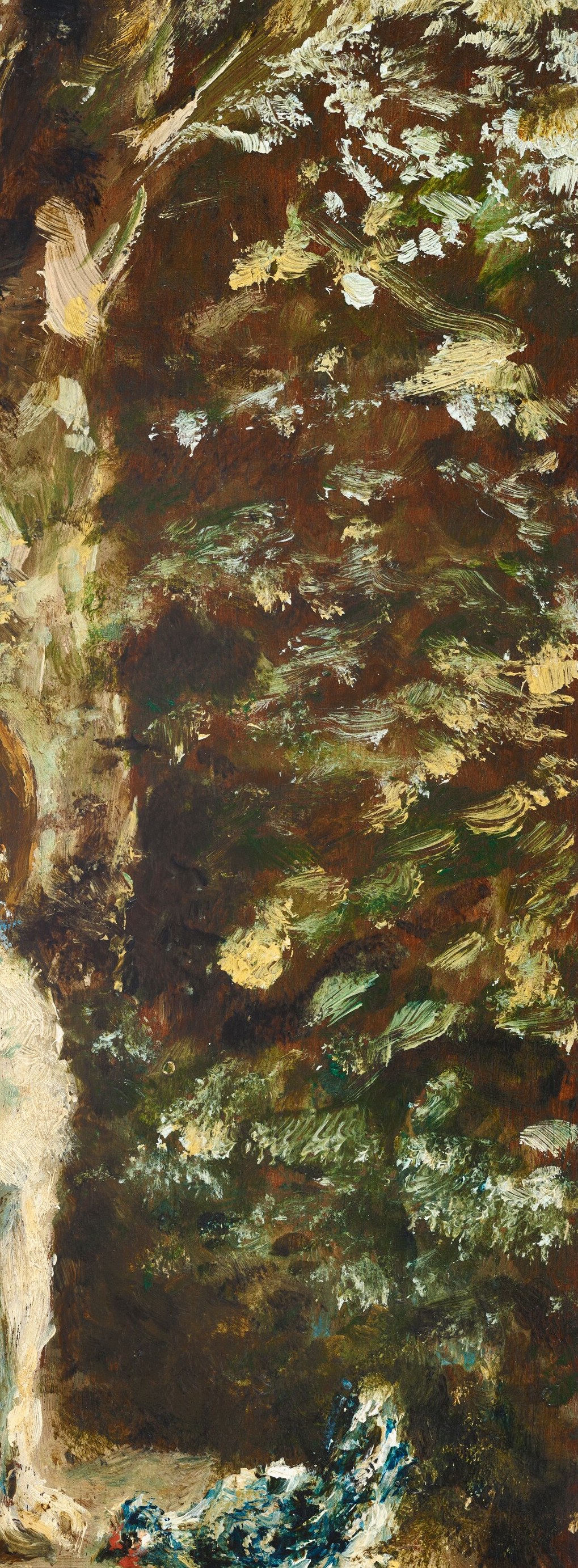
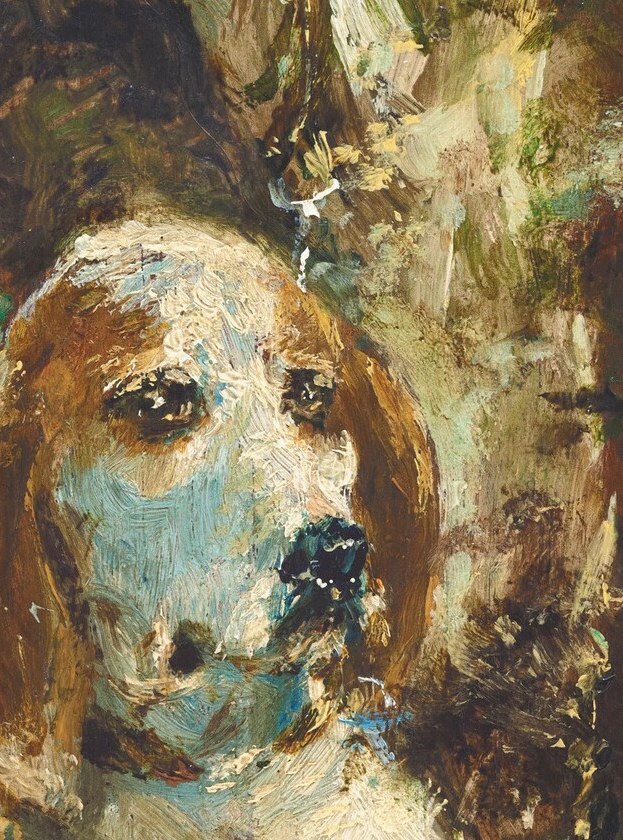
Look closely at the dog, Flèche. The painter used thick, textured brushwork, known as impasto, to create the illusion of soft, dapple-lit fur. The vibrant strokes make the light seem to dance across the dog's coat and the lush background foliage.
Toulouse-Lautrec, born into French aristocracy, developed his unique artistic voice after a childhood accident. While he became famous for capturing the bohemian life of Montmartre, this early work shows his range in portraying both human and animal subjects with remarkable detail and empathy.
It's a testament to his skill that a simple pet portrait can convey such lifelike texture and atmosphere.
Details
Transcript
This painter, famed for Parisian nightlife, also painted quiet moments. His own dog, Flèche, has a coat that looks touchable. See how light dapples his fur, almost vibrating. He built this illusion with thick dabs of paint. Even the background foliage shimmers with impasto strokes. Notice the small, dead bird, painted with similar vibrancy.