Landscape at Kortenhoef by Paul Joseph Constantin Gabriël
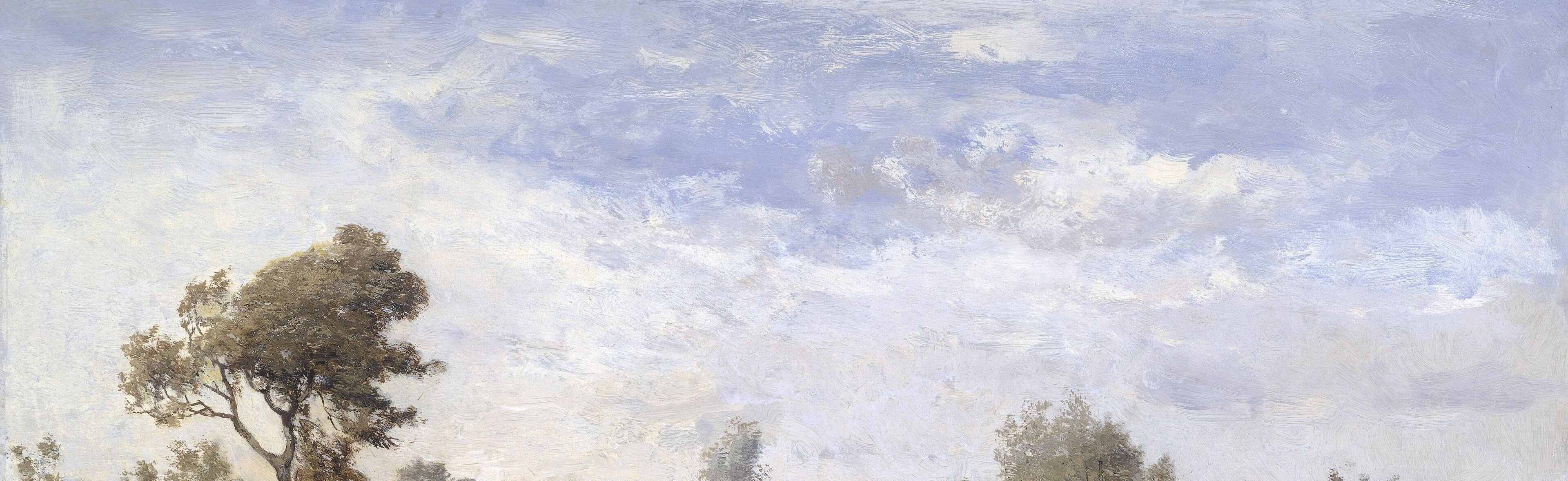
Paul Gabriël, a Dutch painter of the Hague School, was a master at capturing the subtle beauty of the Dutch landscape. In his 1889 oil painting, *Landscape at Kortenhoef*, now in the Rijksmuseum, he brings the tranquil scene to life with an astonishing rendering of water and light.
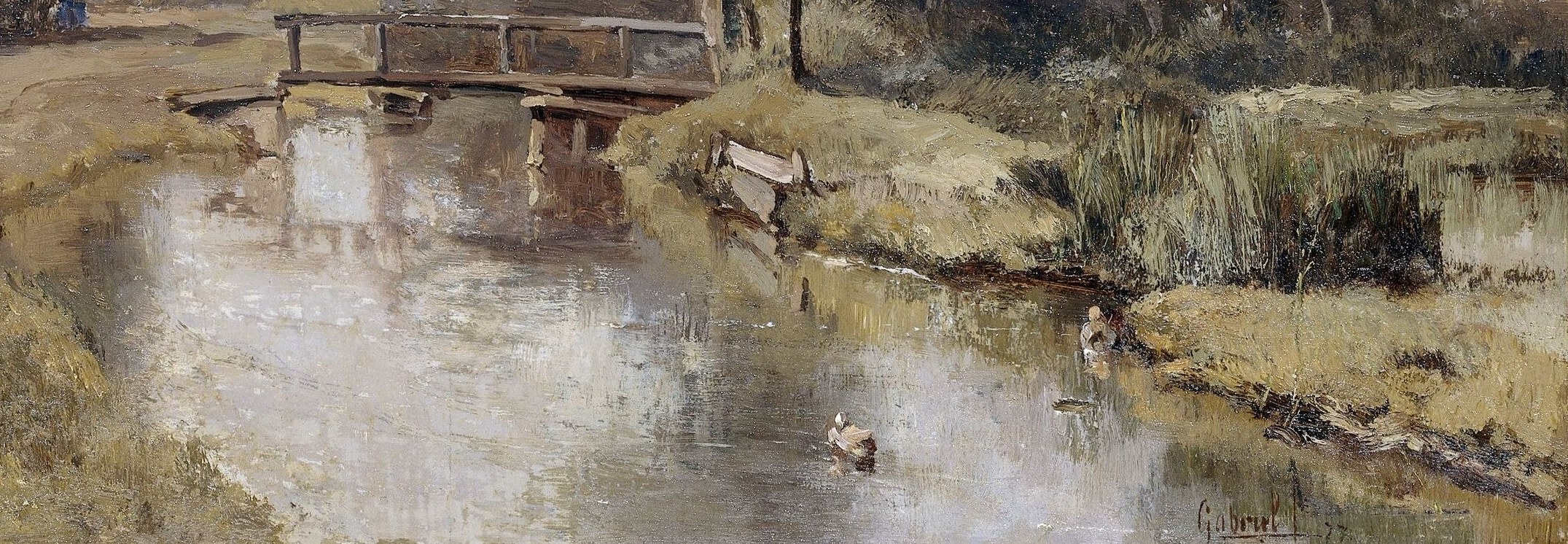
Observe the way Gabriël paints the river's surface. With loose, visible brushstrokes, he creates the illusion of shimmering reflections and gentle ripples, particularly around the two ducks swimming peacefully. The interplay of light and shadow on the water gives the scene an almost photographic quality.
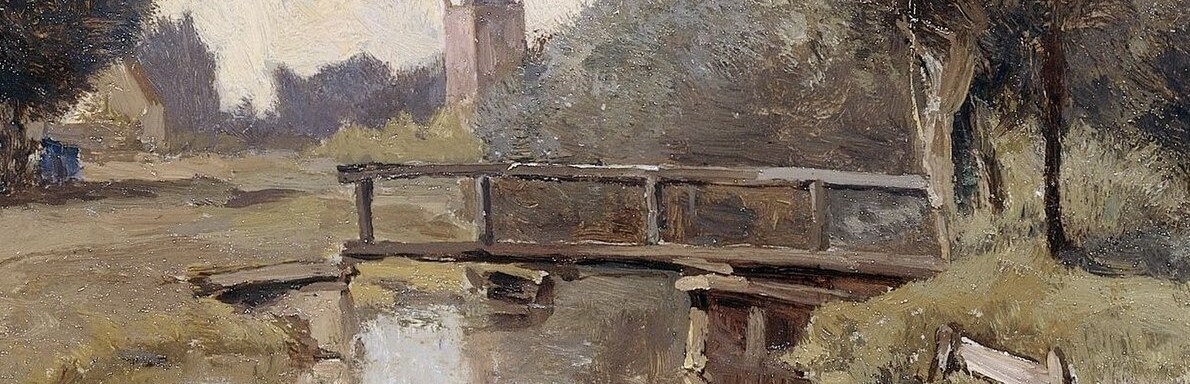
Gabriël's technique highlights the tactile elements of the natural world, inviting viewers to feel the dampness of the grass and the rustic texture of the wooden bridge. This painting is a testament to his ability to transform ordinary rural vistas into captivating works of art.
How does this mastery of light on water affect your perception of the entire landscape?
Details
Transcript
This painter was a master of water and light. He captures the quiet shimmer on the surface of the river. Notice the subtle ripple of the reflections. He used loose, visible brushstrokes to create this effect. A few strokes, and a duck appears to swim into the light. This is oil paint, made to look like liquid light.