Hornbæk Strand in the North of Sealand by Vilhelm Kyhn
Vilhelm Kyhn's Hornbæk Strand in the North of Sealand (1855) was a painting that dared to be different. The artist, a staunch traditionalist, found himself at odds with the emerging artistic trends of his time. This work, now in the Statens Museum for Kunst, represents his dedication to a more grounded, national romantic style.
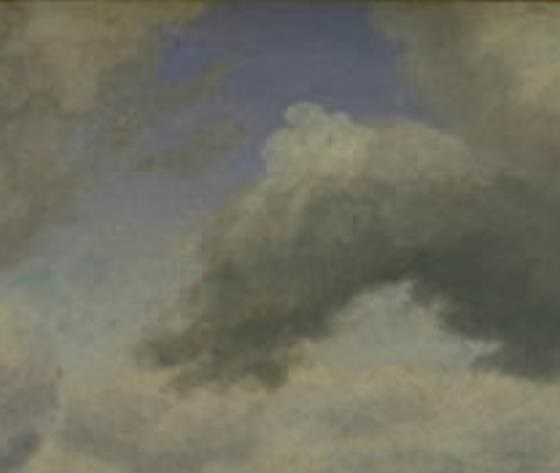
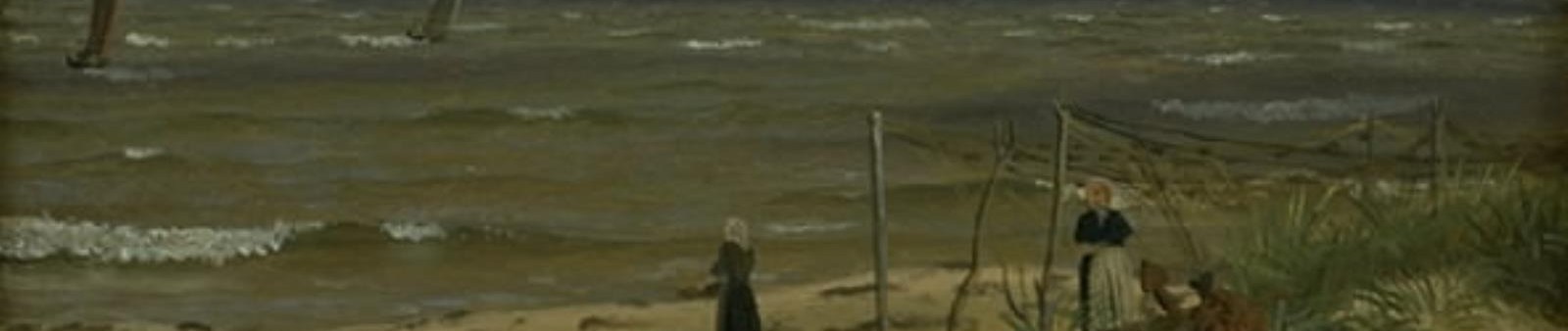
Observe the dramatic, brooding clouds that dominate the sky, a stark contrast to the calmer seascapes often favored. The solitary figure of a woman on the beach draws the viewer into a moment of quiet contemplation, her gaze seemingly lost in the vastness of the ocean. Kyhn's expressive brushwork, particularly in the rendering of the waves and sand, adds a palpable energy to the scene.
Despite its artistic merit, the painting was met with harsh criticism upon its debut. Kyhn's deliberate rejection of contemporary styles and his bold execution were seen by many as controversial, leading to outrage and even the ruin of his reputation among certain circles. The press famously decried it as a clumsy disaster, highlighting the artist's willingness to defy convention.
Kyhn's insistence on his own artistic vision, even in the face of public backlash, is a testament to his conviction. His legacy is not only in his paintings but also in his role as an educator, shaping future generations of Danish artists.
Details
Transcript
This sky looks like it means real trouble. A Danish painter made this in 1855. The artist, Vilhelm Kyhn, hated new trends. He rejected a popular new style of painting. Look at this woman standing alone. She seems to stare out at the rough sea. His bold brushstrokes looked too wild. The press called it a clumsy disaster.