Prisoners from the Front by Winslow Homer (American, 1836–1910)
View the artwork: Prisoners from the Front →
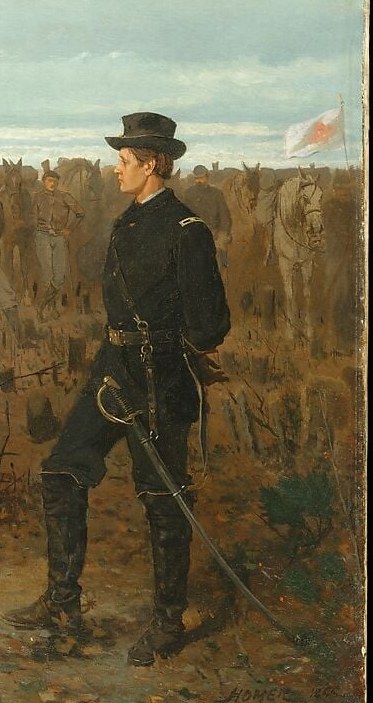
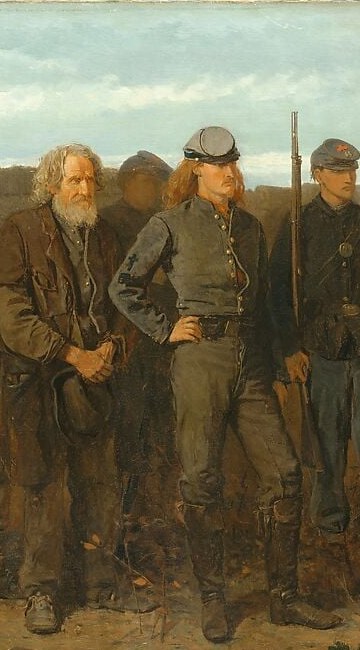
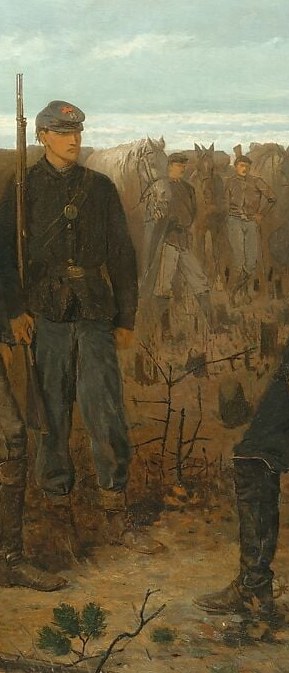
Winslow Homer painted "Prisoners from the Front" in 1866, one year after the Civil War ended. The painting shows a specific moment: Confederate officers surrendering to Union Brigadier General Francis Channing Barlow, likely near Petersburg, Virginia. Homer was not imagining this from a studio. He had spent the war as a correspondent-illustrator, sleeping in the field and drawing what he saw. The painting now hangs at the Metropolitan Museum of Art.
Look at the space between the General and the prisoners. There is no handshake, no signing of documents, no dramatic gesture of defeat. Homer left an empty gap of churned earth where a ritual exchange should be. The Confederate officer at center does not bow. His posture is erect, his face is unreadable, and his direct gaze was widely noted when the painting was first exhibited. The rawness of the moment is still there.
Homer completed this painting in the immediate aftermath of the war, when the official peace had been declared but the questions of reconciliation and punishment remained entirely unresolved. The barren landscape behind them, a low horizon of dirt and a flat grey sky, refuses to offer any divine light or moral framing. The war had burned the ground bare, and the painting declines to tell you what comes next.
This was the work that made Homer's artistic reputation. It toured to acclaim in 1867, not because it celebrated victory, but because it asked a question civilians were asking too: what do you do with an enemy who still believes in his cause?
#arthistory #winslowhomer #americancivilwar
Details
Transcript
The war was not yet over. But here, in the spring of 1865, the guns had gone quiet. A captured Confederate officer stands before his captor. His eyes hold the General's without yielding. The painter had been there, a war correspondent at the front. He knew this silence. No handshake. No sword. Just a question hanging in the space between.