Winter in the Country by Durrie, George Henry
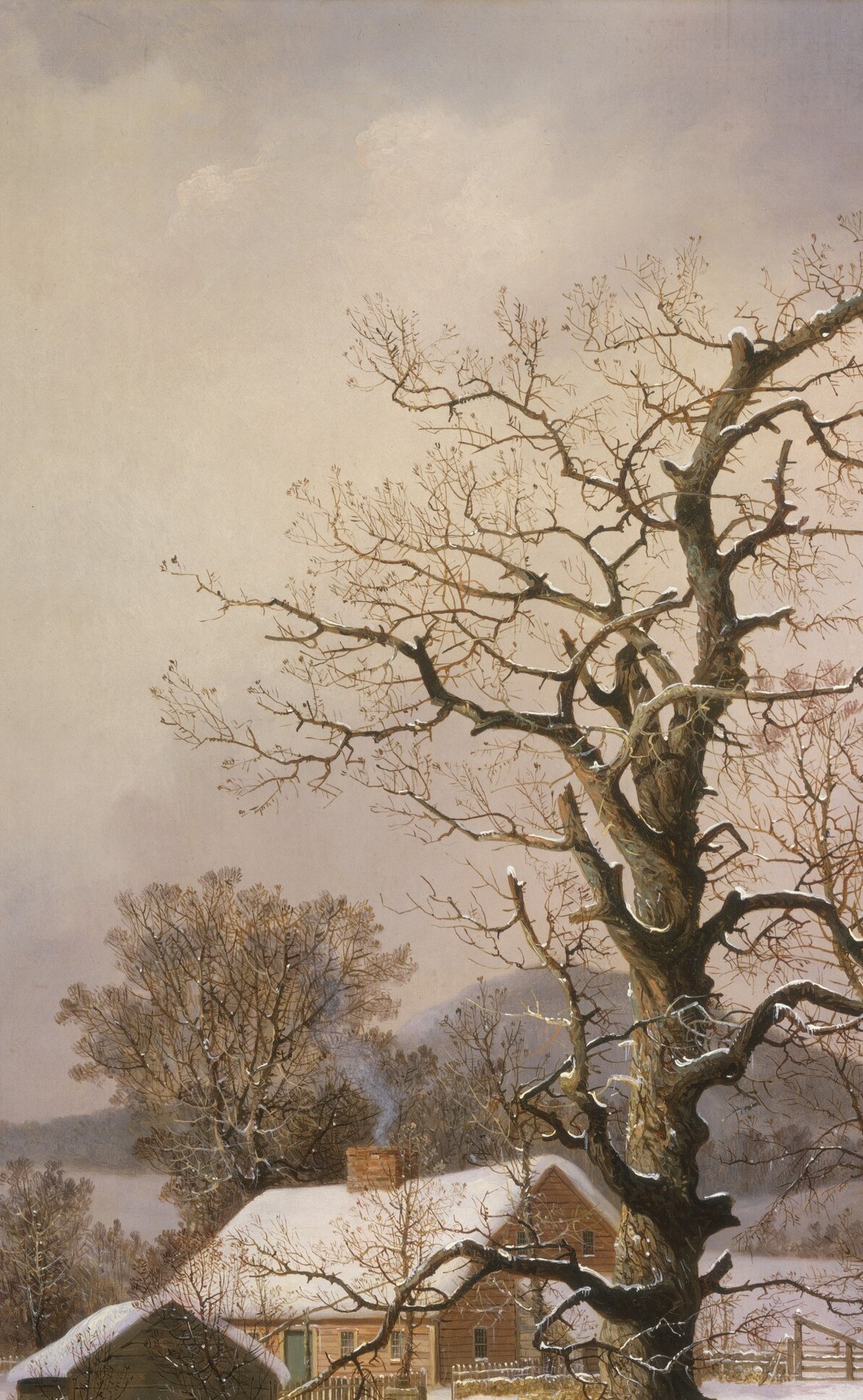
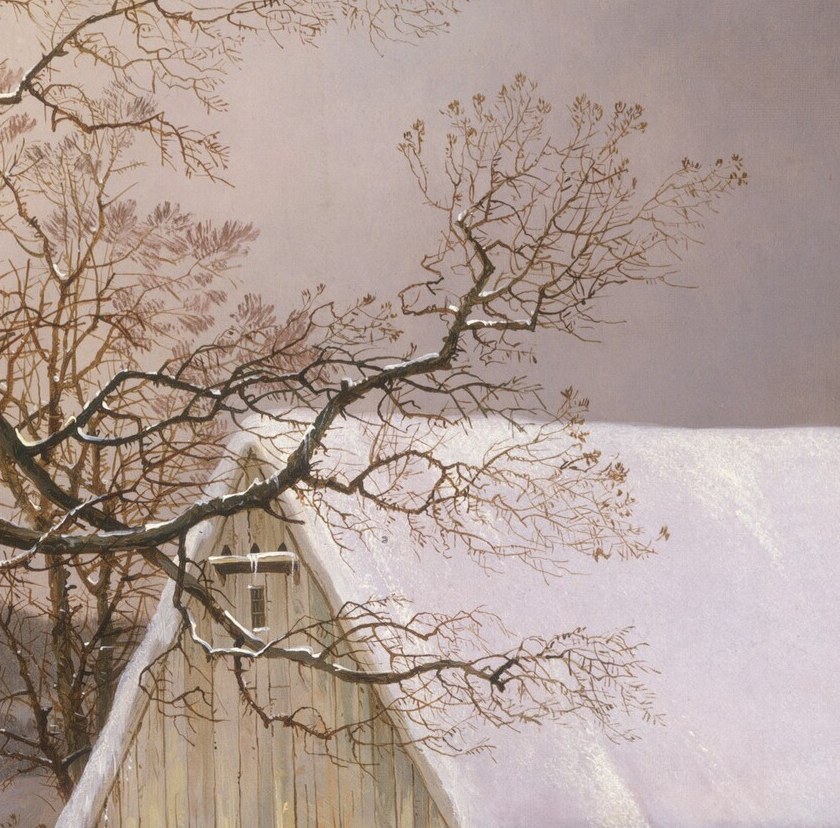
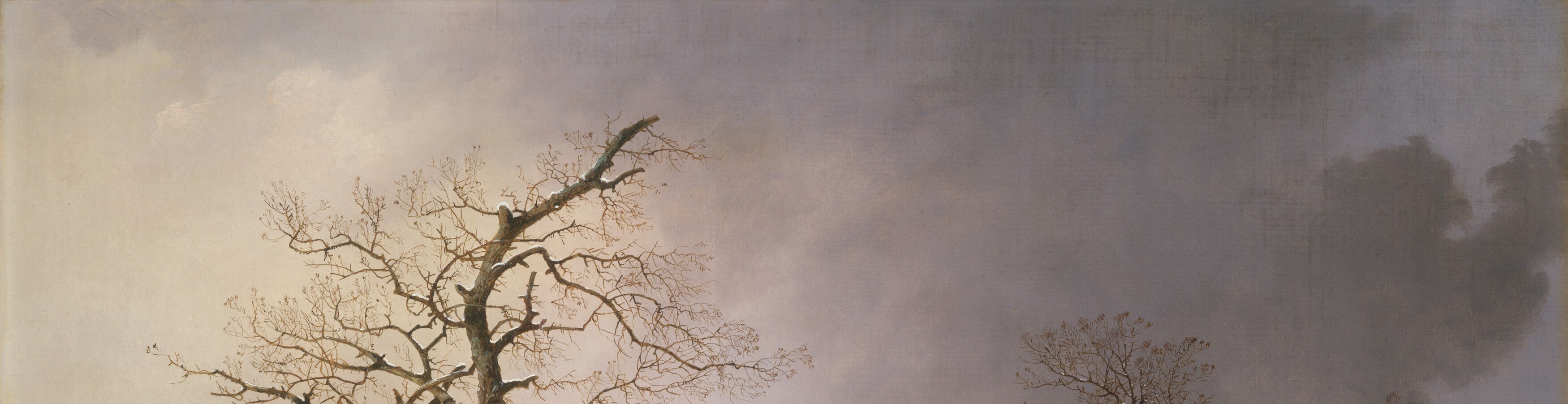
George Henry Durrie's 'Winter in the Country,' painted around 1859, is an oil on canvas that became an iconic representation of rural American winter. Despite its seemingly isolated setting, the painting holds a subtle detail that suggests a broader world beyond the snow-covered farm.
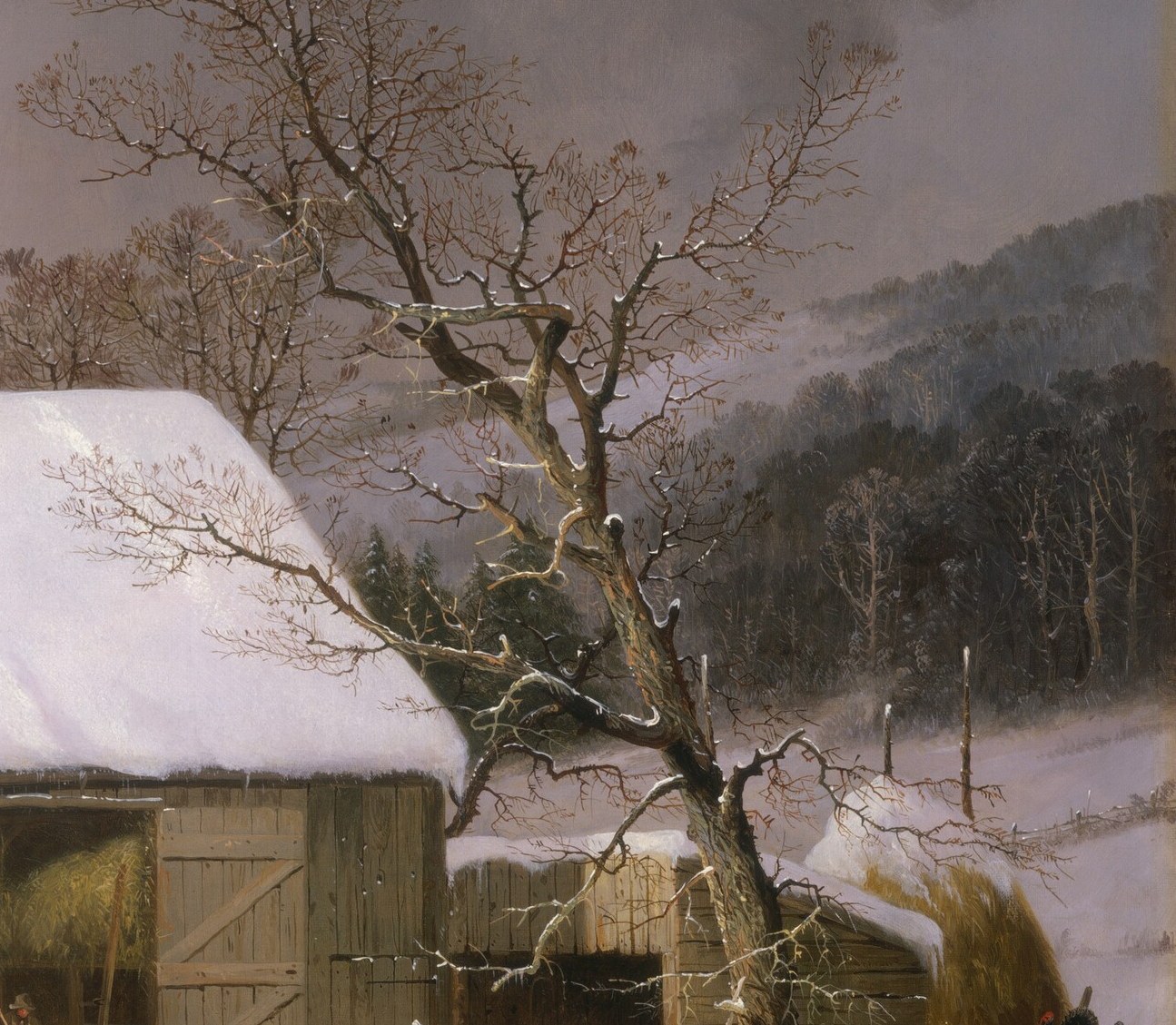
While the foreground features a solitary barn and a horse-drawn wagon, a closer look at the distant treeline reveals more. To the right, just barely discernible through the muted winter haze, stands another house and a tiny church steeple. This detail implies that the farm, rather than being completely alone, is part of a larger, unseen community.
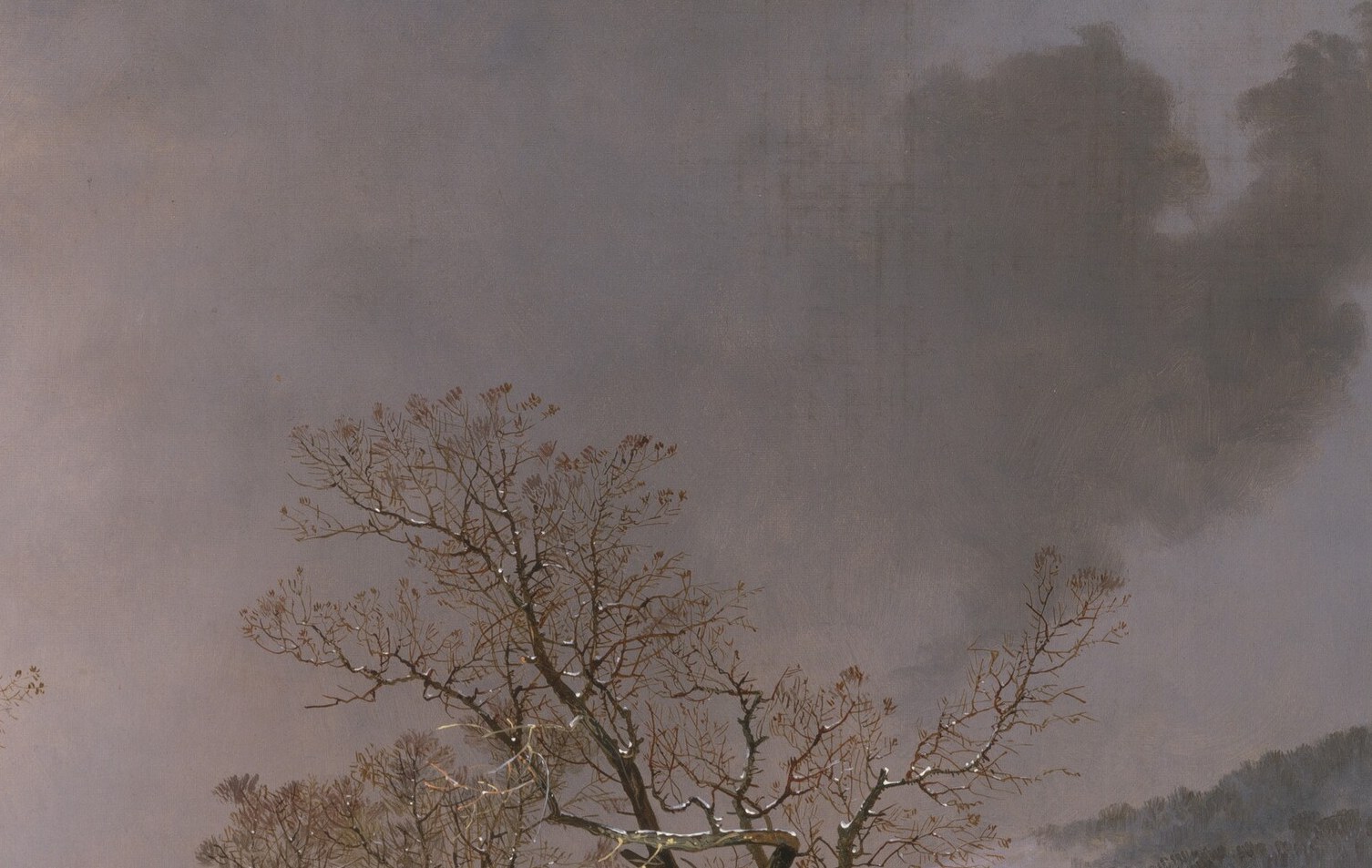
Durrie, an American artist active in New Haven, Connecticut, from 1820 to 1863, was renowned for his serene winter landscapes. His meticulous rendering of snow, bare trees, and atmospheric light created a profound sense of quietude characteristic of his work.
What other hidden details do you think might be waiting to be discovered in the quiet corners of art?
Details
Transcript
This peaceful winter scene became a classic American image. The artist, George Henry Durrie, specialized in winter landscapes. Look closely at the barn's open, shadowed doorway. There's an empty wagon, but no sign of life anywhere. But look at the distant background, to the right. Barely visible: another house, and a tiny church steeple. This isolated farm is part of a larger, unseen community.