Pompeian Scene by Lawrence Alma-Tadema
Lawrence Alma-Tadema's 'Pompeian Scene' (1868) invites us into a tranquil Roman interior, filled with classical details and quiet contemplation. The Dutch-born artist, who later settled in London, was renowned for his meticulous depictions of ancient life.
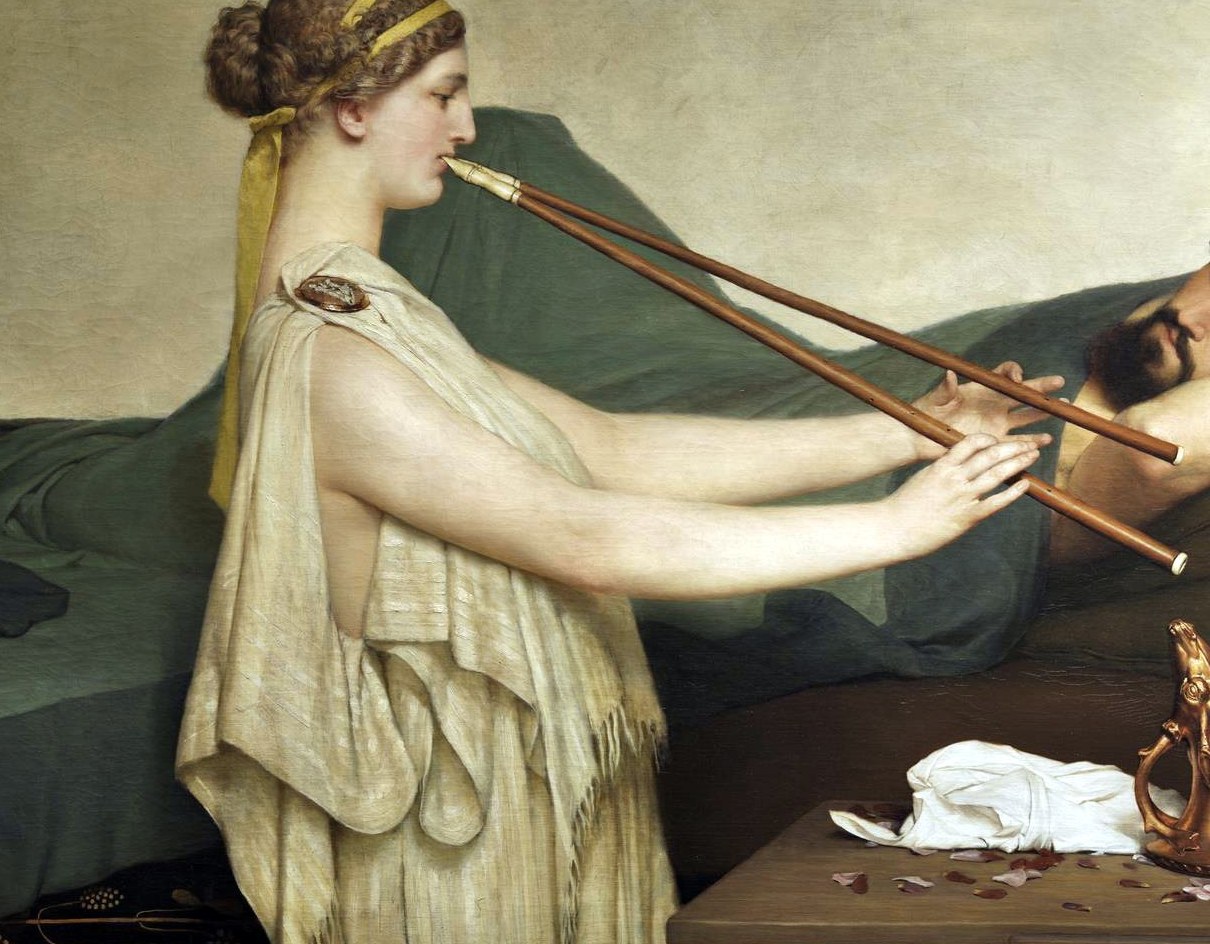
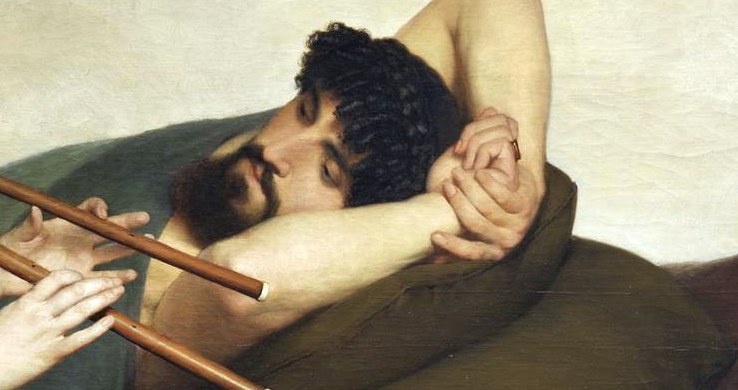
Look closely at the three figures: a woman engrossed in playing her flute, a man reclining in serene repose, and an older man lost in thought. Their varied expressions offer a window into different human states within the same peaceful setting. The careful rendering of objects, from the golden cup to the Venus de' Medici statue, highlights Alma-Tadema's dedication to historical accuracy.
Created before Alma-Tadema moved to London, this painting shows his early fascination with classical themes that would define his celebrated career. It's now held in the collection of the Museo del Prado.
What do you imagine each figure is thinking in this quiet scene?
Details

Transcript
A moment of quiet leisure in ancient Rome. This painter was obsessed with Roman life and detail. A woman plays a flute, lost in the music. Her delicate hands reveal a musician's skill. The reclining man rests, perhaps lulled by the sound. But the older man holds his head, deep in thought. This painting captures three very different inner worlds.