Sculptor's Studio by Louis Moeller
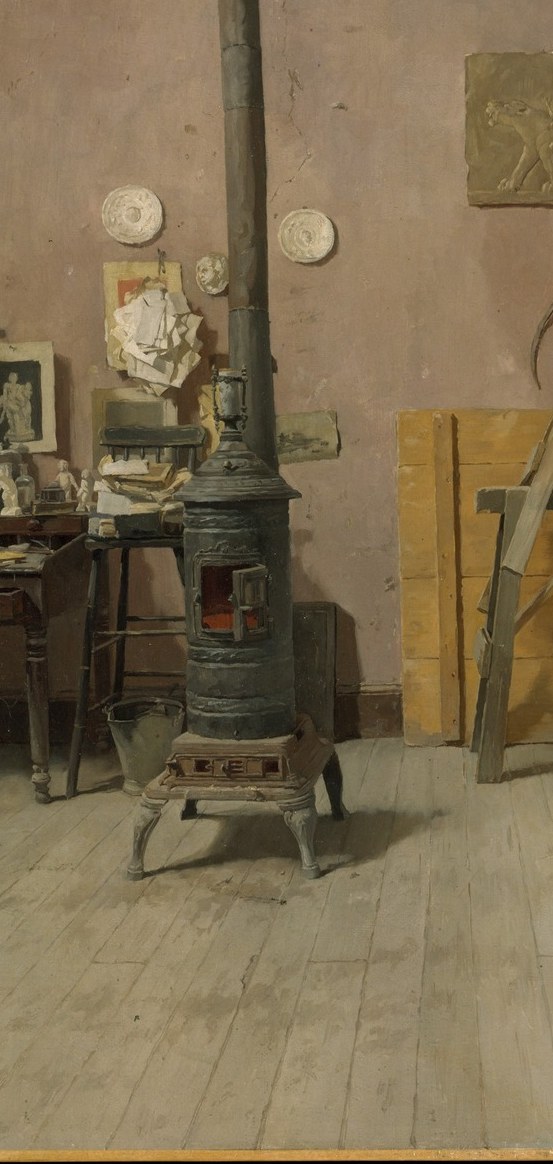
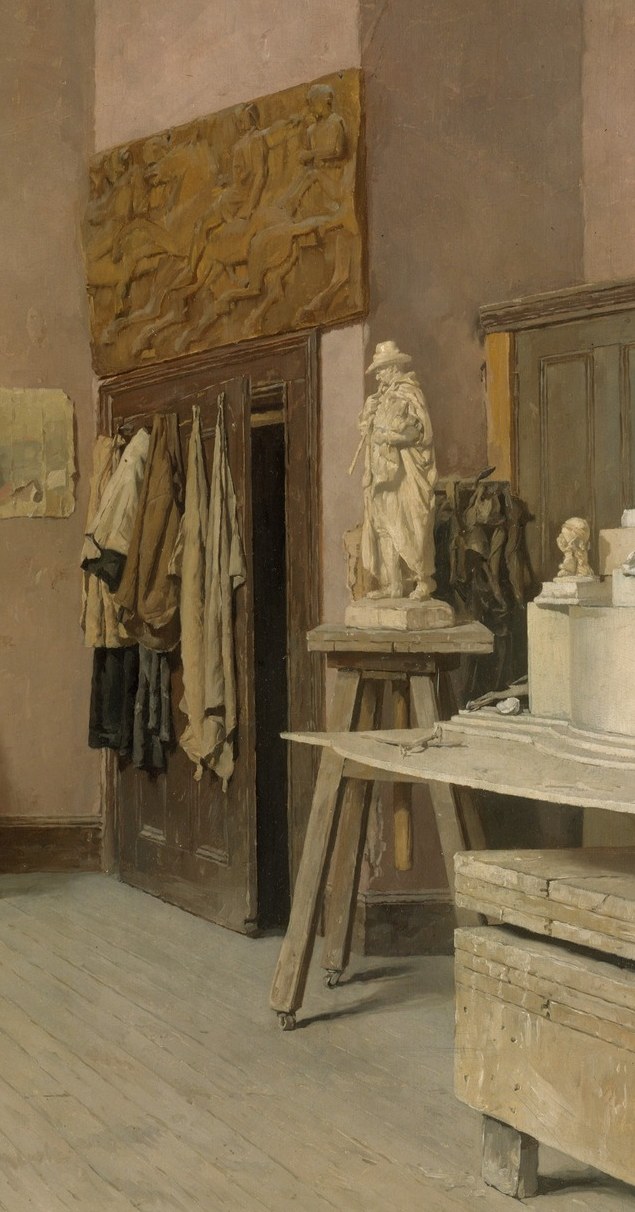
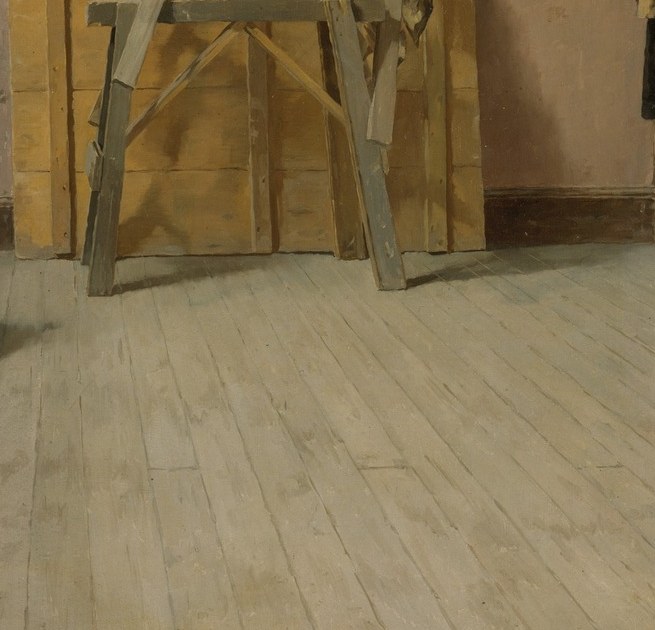
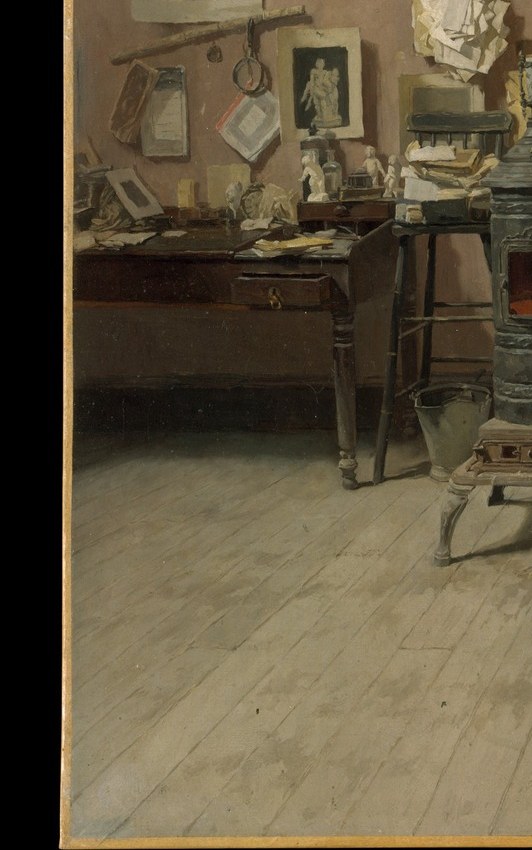
Louis Moeller's 'Sculptor's Studio,' painted around 1885 and held at the Metropolitan Museum of Art, is a quiet masterclass in surface texture. Moeller takes a single ambient light source and uses it to define four completely different materials: black cast iron, luminous plaster, absorbent draped cloth, and dry scattered dust.
Watch how he builds the plaster figure on the right. It is never just white. He mixes warm gray, cool gray, faint green, and a touch of pink into the shadows so the form glows softly without a single hard outline. The black stove on the left is the opposite trick, an object defined only by the thin brown highlights tracing its edges.
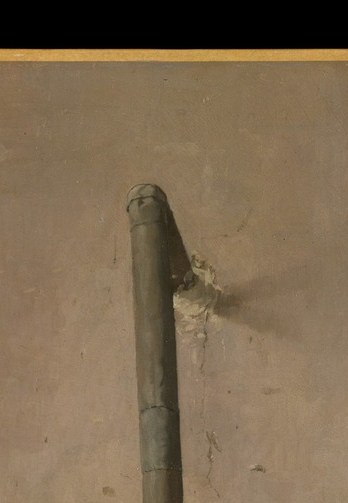
Moeller was a New York-born genre painter who trained in Munich and made his career on small, meticulous interiors. His father was a decorative painter, and the son inherited an almost obsessive attention to the way light falls across a lived-in room. This studio is not grand; it is a real working space with debris on the floor and a stovepipe running to the ceiling, the kind of place where an artist might spend decades.
Every surface in this room asks for a different brush. The cloth in the foreground absorbs light softly; the wood of the worktable reflects it with a dull gleam; the plaster dust on the floor scatters it into near-abstraction. Next time you see a white sculpture in a painting, look into the shadows, you will find a whole palette hiding there.
Details
Transcript
Inside a 19th-century sculptor's working studio. The stove is a solid black void, just brown highlights where the light hits. Now look at the plaster figure. It glows without a hard edge. Not white paint. Warm gray, cool gray, a little green, a little pink. And the cloth. A completely different texture, soft and absorbent. Moeller was a genre painter obsessed with humble interiors and quiet craft. He gets four textures from nothing but careful tonal shifts in the same low light.