Trees and Houses Near the Jas de Bouffan by Paul Cézanne
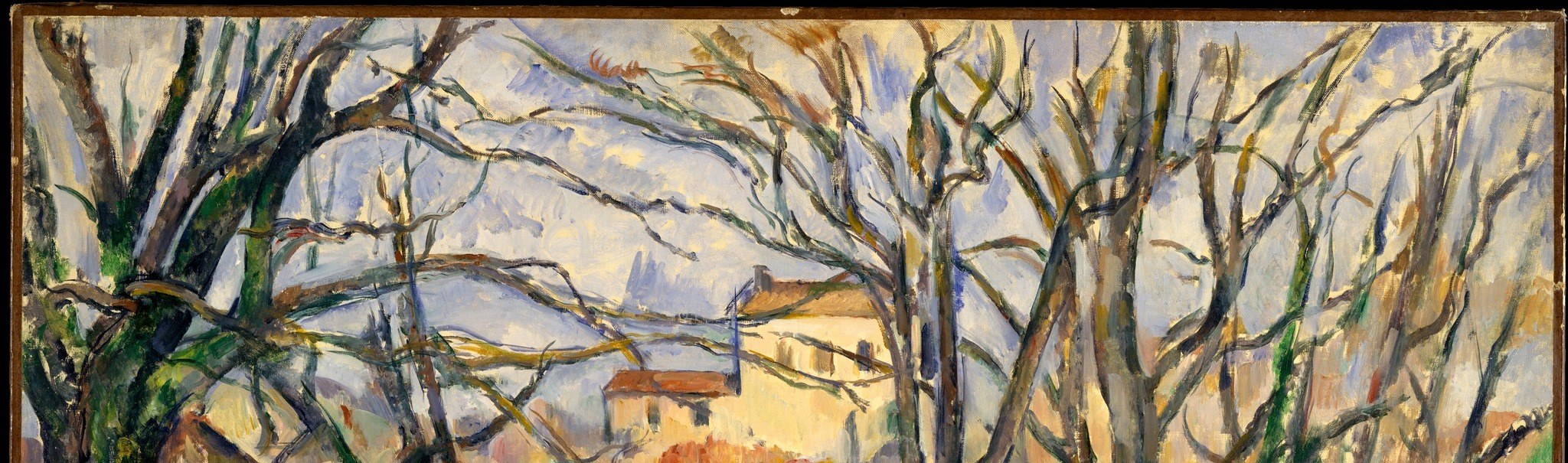
This is the real Jas de Bouffan, the estate Cézanne's father bought near Aix-en-Provence, painted in the winter of 1893. Trees and Houses Near the Jas de Bouffan sits today at The Metropolitan Museum of Art.
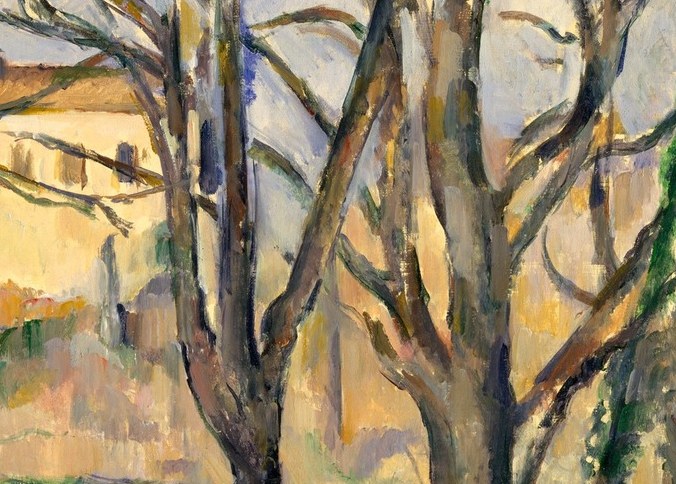
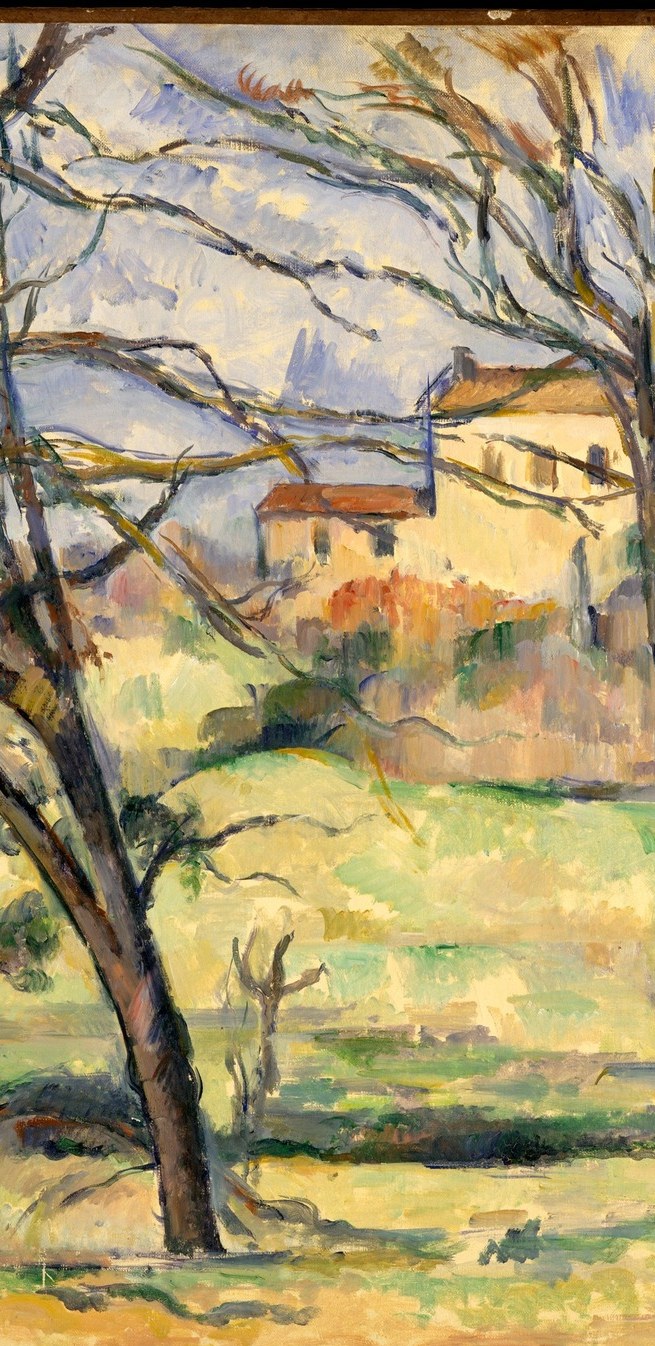
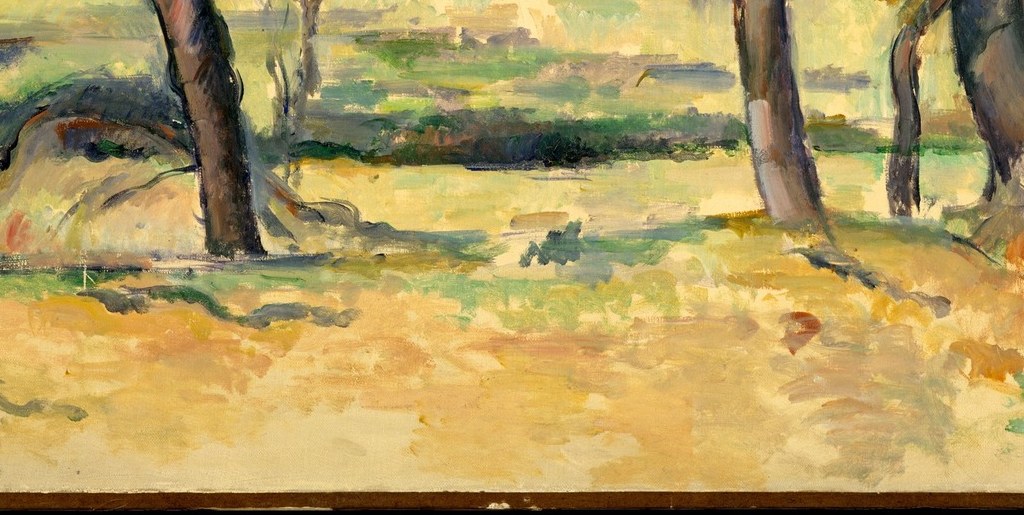
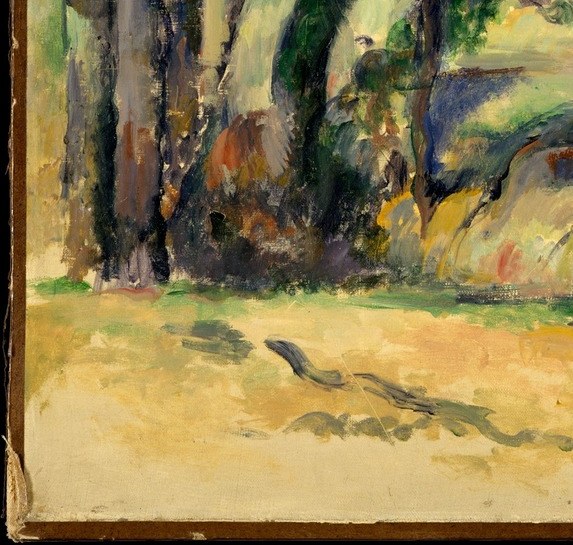
Look at the foreground earth first. Those parallel diagonal strokes, ochre, orange, olive, are his constructive touch laid bare. The shadow in the bottom-left corner contains no black at all, only layered blues, greens, and brown. Move up through the bare trunks and watch how he turns the branch canopy into a fractured mosaic of pale grey-blue sky.
The estate was Cézanne's refuge and his laboratory. His father, a successful banker, had bought it in 1859, and Paul would paint its grounds, its chestnut alleys, and its ochre-walled farmhouse again and again for decades, in every season, under every light. By 1893, he had withdrawn from Paris and was working almost entirely alone in Provence, developing the structural language that would reach the next generation of painters.
Within a dozen years, Braque and Picasso would look at passages exactly like the faceted earth in this foreground and push the idea further. Trees and Houses is not a postcard. It is a foundation document.
Details
Transcript
Winter, 1893. The Jas de Bouffan estate near Aix-en-Provence. Cézanne was 54 and working alone on his father's land. Look through the bare branches, at how the house sits. He used the trees as a screen, a lattice of line and sky. Every brushstroke is visible. He's not hiding the work. He laid ochre, olive, and blue into the shadows, never black. In twelve years, painters in Paris would cubify the world, starting here.