Equestrian Portrait of the Duke of Lerma by Peter Paul Rubens
This is the Equestrian Portrait of the Duke of Lerma, painted by Peter Paul Rubens in 1603 and now housed at the Museo del Prado in Madrid. Rubens created this dynamic portrait during his first visit to Spain, seeking to impress the powerful Valido, Francisco Gómez de Sandoval, Duke of Lerma. The painting served as a crucial step in establishing Rubens's reputation at the Spanish court.
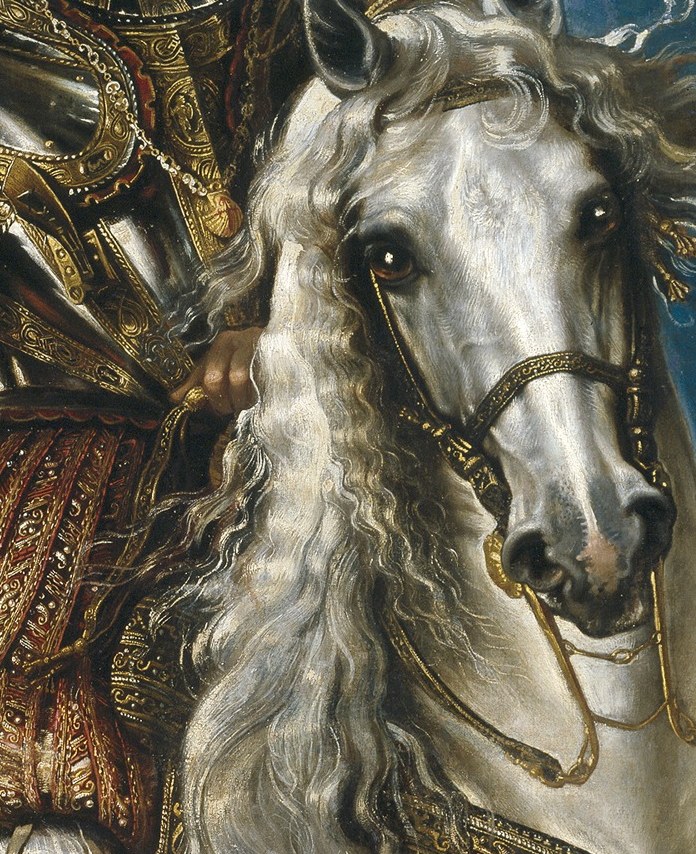
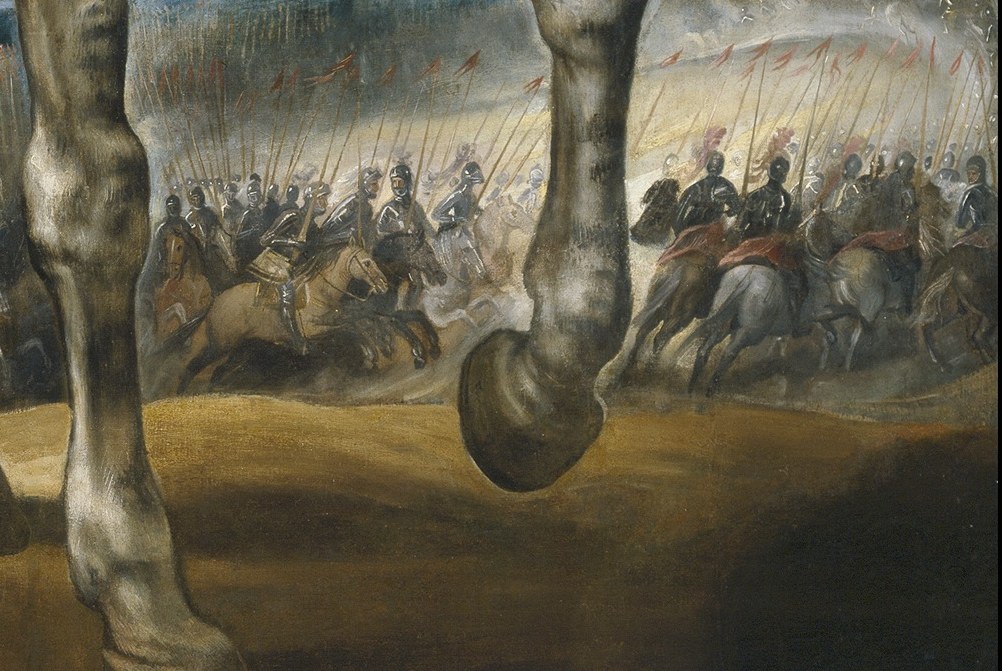
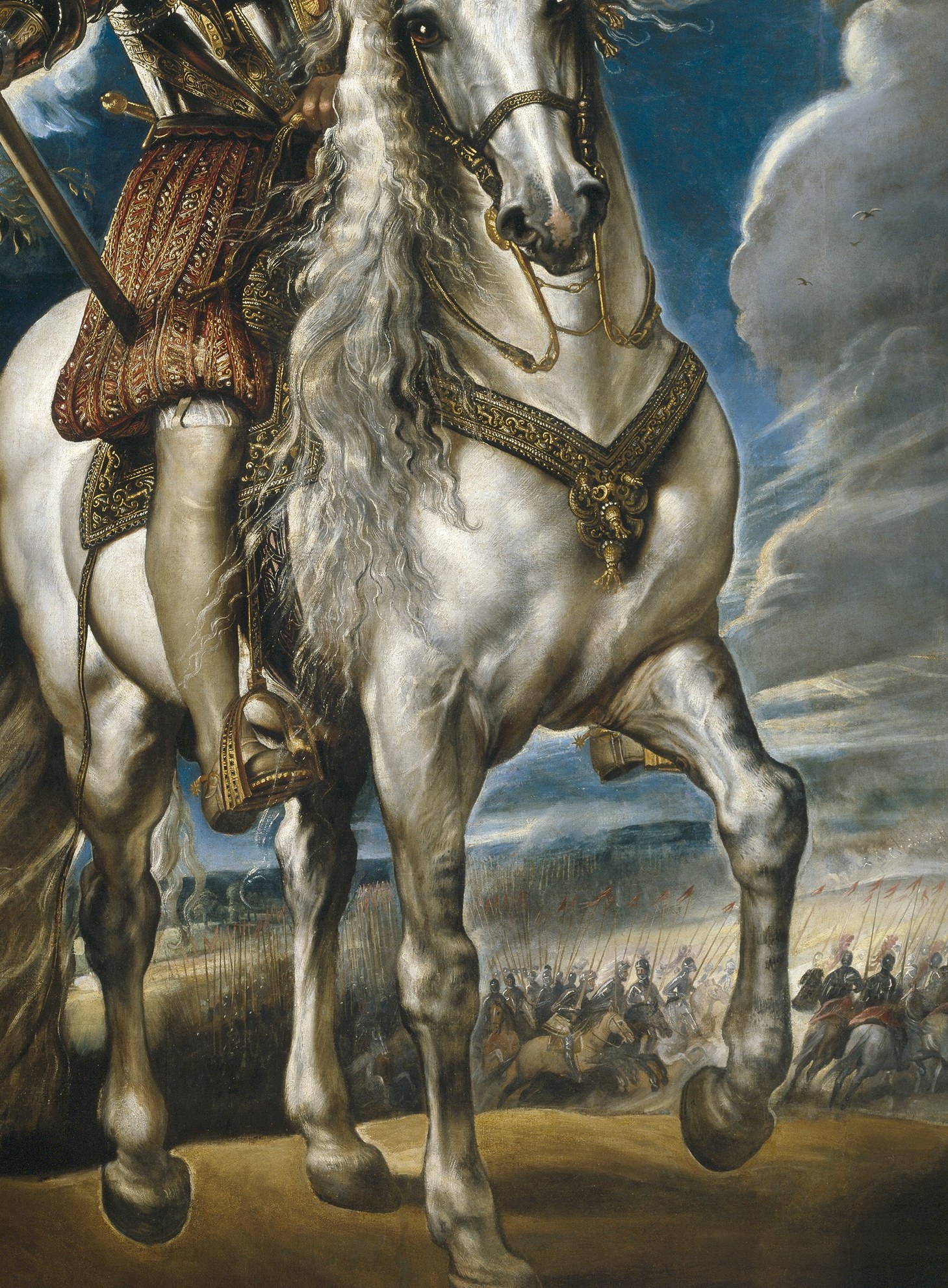
Observe the Duke himself, confidently seated on a rearing white horse. He is clad in gleaming armor and wears a vibrant red sash, both signifying his high rank and military command. He firmly grasps a commander's baton, a clear symbol of his authority. The background offers a glimpse of a distant battlefield, hinting at the Duke's influence and the turbulent political landscape of the era.
Rubens consciously adapted the grand tradition of imperial equestrian portraiture, particularly drawing inspiration from Titian's famous portrait of Charles V. This commission was a pivotal moment for Rubens, showcasing his mastery of the Baroque style and his ability to capture both the power and the prestige of his sitter. The painting's success significantly boosted Rubens's career, leading to further commissions and solidifying his status as a leading artist.
This portrait is a masterful display of power, status, and artistic ambition. How do you think the dynamic pose of the horse and rider contributes to the overall impression of authority?
Details
Transcript
This is Francisco Gómez de Sandoval, Duke of Lerma. He was the powerful minister of King Philip III. His ornate armor signals his military status. Rubens painted this in 1603, his first trip to Spain. The Duke holds a commander's baton for authority. Rubens adapted a Titian format for the Duke's rise. A distant battlefield shows the Duke's influence. This painting made Rubens famous at the Spanish court.