Seated Virgin and Child by http://www.wikidata.org/.well-known/genid/4b80d693c44234c214cee772484cb775
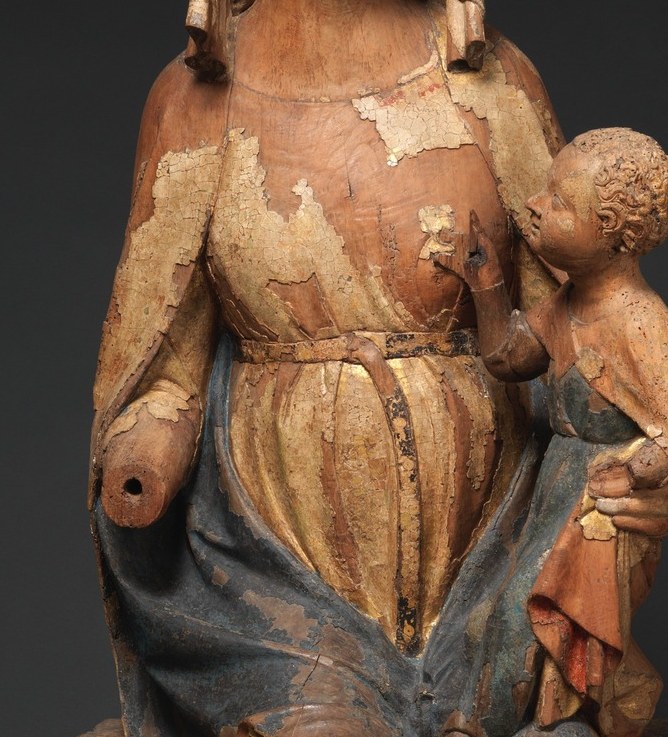
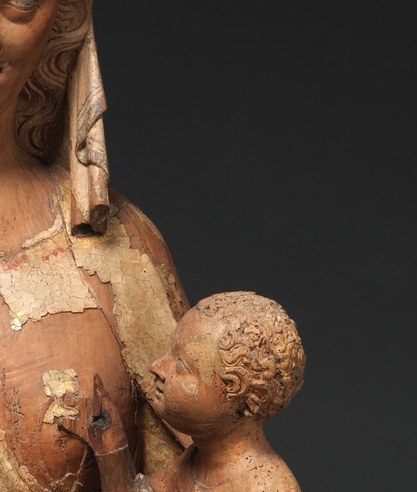
A medieval sculpture bricked into a wall and forgotten. That's the likely story of the "Seated Virgin and Child," an anonymous work from around 1300 that carries the physical scars of survival.
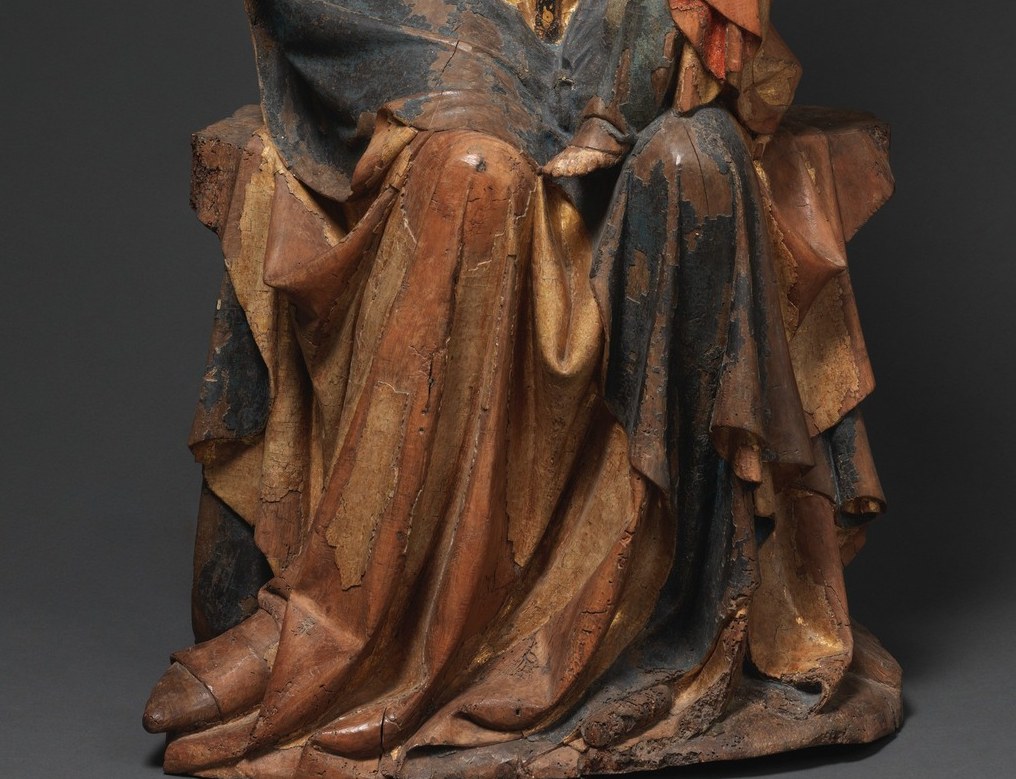
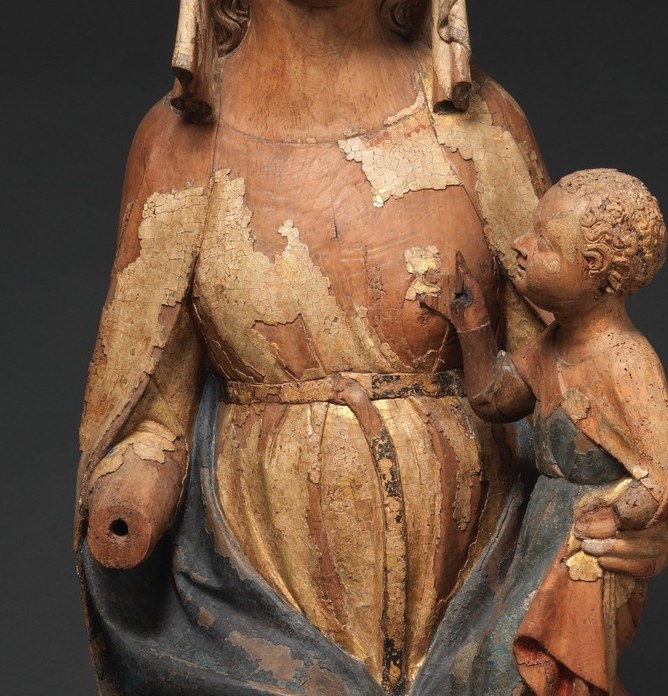
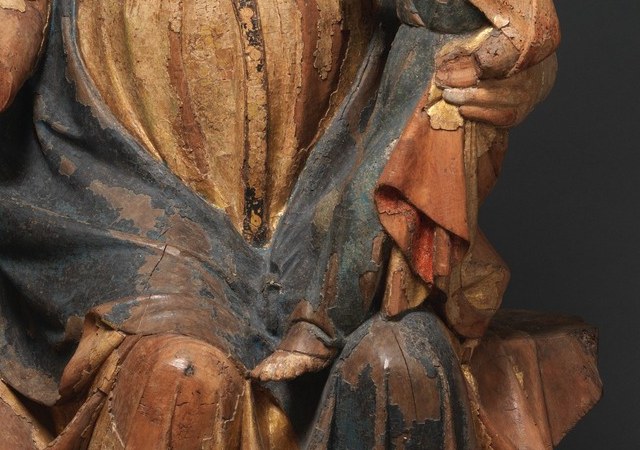
Look closely at the carved channels of her robe. The brown patina isn't original. The sculpture would have blazed with color: gold leaf halos and a deep blue mantle made from ground lapis lazuli, a pigment once reserved for the most sacred subjects. You can still see traces of it sheltering in the deepest folds.
The serene faces belong to the Italo-Byzantine tradition, but the generous volume of the drapery hints at the softening influence of the early Gothic. The Christ Child's gaze, turned outward toward the viewer, was a deliberate theological statement, this wasn't just a mother holding her child, but an address to the worshipper.
The work's survival is likely tied to the iconoclasm of the Reformation, when such objects were often hidden in walls to escape destruction. What we see now is a map of endurance. To someone who merely glimpsed the cracks, she was ruined. To us, she is an unquiet, vivid witness.
Details
Transcript
You're looking at a fugitive. For centuries, this sculpture was hidden inside a wall. Look at the cracks. They're not just age. Severe humidity cycles. Plaster. Centuries of burial. The true shock is hiding in the crevices. Ultramarine blue and gold leaf. Ground from lapis lazuli, worth more than gold. Hidden away during the Reformation to save it from destruction. Under her hands, a child who survived the silence.