Virgin and Child by Bartolo di Fredi
Bartolo di Fredi's "Virgin and Child," painted around 1450, is a beautiful example of early Renaissance devotional art, now housed at the Rijksmuseum.
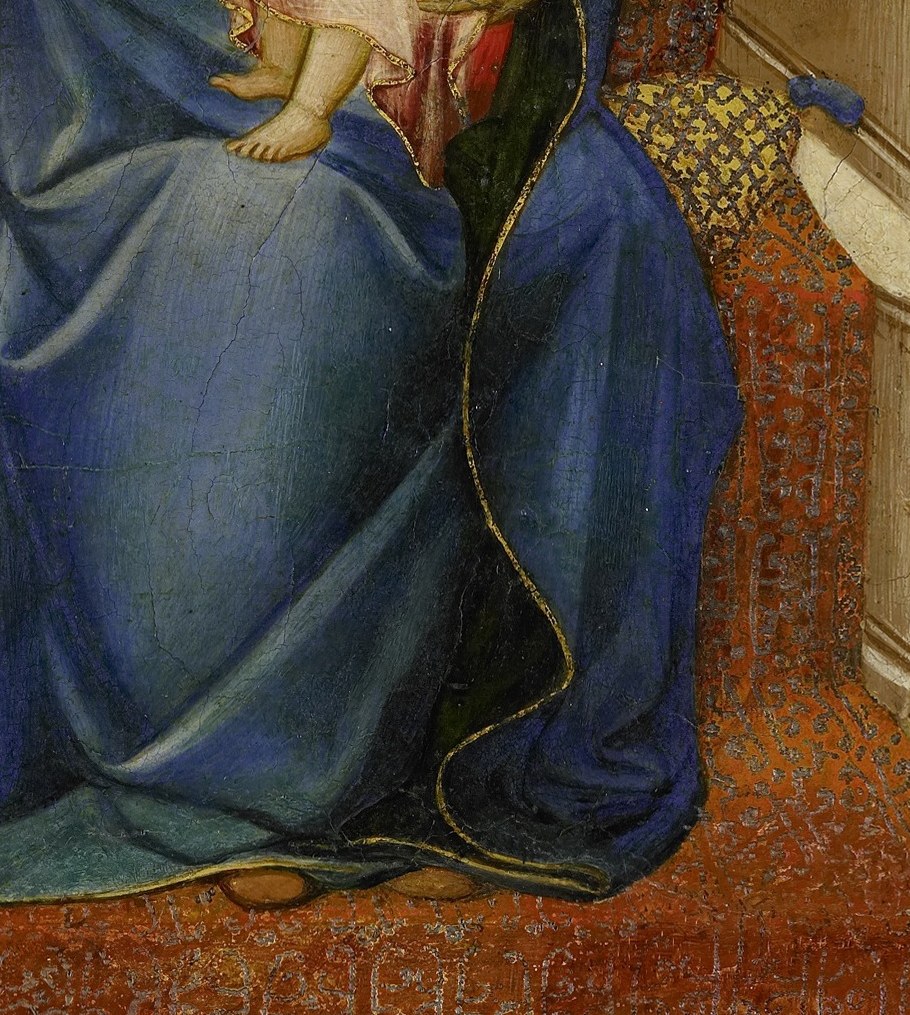
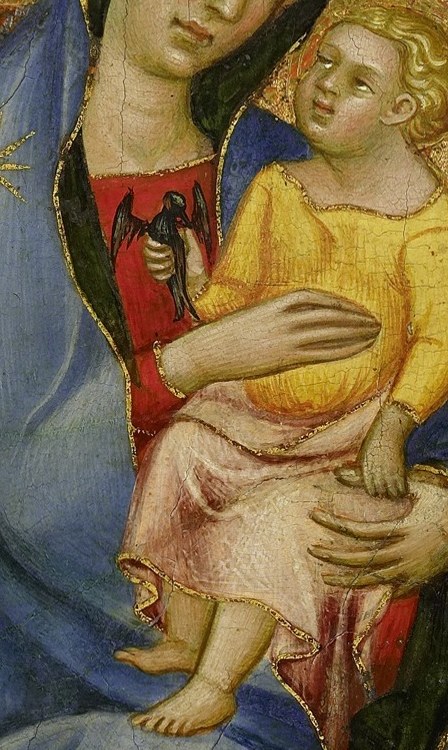
This tempera panel, typical of the Sienese School, depicts the Virgin Mary tenderly cradling the Christ Child. Notice the delicate way her hand supports him and his small hand reaching out, a gesture full of meaning. Both figures are adorned with luminous halos, emphasizing their sanctity, while the rich brocade of the throne and ornate carpet establish a regal, sacred atmosphere.
Created for private contemplation, this painting would have offered solace and inspiration to its original owner. Bartolo di Fredi, a prominent Sienese painter, used traditional egg-tempera, a medium known for its vibrant, flat colors, before oil painting became widespread. The work reflects the deep religious sentiment of 15th-century Italy.
What emotions does this intimate portrayal evoke in you?
Details
Transcript
This painting, from 1450, was made for private prayer. The painter used tempera, a traditional method before oils. See how the Virgin's hand gently cradles the Christ Child. His hand reaches out, a blessing or a request. Both figures have halos, marking their divine status. The intricate throne and carpet create a sacred setting. It was meant to inspire contemplation in viewers then, as now.