A Yahua Village by Catlin, George
George Catlin, a lawyer-turned-artist, dedicated his career to documenting Native American life, fearing these cultures were vanishing. This painting, "A Yahua Village," created between 1854 and 1869, is an oil on card mounted on paperboard, and is housed in a museum collection.
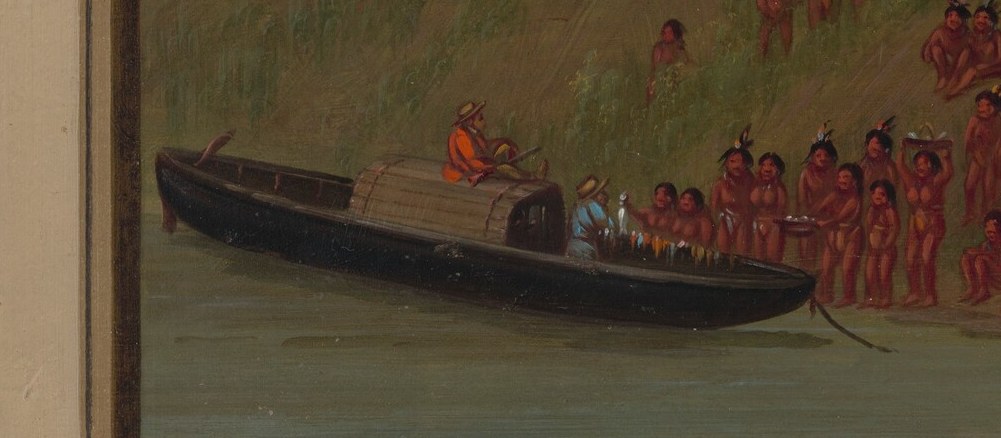
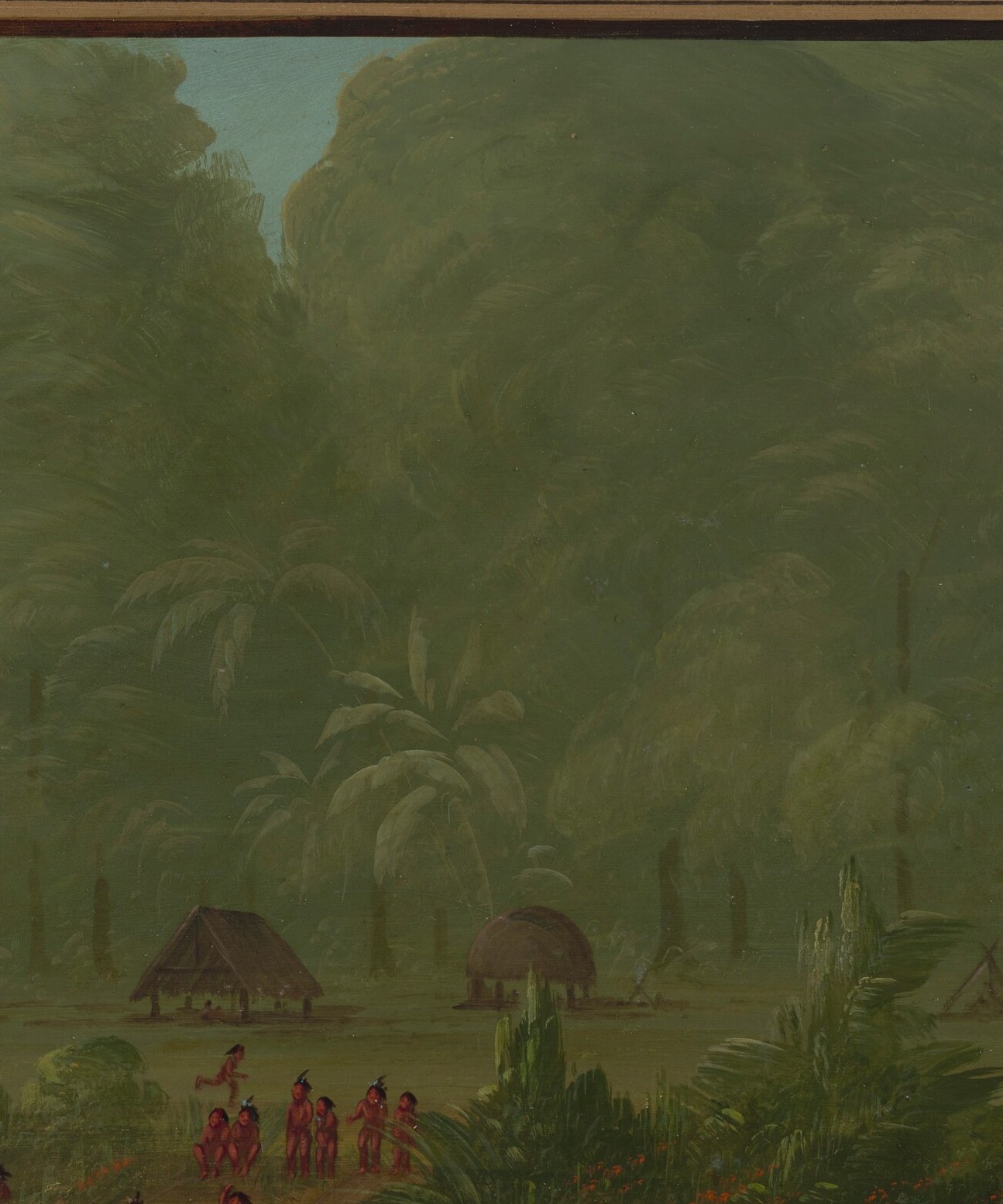
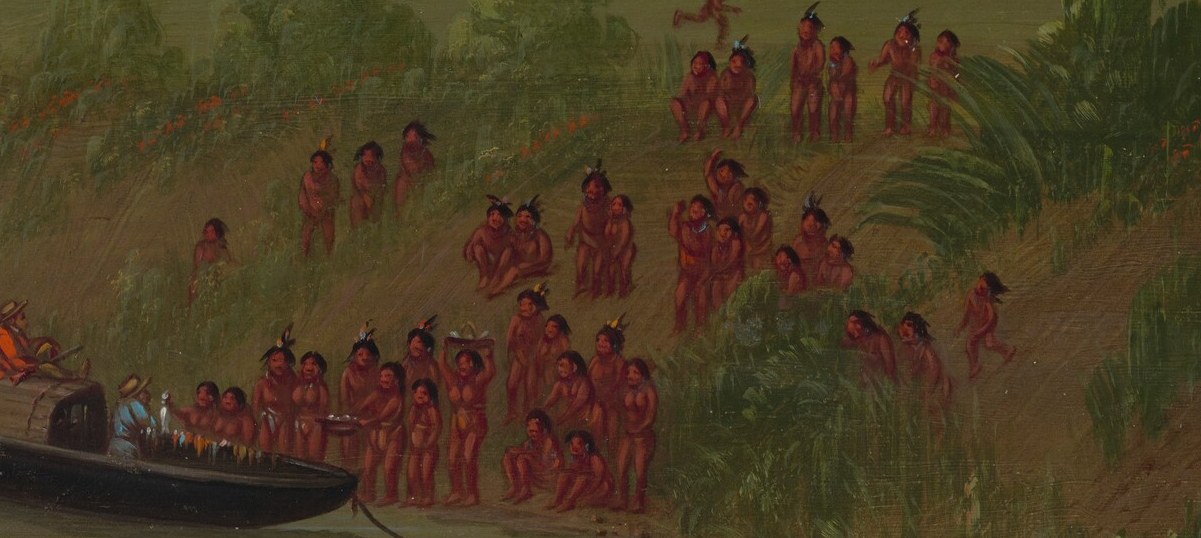
Observe the central tree, a visual anchor for the village scene, with figures and dwellings arranged around it. The rich vegetation and distant palm trees set a tropical backdrop, emphasizing the integration of culture and landscape.
Catlin traveled extensively through the American West in the 1830s, producing a vast body of work. His mid-19th century style, characterized by flat areas of color and clear delineation, aimed for a documentary quality. This piece reflects his sustained commitment to portraying indigenous communities during a period of rapid territorial expansion.
What details in the painting help tell the story of this community?
Details

Transcript
This American lawyer became an artist to save a culture. He traveled the American West, painting Native American life. This painting, A Yahua Village, reflects his later work. Notice the central tree, anchoring the community. His goal was to visually record cultures he feared were vanishing. Look closely at the figures on the river bank.