Untitled by Dong Qichang
Dong Qichang's Untitled (1611) is an ink-on-satin handscroll that rarely appears in public collections. Painted by a man who was simultaneously the most powerful art theorist, calligrapher, and political figure of late Ming China, the work is less a picture of a place than a diagram of an idea.
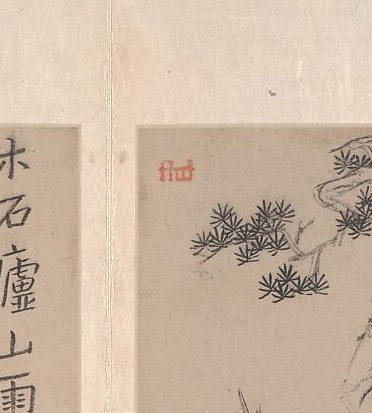
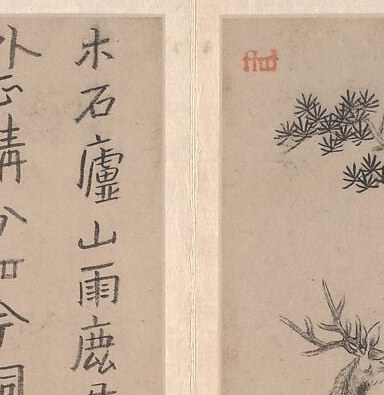
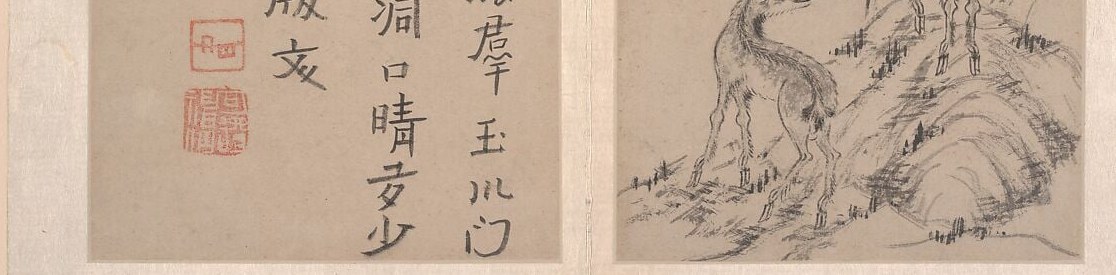
Look at the texture strokes on the mountain faces. Those are cun, a vocabulary of marks Dong Qichang lifted from Tang and Song dynasty masters who lived 800 years before him. He believed that every stroke should carry a lineage, and he built his landscapes as collages of quotations. The bare satin is equally deliberate: what looks empty is water, what looks like sky is a conceptual void that lets the mountains breathe.
Dong Qichang served in the Ming court, survived political purges, and spent his final years writing the theory that would organize all of Chinese painting into Northern and Southern Schools. He placed himself, naturally, at the head of the Southern line. This scroll was painted in that late period, when his brush was at its most confident and his ideas most settled.
A painting that looks like a gentle misty landscape turns out to be a deeply intellectual argument about what art should be. What does it change, knowing the mountains are a conversation and not a view?
Details
Transcript
This mountain is not a real mountain. Painted in 1611, by a man who shaped how China saw art. Look closer at the strokes. Every line is a quotation from a Tang dynasty master, 800 years older. Dong Qichang was painting a theory. He called it the Southern School. The bare satin is not empty. It is water, sky, breath. A single pavilion sits at the base, barely visible. Nature was never the subject. The mind of the artist was.