Tama, the Japanese Dog by Manet, Edouard
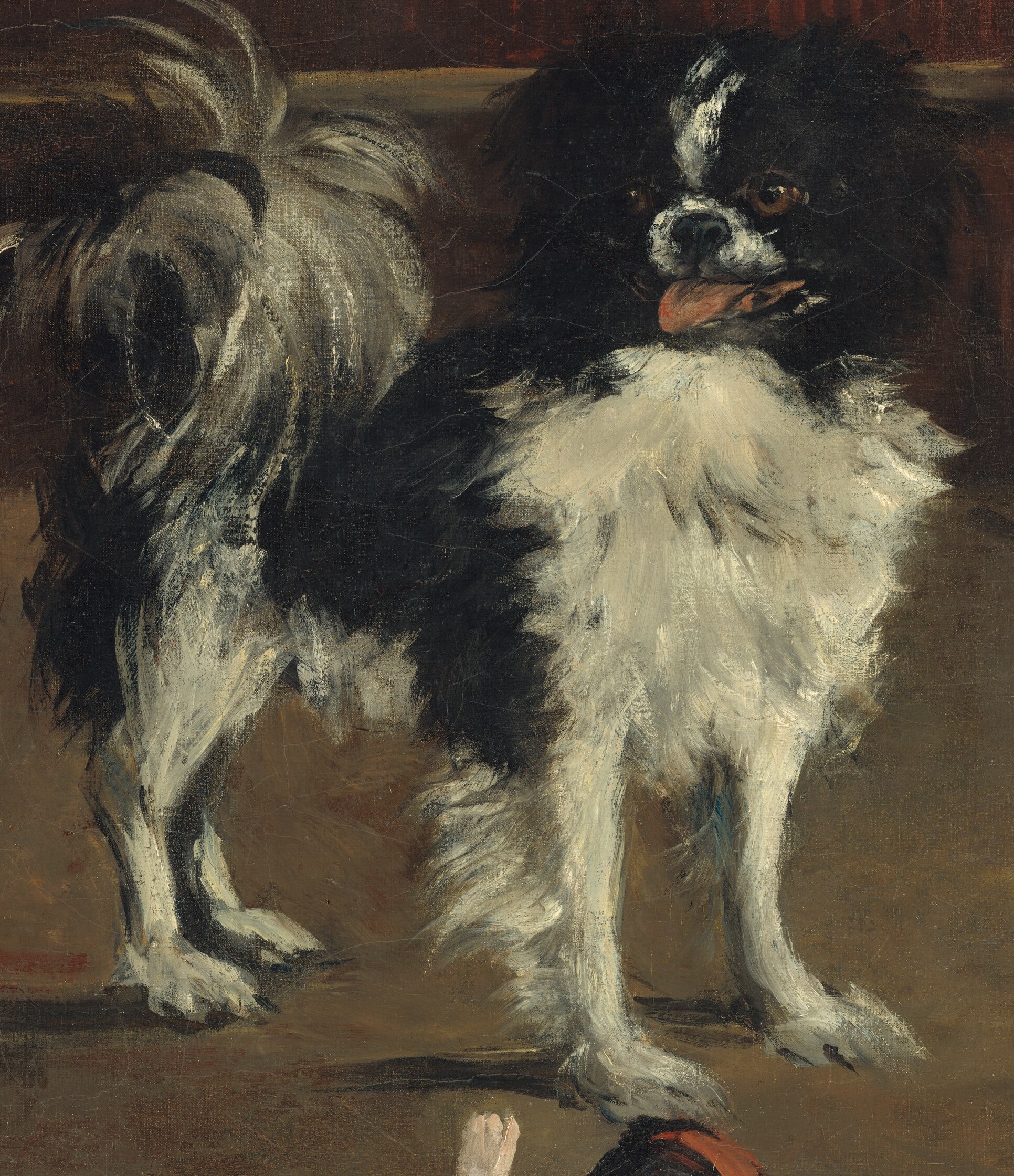
Édouard Manet's 'Tama, the Japanese Dog,' painted around 1875, is a deceptively simple work that quietly challenged artistic conventions of its time. This oil on canvas piece, now held in a private collection, features a black-and-white dog, Tama, in a scene that was considered unconventional for a formal portrait by an artist known for his provocative works.
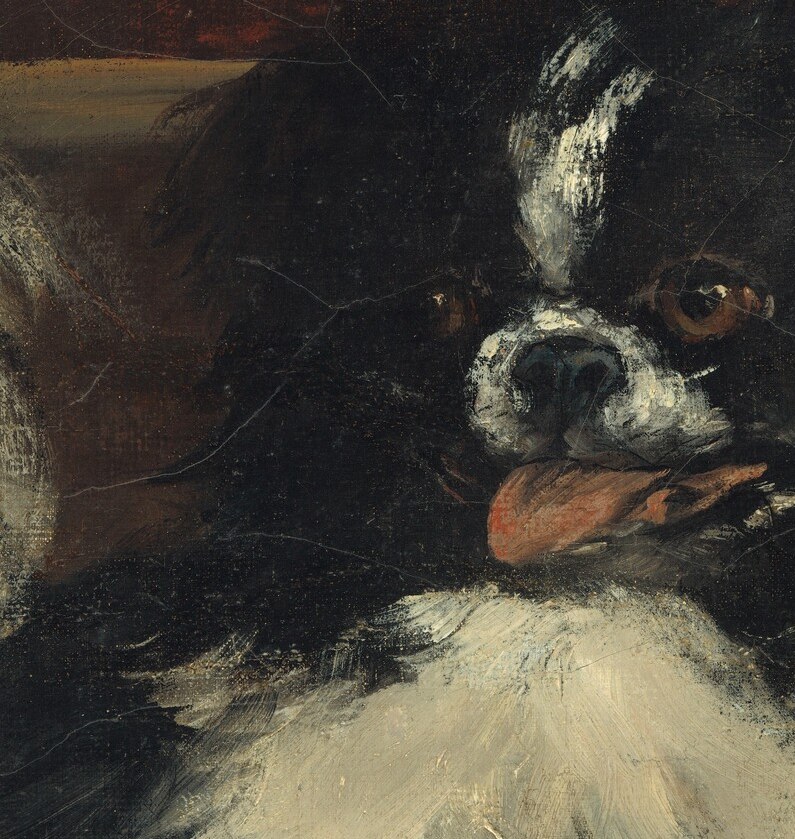
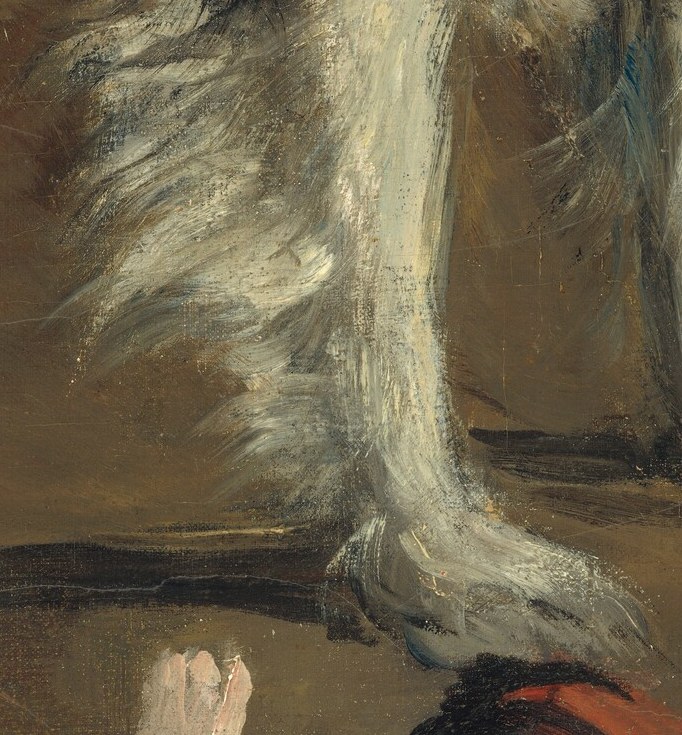
Look closely at Tama's intense gaze and the birds in the scene. One bird is held firmly in the dog's mouth, while another lies on the wooden floor. The inscription 'TAMA' on the background wall provides a direct identification of the subject, personalizing what might otherwise be a mere animal study. The dark, unadorned background focuses all attention on the animal and its prey.
Manet, a master of modern art, often used bold brushstrokes and stark contrasts. This painting, while less overtly controversial than some of his major salon works, still represented a departure from traditional portraiture. Depicting a pet with such directness, and with the inclusion of dead game, pushed the boundaries of what was considered an appropriate or 'noble' subject for a serious artist. It reflects Manet's continuous exploration of everyday life and his readiness to depict it with unvarnished realism.
What do you think of Manet's choice to immortalize Tama in this way?
Details

Transcript
This painter was known for scandalous portraits. But this one, of a dog, is rarely seen. The dog's name, 'Tama,' is visible on the wall. Tama holds a dead bird, while another lies on the floor. This domestic scene, so stark, was unusual for Manet. It was considered a strange subject for a formal portrait.