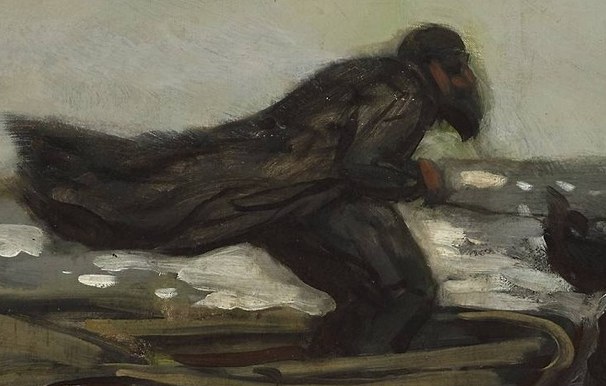
Rushing cart driven by a Jew by Józef Chełmoński
Józef Chełmoński's *Rushing cart driven by a Jew*, painted in 1892, is a powerful depiction of everyday rural life in late Romantic period Poland, now housed at the National Museum in Warsaw. However, the painting's history is marked by controversy due to its original title.
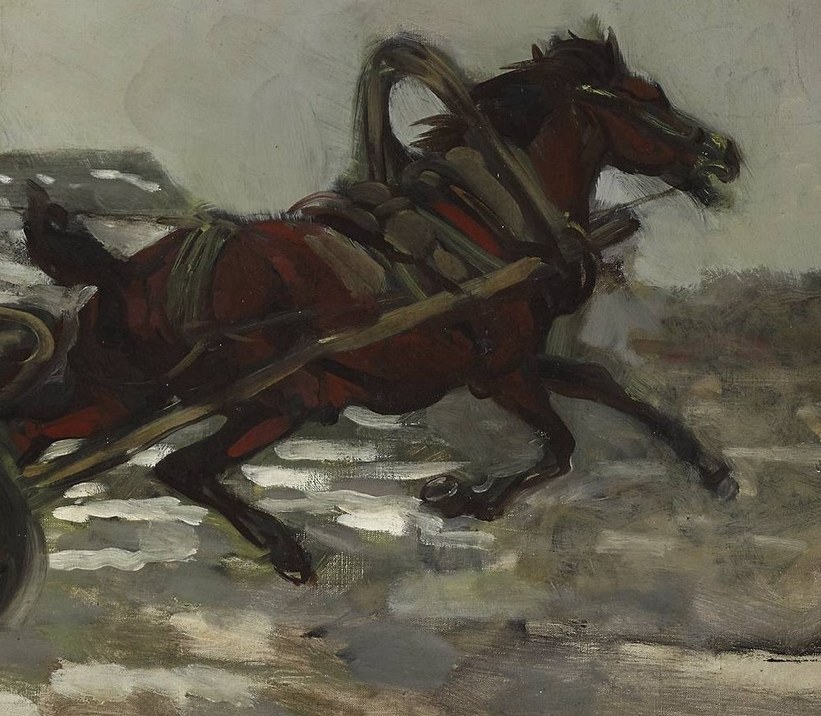
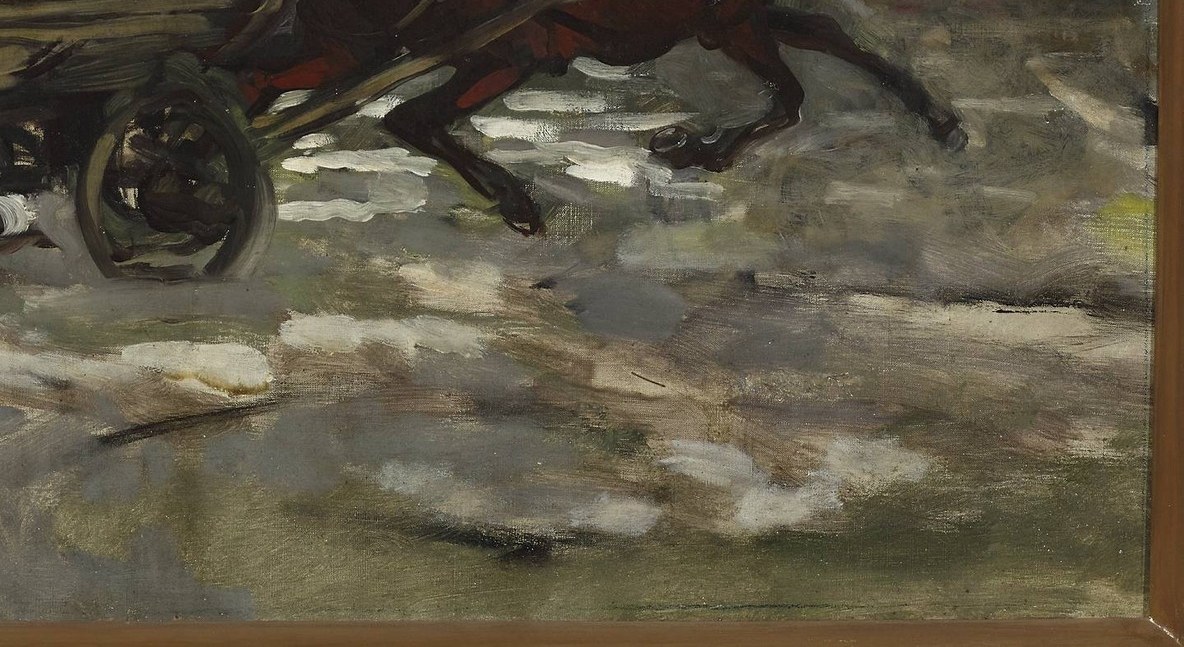
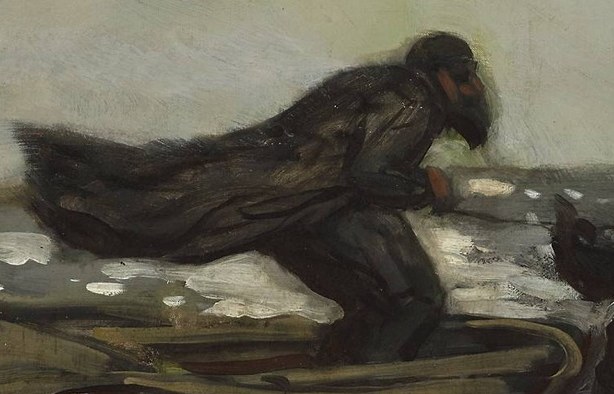
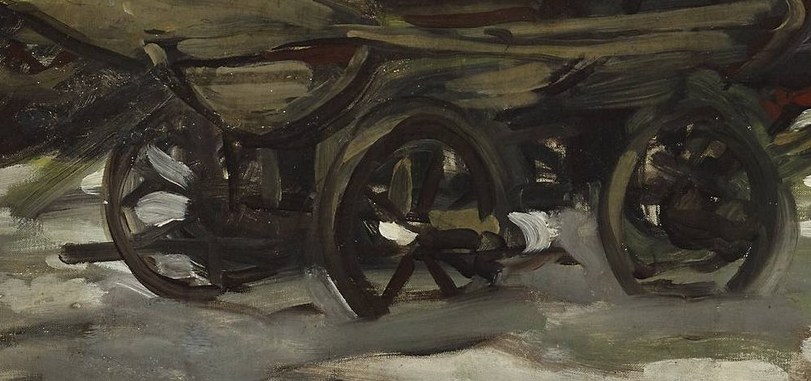
Chełmoński, known for his commitment to Realism, captures the raw energy of the scene: a horse straining against a heavy cart, a coachman focused on the reins, and the churning muddy track. These details emphasize the arduous conditions of travel at the time.
While the painting itself realistically portrays a common scene, its initial title explicitly identified the coachman as Jewish. This detail, though accurate to the subject, later led to antisemitic censorship, and the title was often changed to remove the specific religious identifier. This act of alteration reflects broader historical prejudices.
The painting remains a testament to Chełmoński's artistic skill and a poignant reminder of the social contexts that can influence how art is presented and perceived over time. What do you notice about the coachman's focus?
Details
Transcript
This Polish painter loved showing everyday rural life. Look at the horse, straining to pull the heavy cart. Its raw energy shows the reality of a difficult journey. The original title named the coachman's religion. But antisemitic censorship forced a title change. The painting now often omits this identifying detail.