Mary Fanton Roberts by Robert Henri
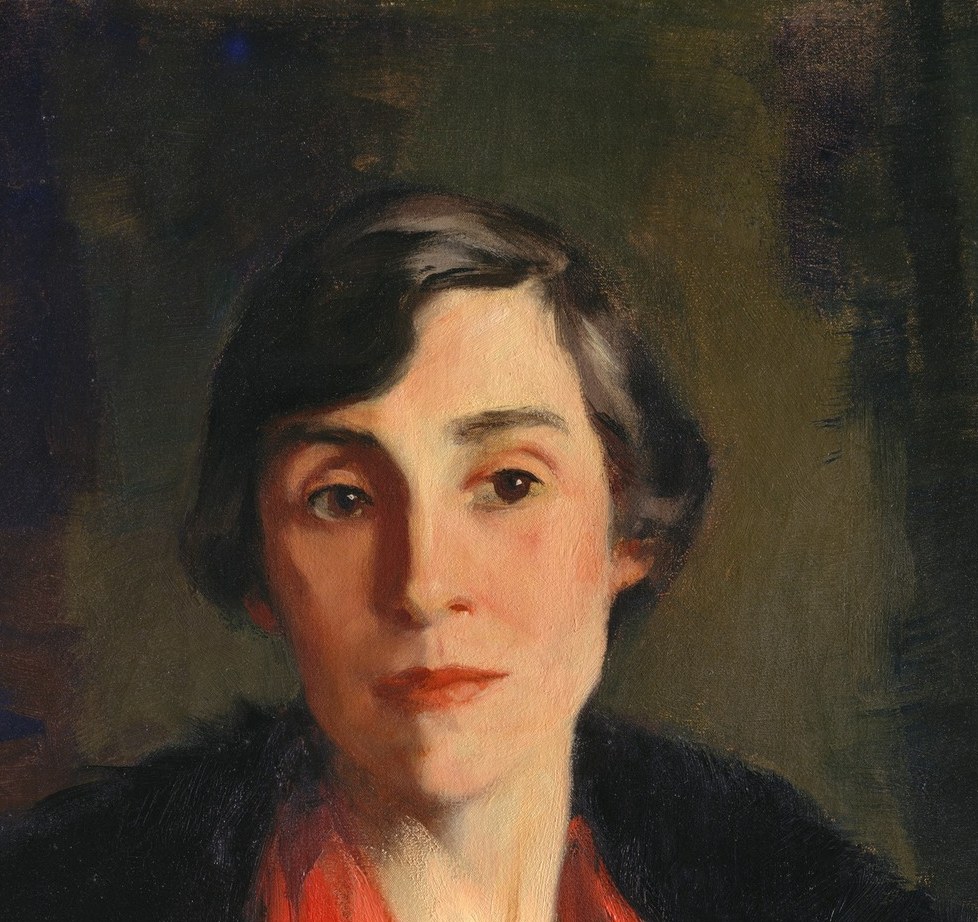
In 1917, the American painter Robert Henri made a portrait that refuses the most basic rule of the genre. He did not flatter. Mary Fanton Roberts was an art critic, a serious intellectual who spent her days looking at paintings and deciding what they were worth. Henri understood the power dynamic instantly: he painted her not as a patron's ornament, but as a peer.
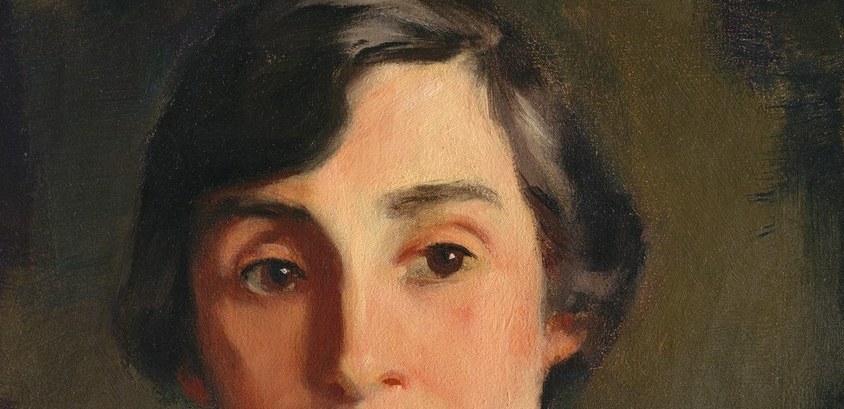
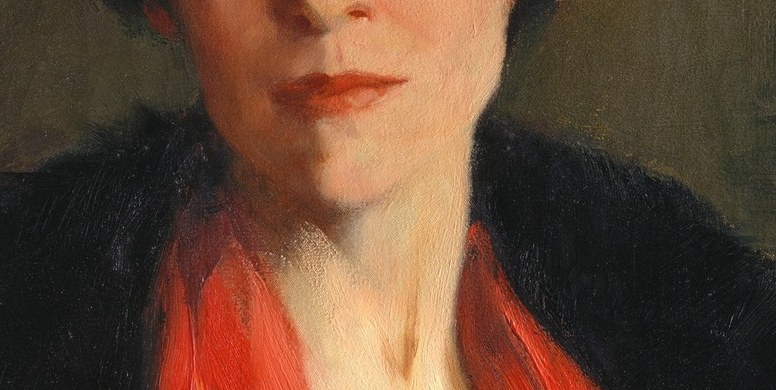
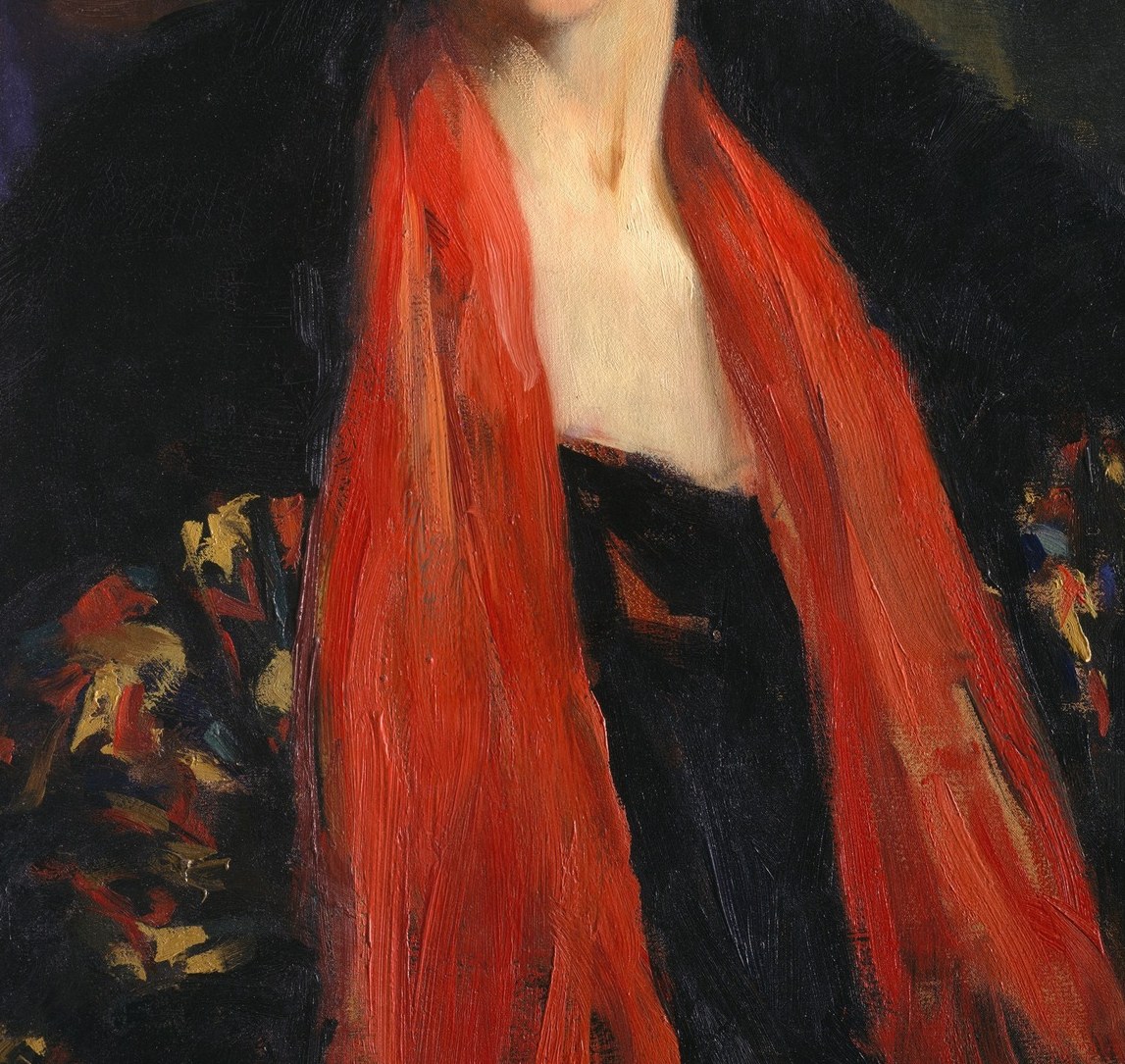
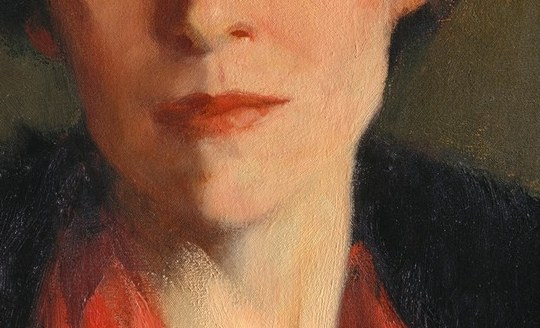
The evidence is all in the face. Her eyes engage the viewer with a level, unblinking directness. Her jawline is recorded as strong bone, not softened silhouette. The red scarf is the only flash of color in an otherwise near-monochrome canvas, and it reads like her personal defiance against the dark. The whole composition keeps returning you to her intelligence.
Henri was the leading teacher of the Ashcan School, a circle of American realists who rejected the slick finish of the academy. He told his students to paint the world as it actually was, urban, rough-edged, alive. By the time he made this portrait, European Modernism was already making his kind of realism look old-fashioned. He kept painting anyway, betting that character would outlast fashion. In 1929, the year he died, the Arts Council of New York named him one of the three greatest living American artists.
What holds you in this painting is the feeling of being observed. She looks at you the way a critic looks at a canvas. Henri gave her that power and then stepped back.
Details
Transcript
She was an art critic. Her job was to look. So the painter let her look right back. Robert Henri made a rule: never flatter, always see. Her strong jaw is drawn without a single softening line. A vivid red slash cuts through the dark. Her signal, not his. Her mouth is closed. No smile, no performance. In 1917, most portraits made women into decorations. Henri made Mary Fanton Roberts into a mind you meet.