Norbertus van Couwerven, abbot of St Michael's by Katharina Pepijn
This 1657 oil portrait by Katharina Pepijn depicts Norbertus van Couwerven, the abbot of St Michael's. It offers a glimpse into the life and religious authority of a 17th-century clergyman.
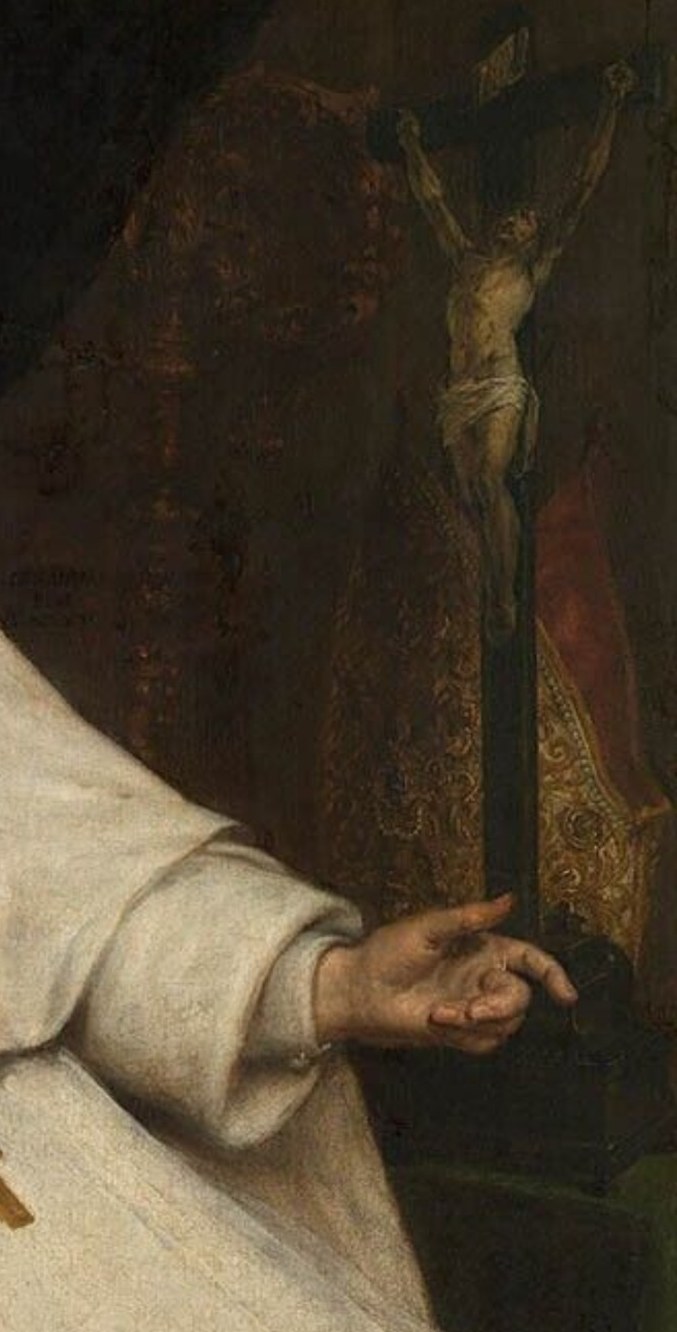
Look closely at the abbot's regalia, from his tall mitre and voluminous white robe to the simple golden cross and the ring on his left hand. These elements all signify his high office and his spiritual devotion.
Pepijn, a Flemish painter active in Antwerp during the Dutch Golden Age, was known for her history paintings and portraits. By placing the abbot before a dimly lit crucifixion scene, she subtly aligns his personal identity with the broader theological narratives prevalent in Counter-Reformation art.
The painting is held in the Royal Museum of Fine Arts Antwerp, where it continues to serve as an example of Pepijn's skillful portraiture. What do you notice first about the abbot's expression?
Details

Transcript
This is Abbot Norbertus van Couwerven, painted in 1657. His tall mitre and white robe signal his religious authority. The simple golden cross is a direct emblem of his faith. His ring symbolizes his bond, or 'marriage', to the Church. Behind him, a dimly lit crucifixion scene reminds us of sacrifice. The painter, Katharina Pepijn, was known for such portraits.