Oarsmen at Chatou by Renoir, Auguste
View the artwork: Oarsmen at Chatou →
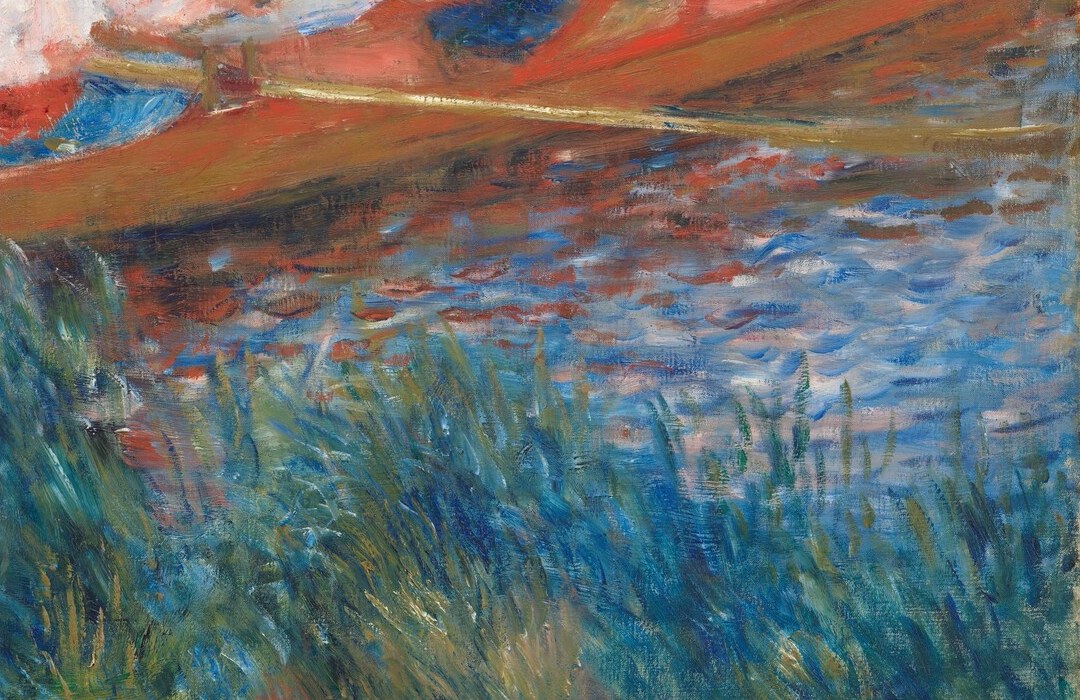
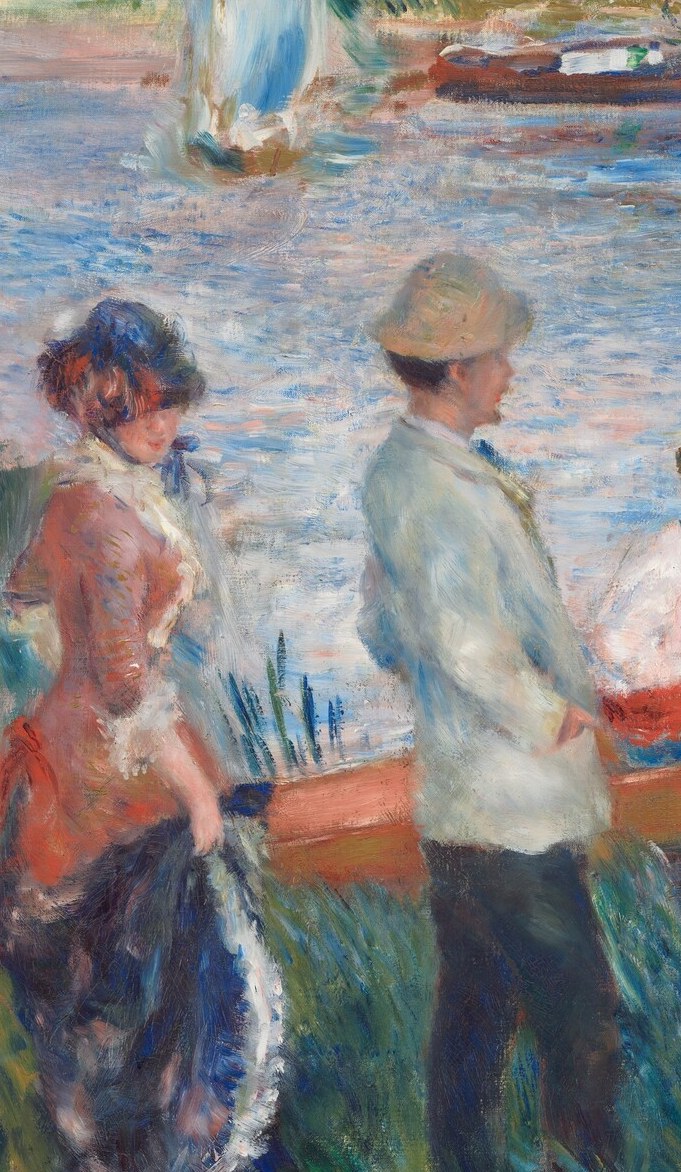
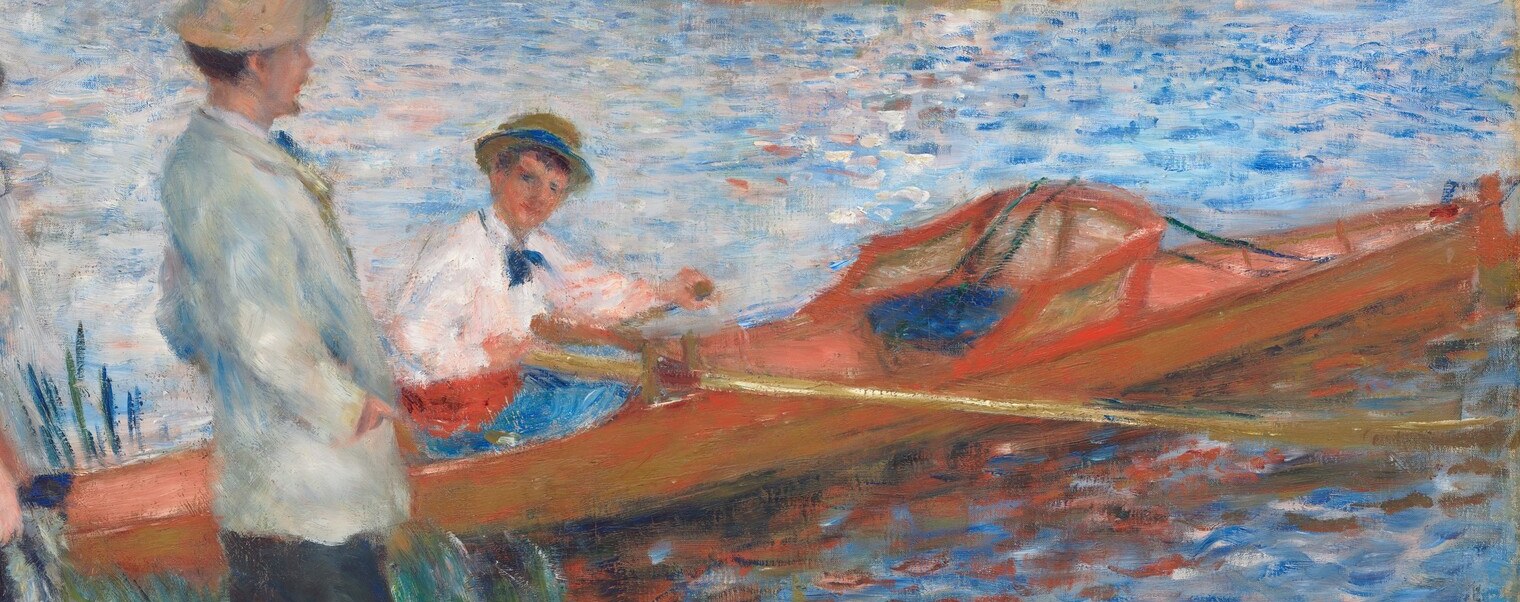
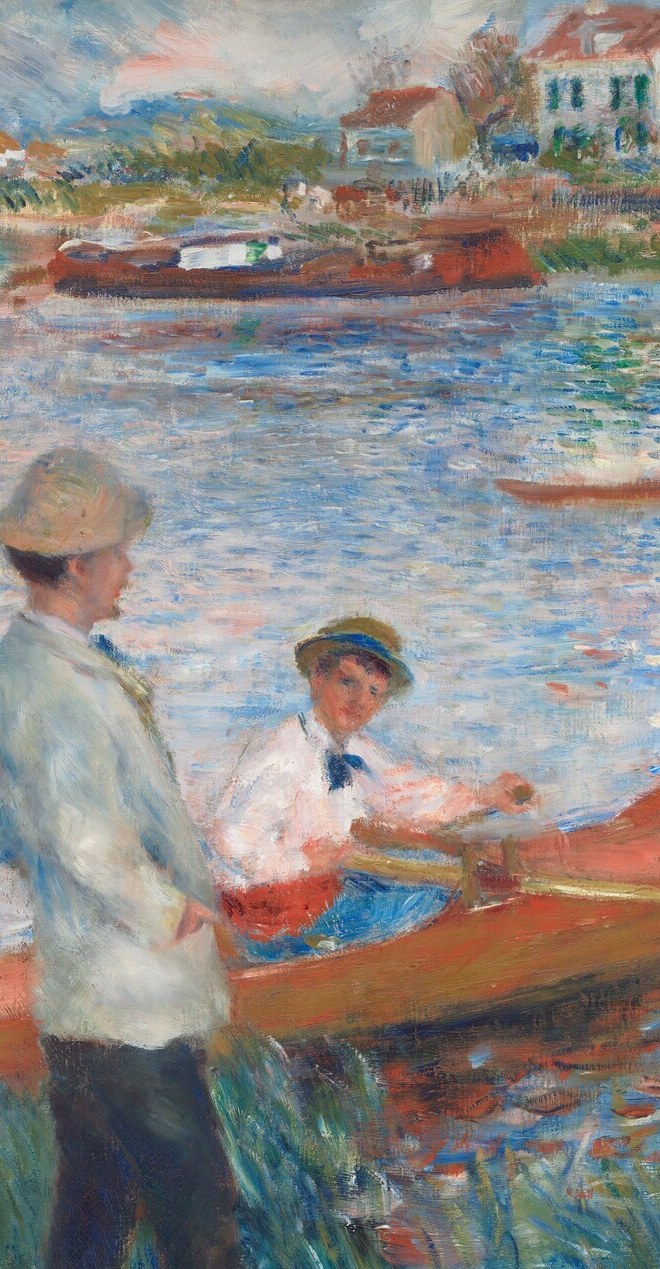
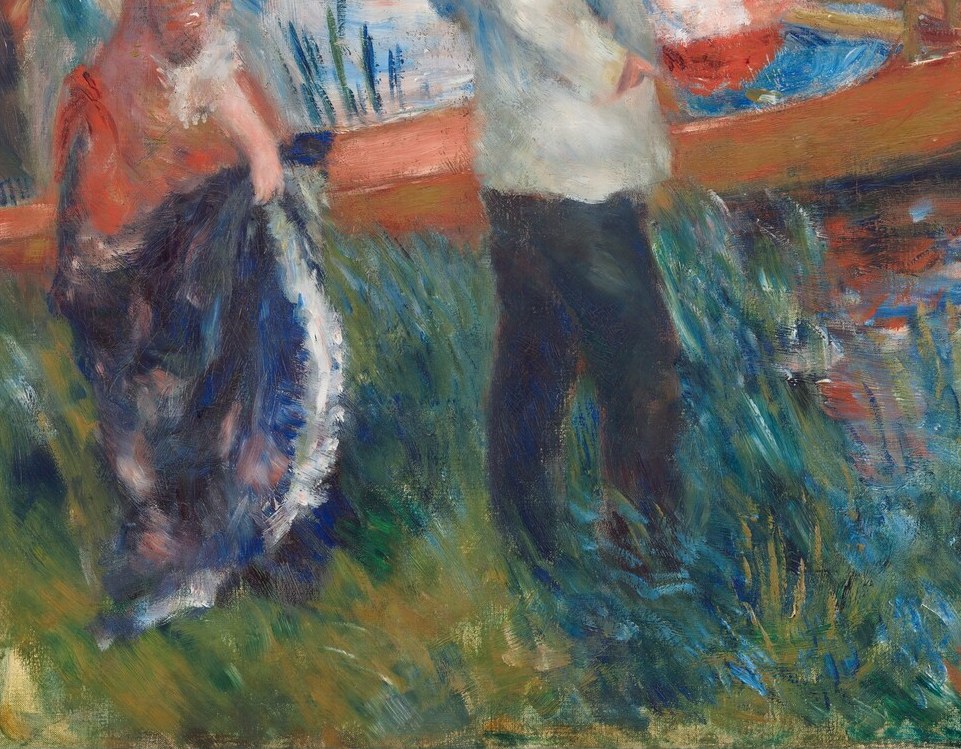
This is Pierre-Auguste Renoir's 'Oarsmen at Chatou' (1879), a sunlit afternoon on the Seine that hides a quiet class rebellion. Renoir packed it with friends: the man in white is fellow Impressionist Gustave Caillebotte, and the woman in blue is Aline Charigot, a seamstress he would later marry.
Look past the flickering water and the dappled grass. A dark cargo barge slides through the background. It was a deliberate intrusion. Critics of the time insisted that leisure paintings should exist in a perfect, unstained world. Renoir, the son of a tailor and a seamstress, knew that world was a fantasy.
He painted a working river flowing right through the middle of a middle-class escape. The tension between the straw hats in the sun and the barge in the shadows is the painting's true subject. It took decades for collectors to see past the surface. The canvas passed through the hands of dealer Paul Durand-Ruel before crossing the Atlantic, eventually reaching the National Gallery of Art in Washington, D.C., where it hangs today.
How many Impressionist afternoons are actually about who gets to be in the picture, and who has to keep working?
#arthistory #impressionism #renoir
Details
Transcript
They called it 'luncheon on the grass' for the working class. The man in white is Gustave Caillebotte, a painter from a wealthy family. Beside him, a seamstress who would become Renoir's wife. Gleaming like satin, his jacket is pure paint. Renoir sold it for cash in 1911. The dealer waited 32 years. The real scandal? That dark barge in the back. Critics said leisure scenes should not include the working river. Renoir painted it anyway. He was a tailor's son.