Artwork
Oarsmen at Chatou
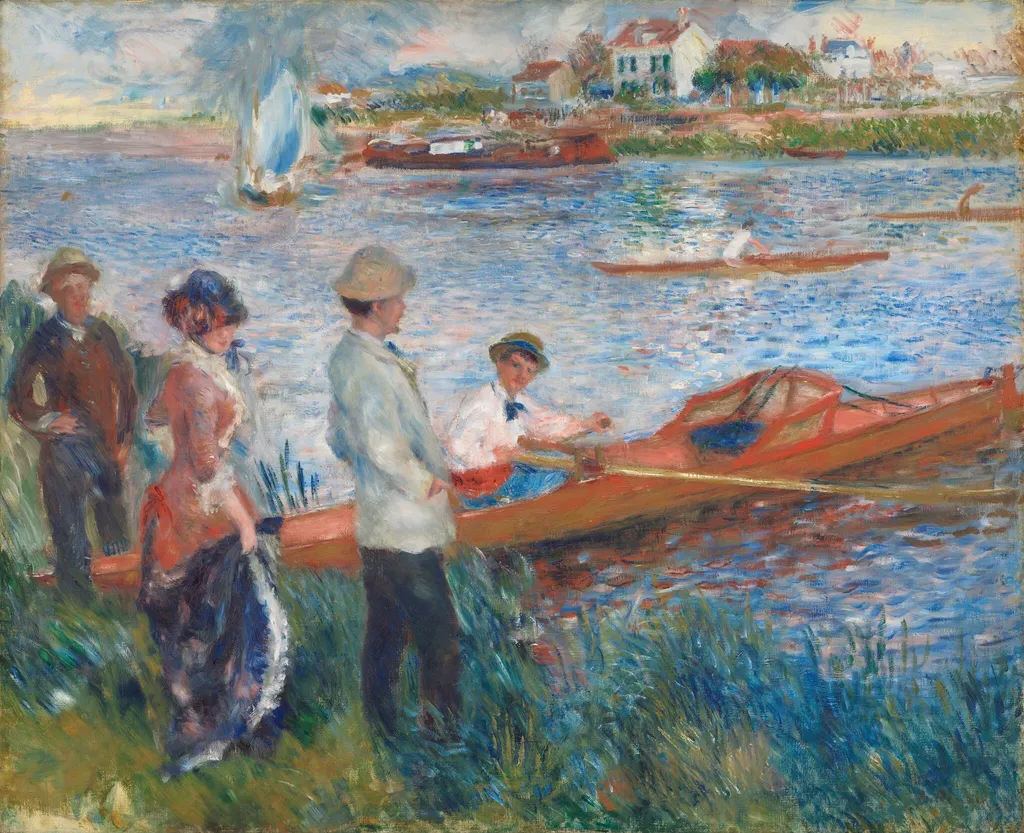
Oarsmen at Chatou is an oil painting by the Impressionist artist Pierre-Auguste Renoir. It dates from 1879 and is held in the collection of the National Gallery of Art.
- Inscription
- Inscribed:lower right: A.Renoir. 79
About this work
On the banks of the Seine at Chatou, a well-dressed woman lifts her blue skirt above the wet grass as a boatman pulls his canoe ashore. Pierre-Auguste Renoir signed and dated this sun-drenched scene of bourgeois leisure "A. Renoir. 79." It entered the National Gallery of Art in 1951 as a bequest from collector Sam A. Lewisohn.
Subject & Meaning
The painting depicts a rowing competition on the Seine at Chatou, showing rowers in a racing shell, sailboats, and riverside houses under a bright sky.
The painting depicts a rowing competition on the Seine at Chatou, showing rowers in a racing shell, sailboats, and riverside houses under a bright sky. Specific individuals include Aline Charigot, whom Renoir later married, and the artist's brother Edmond. The scene is a genre piece celebrating the leisure activities of the bourgeoisie, encapsulating modern life in late 19th-century France.
Symbolically, the inclusion of close family members personalizes the snapshot of recreation, while the emphasis on light and color conveys the transient pleasures of boating and socializing. The work captures the era's fascination with competitive and recreational navigation, reflecting Impressionism's focus on contemporary subjects and the interplay of light and atmosphere.
Technique & Style
Executed in oil on canvas, Oarsmen at Chatou (1879) measures 81.2 × 100.2 cm and is signed “A. Renoir 79” at lower right. The painting exemplifies Impressionist technique through its bright, vibrant palette and rapid, short brushstrokes. Renoir employs a color range from scarlet to the palest pinks, with a patch of blue-gray sky advancing from the distant horizon.
Compositionally, the vertical grouping of figures anchors the sharp diagonal of the vermilion rowboat in the foreground, opposing the broader leftward sweep of the river and its banks. Figures blend gradually into the atmospheric landscape, while reflections of sunlight on the water enhance the luminous effect. Renoir studied how light played on the water and how boats appeared distorted in reflection, contributing to the work's sense of fleeting modern leisure.
History & Provenance
Painted in 1879 along the Seine at Chatou, the work bears the inscription 'A. Renoir 79' in the lower right. It was likely first exhibited in 1882 at the 7th Impressionist exhibition in Paris under the title Canotiers. The artist retained the painting until 1911, when he sold it to the gallery Durand-Ruel (Paris).
In May 1912, it was purchased by Arthur B. Emmons of New York and Newport. After Emmons' death, the painting was sold at auction in January 1920 and acquired by Durand-Ruel (New York) and M. Knoedler & Co. In February 1922, it was sold to Adolph Lewisohn of New York.
By inheritance it passed to his son Sam A. Lewisohn, who bequeathed it to the National Gallery of Art, Washington, in 1951, where it remains.
Context
Oarsmen at Chatou is an Impressionist genre scene by Pierre-Auguste Renoir, likely first exhibited at the seventh Impressionist exhibition in 1882 under the title Canotiers. The painting features Renoir's future wife Aline Charigot and his brother Edmond, who serve as structural anchors within the composition's diagonal thrust. Art historical scholarship interprets the work as a depiction of bourgeois leisure and modern life, celebrating the brightness of outdoor recreation through vivid colors, rapid brushwork, and the integration of figures into a sunlit riverscape.
The painting's focus on pleasure boating and light effects situates it within Renoir's broader Seine-side production and the Impressionist movement's interest in contemporary leisure and atmospheric luminosity.
Overview
Renoir's "Oarsmen at Chatou," painted in 1879, captures a leisurely afternoon on the Seine River. This oil on canvas work exemplifies Impressionist themes, depicting middle-class Parisians enjoying recreational activities outside the city. The scene features figures on a riverbank, engaged in conversation and boating, bathed in the dappled sunlight characteristic of the period. It offers a glimpse into the social life and popular escapes of late 19th-century Paris.
Own this work as a print
Artist & collection
Artist
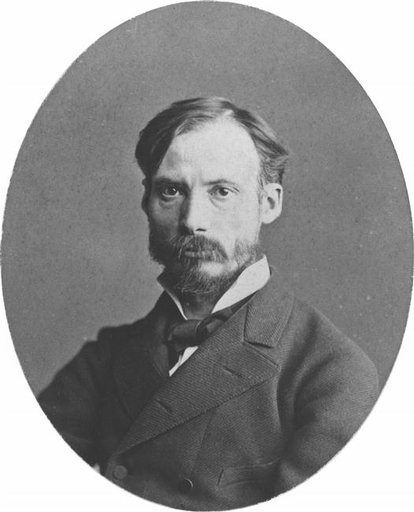
Pierre-Auguste Renoir was a French artist who was a leading painter in the development of the Impressionist style.

 Compared in the Impressionism course