Calvary by Master of the Death of Saint Nicholas of Münster
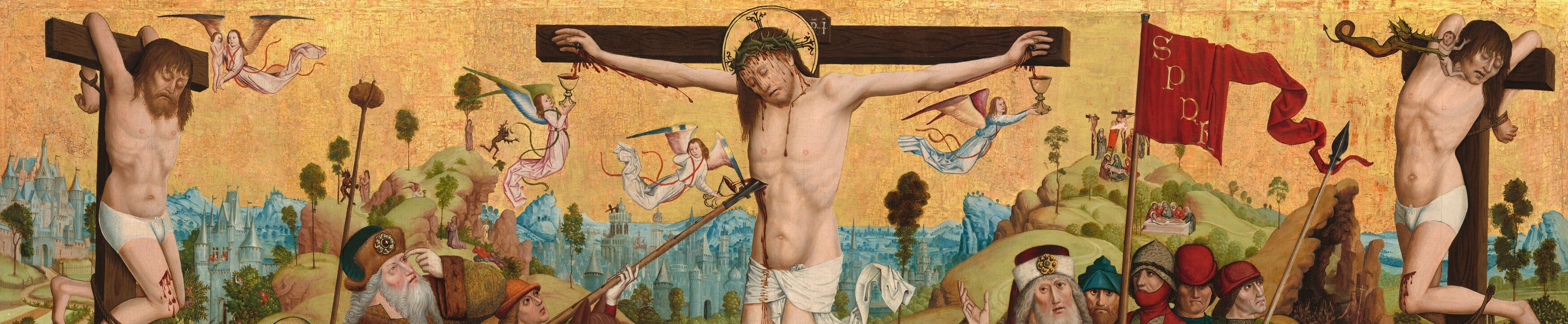
This is Calvary, painted around 1475 by an artist whose real name we have lost. We call him the Master of the Death of Saint Nicholas of Münster, a name borrowed from another painting his hand left behind.
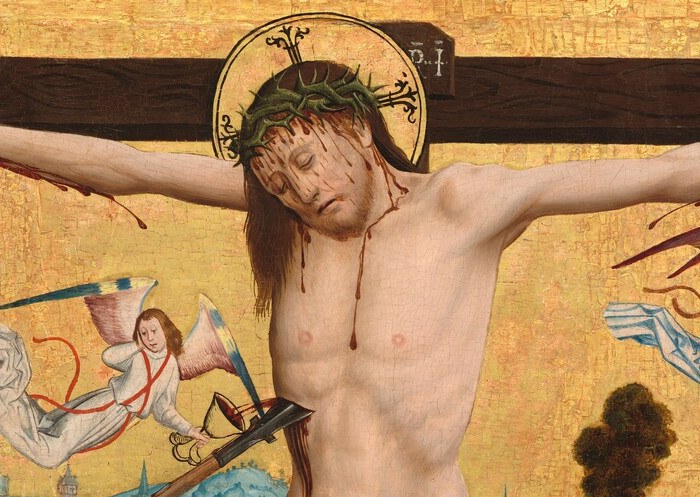
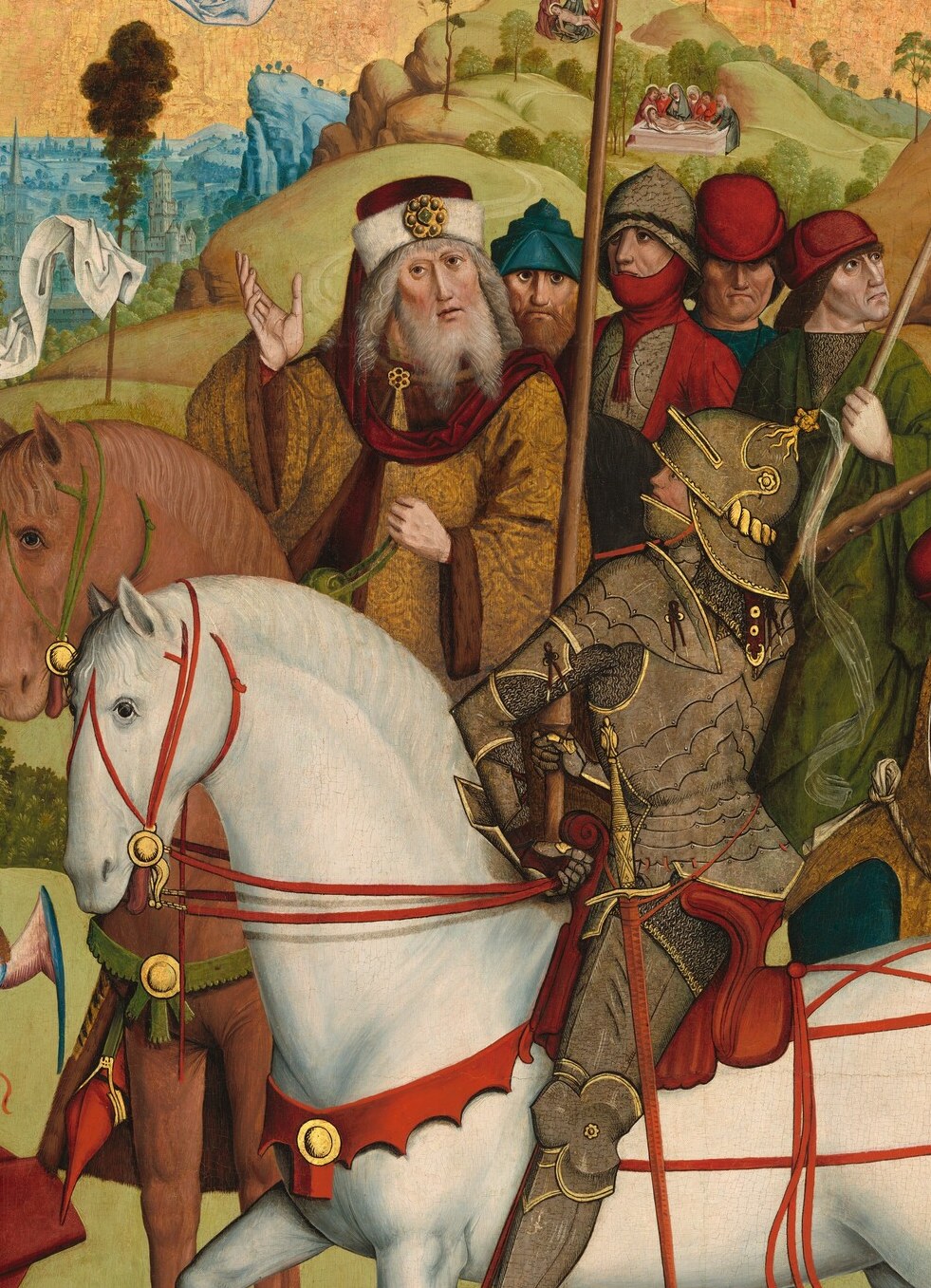
Look first at the sky. It is real gold leaf, not blue pigment. In the 1470s, a painter choosing a flat gold ground over a naturalistic landscape was making a statement: this moment does not belong to the ordinary world. It is eternal. Then look at Christ’s face. You have to get close for this. The expression is nearly unreadable at a distance; up close, it reads as acceptance, not torment. The artist painted surrender where others painted suffering.
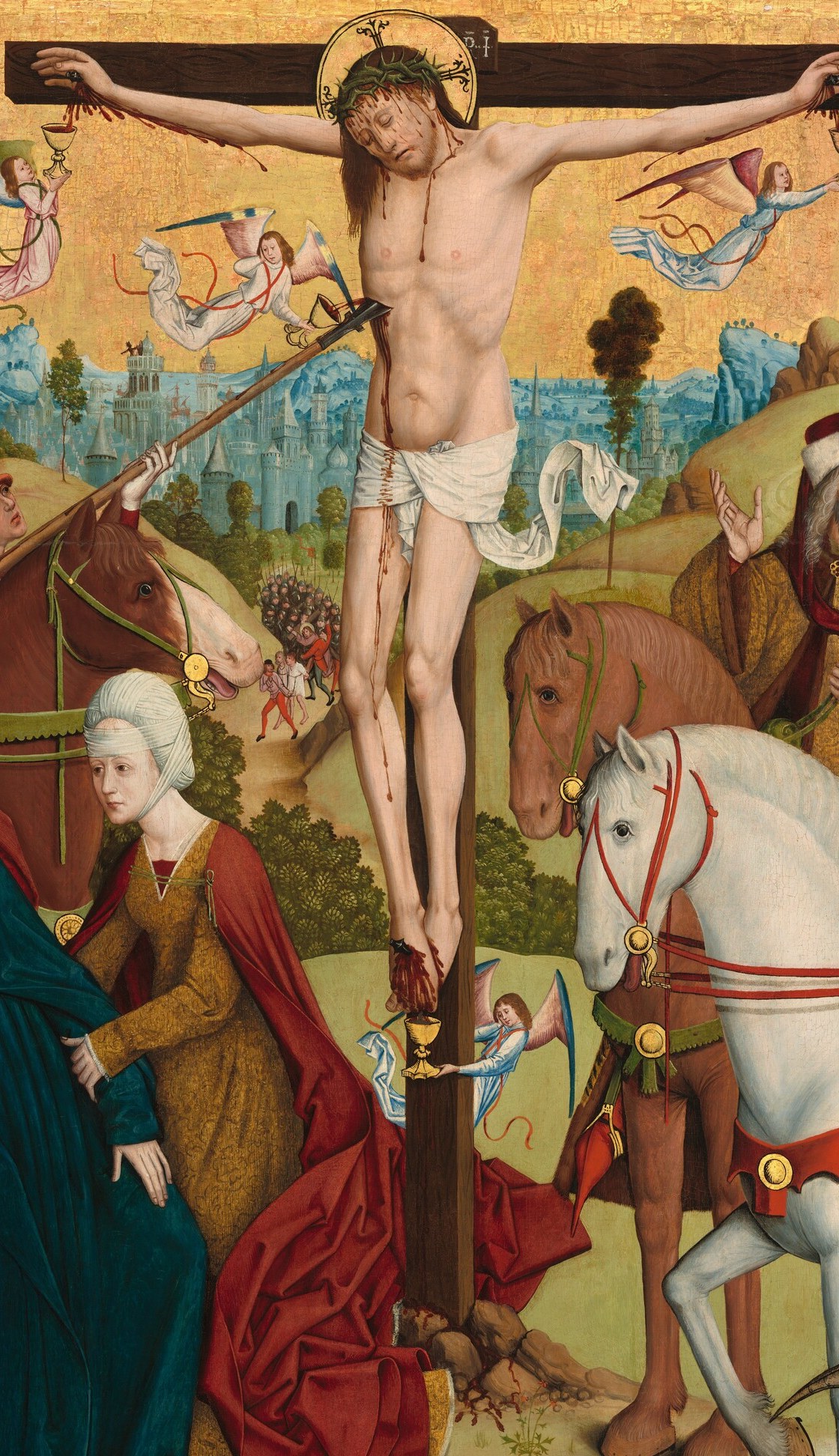
The panel is packed with small revelations. The Virgin in blue, held upright by Saint John, a rare moment of human touch in a formal composition. The crimson banner of the Roman soldier, the single loudest color note, pulling your eye rightward. The ladders still leaning against the thieves’ crosses, confirming the action is still unfolding. Every choice serves the devotional purpose.
The anonymity is part of the work’s quiet power. This artist signed nothing, left no letters, appears in no guild records. A whole career reduced to a group of panels recognized by the same hand. And yet Calvary remains, five centuries of people standing in front of it, finding the peace in that small painted face.
Details
Transcript
Look at the sky. That is real gold leaf, laid down around 1475. The painter chose a flat gold heaven over a real landscape. This was deliberate, a sign that the scene is outside time. Now look at his face. No grimace. No agony. Just surrendered peace. The artist made a theological argument with a brush. He remains anonymous. We know him only by a different painting.