The Outskirts of a Village by Edmond Aman-Jean
The Outskirts of a Village, painted by Edmond Aman-Jean in 1890, is a landscape that survived war and looting to find a home at The Metropolitan Museum of Art.
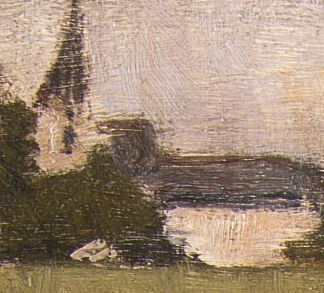
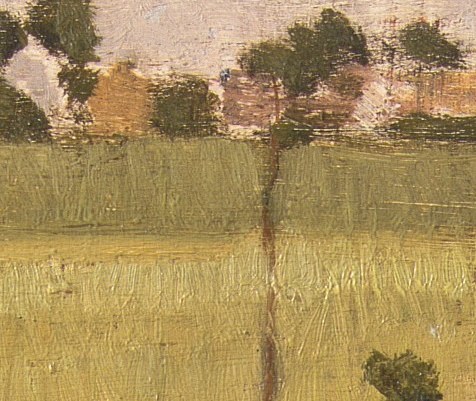
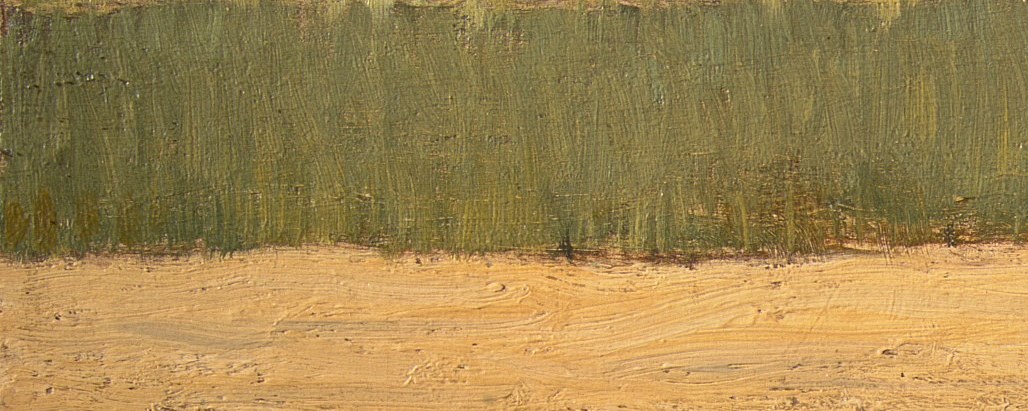
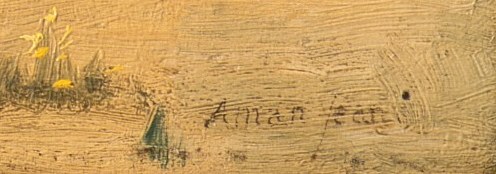
Look first at the church steeple, the single vertical accent rising above the village roofline. Then let your eye drop to the dry golden-ochre grass in the foreground, where tiny yellow wildflowers signal late summer. Aman-Jean structured the scene with a dark hedgerow band acting as a strict horizon, dividing the flat green meadow from the pale hazy sky.
Aman-Jean was a French Symbolist who co-founded the Salon des Tuileries. During World War I, occupying forces looted artworks from his studio. Many pieces were lost or destroyed, but this quiet view of rural life escaped that fate.
What other paintings in the Met’s collection carry stories we rarely hear?
Details

Transcript
In 1890, Edmond Aman-Jean painted a village edge. The church steeple anchors a peaceful horizon. These slender trees mark a property boundary. Late summer wildflowers fleck the dry grass. But this tranquil scene was once a target. In 1918, looters seized works from his studio. This canvas survived. Today it hangs in the Met.