The Old Mill (Vieux Moulin) by Theodore Robinson
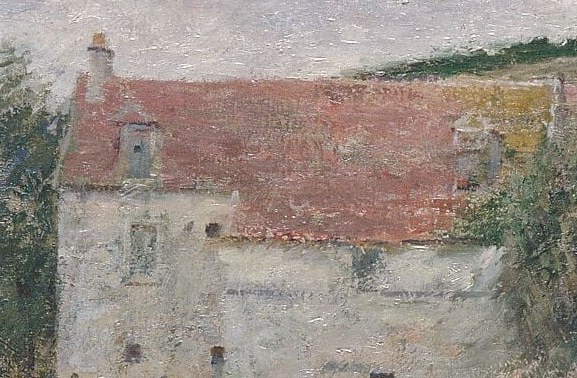
Theodore Robinson’s The Old Mill (Vieux Moulin), painted around 1892, exemplifies American Impressionism's masterful use of light. This oil on canvas, housed in a prominent collection, showcases Robinson's deep engagement with capturing fleeting atmospheric conditions, a skill he honed while living near Claude Monet in Giverny.
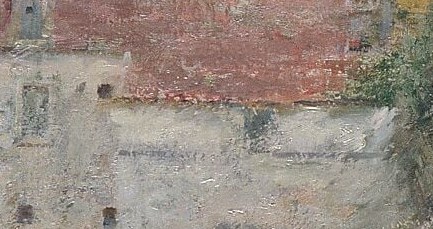
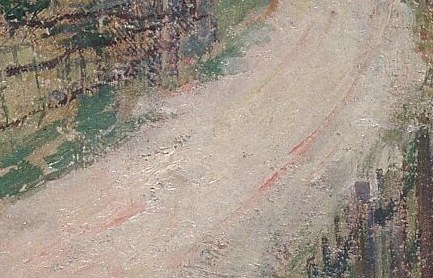
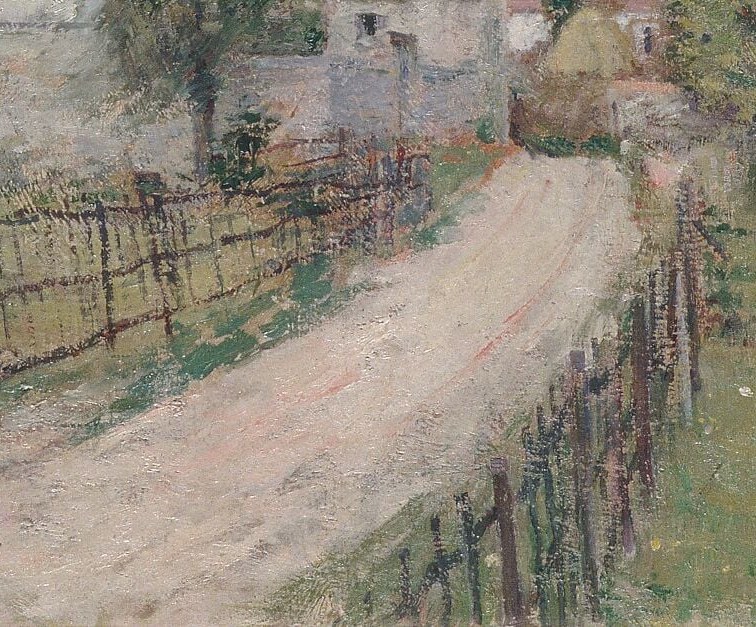
Look closely at the sunlit stone wall of the old mill; Robinson builds its luminous texture with thick, visible dabs of paint, creating a sense of palpable light. The winding dirt road is similarly rendered, an intricate mosaic of light and shadow that suggests movement and the transience of a specific moment.
Robinson was among the first American artists to embrace Impressionism, adopting its characteristic small, swift brushstrokes. His technique prioritized the ephemeral quality of light over precise architectural detail, allowing the everyday scene to shimmer with quiet observation. This work is considered a masterpiece of American Impressionism, showing how he brought a fresh perspective to the French countryside.
It’s a beautiful demonstration of how a painter can make light itself the true subject.
Details
Transcript
This painter was an American, but he studied with Monet. He learned to paint light, not objects. See how sunlight catches the weathered stone wall. He builds that bright texture with thick dabs of paint. The road, too, is mostly patches of light and shadow. It's all quick, visible brushstrokes, catching a fleeting moment.