Chalice and Host in a Niche, within a Cartouche of Roses and Fruit by Jan Davidsz. de Heem
Jan Davidsz. de Heem's *Chalice and Host in a Niche, within a Cartouche of Roses and Fruit* (1648) at the Kunsthistorisches Museum is a prime example of Dutch Golden Age still life, blending sacred symbolism with opulent natural detail.
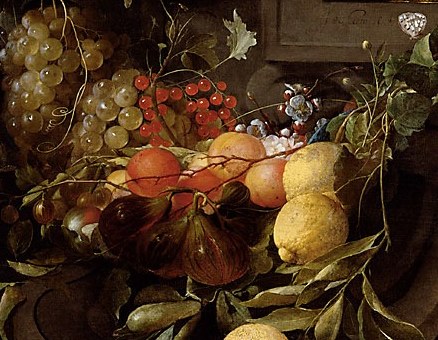
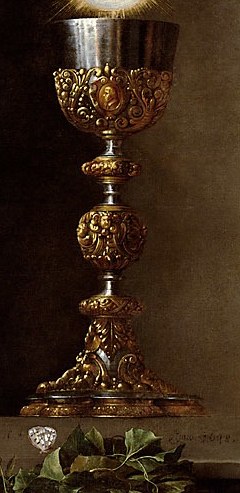
The painting's central glowing host and ornate chalice immediately draw the eye, symbolizing the Eucharist. Yet, de Heem frames this sacred core with a lavish cartouche of fruits, flowers, and wheat, elements that simultaneously represent earthly bounty and deeper Christian motifs.
De Heem was a master of still life, known for his meticulous attention to detail and ability to weave complex narratives into his compositions. His use of light and shadow, particularly the luminous glow from the chalice, showcases the sophisticated glazing techniques prevalent in his era. Every element, from the twisted lemon peel to the delicate roses, is rendered with striking realism, inviting contemplation on both spiritual and material richness.
What other hidden symbols do you notice in de Heem's intricate work?
Details
Transcript
This 1648 painting seems like a rich still life. The luminous host and chalice are central, a sacred symbol. But the painter, Jan Davidsz. de Heem, adds earthly delights. He was famous for combining luxury with deeper meaning. Look closely for a tiny, fragile white butterfly. It symbolizes the soul and resurrection, often overlooked.