Madame Georges Charpentier and her Children by Pierre-Auguste Renoir
View the artwork: Madame Georges Charpentier and her Children →
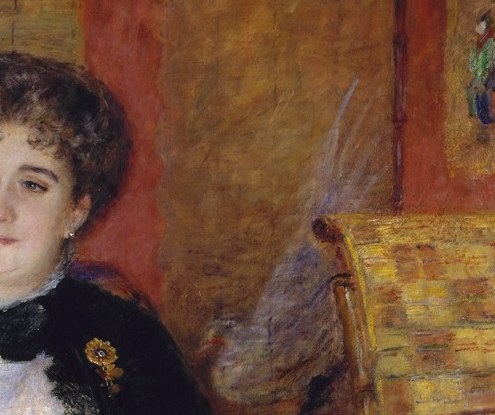
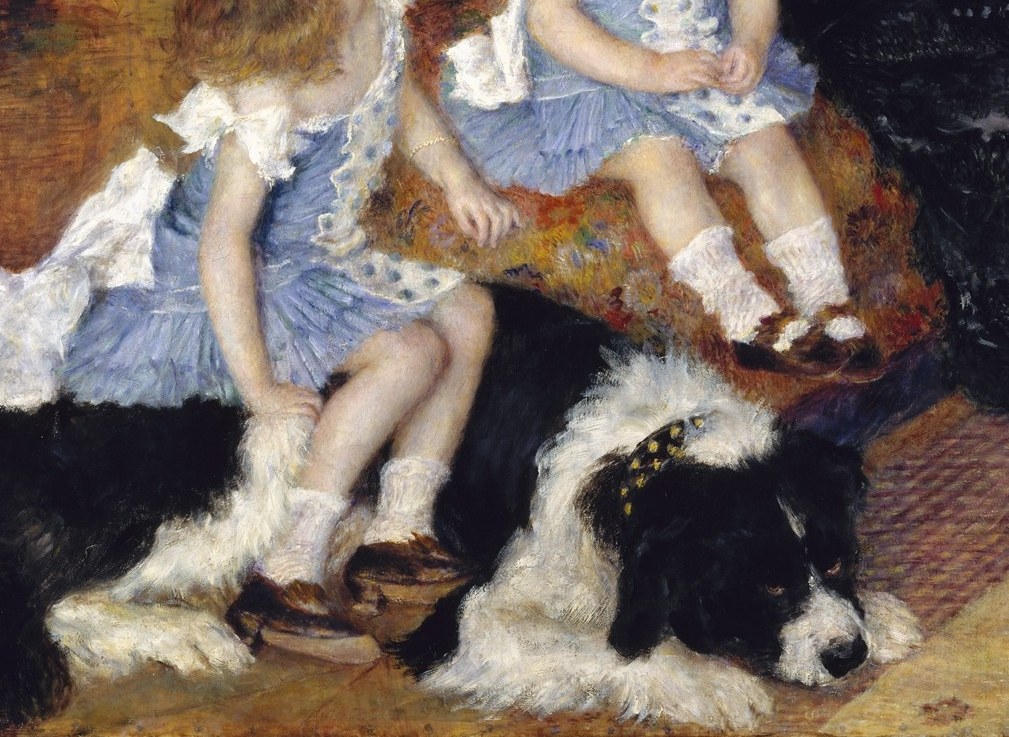
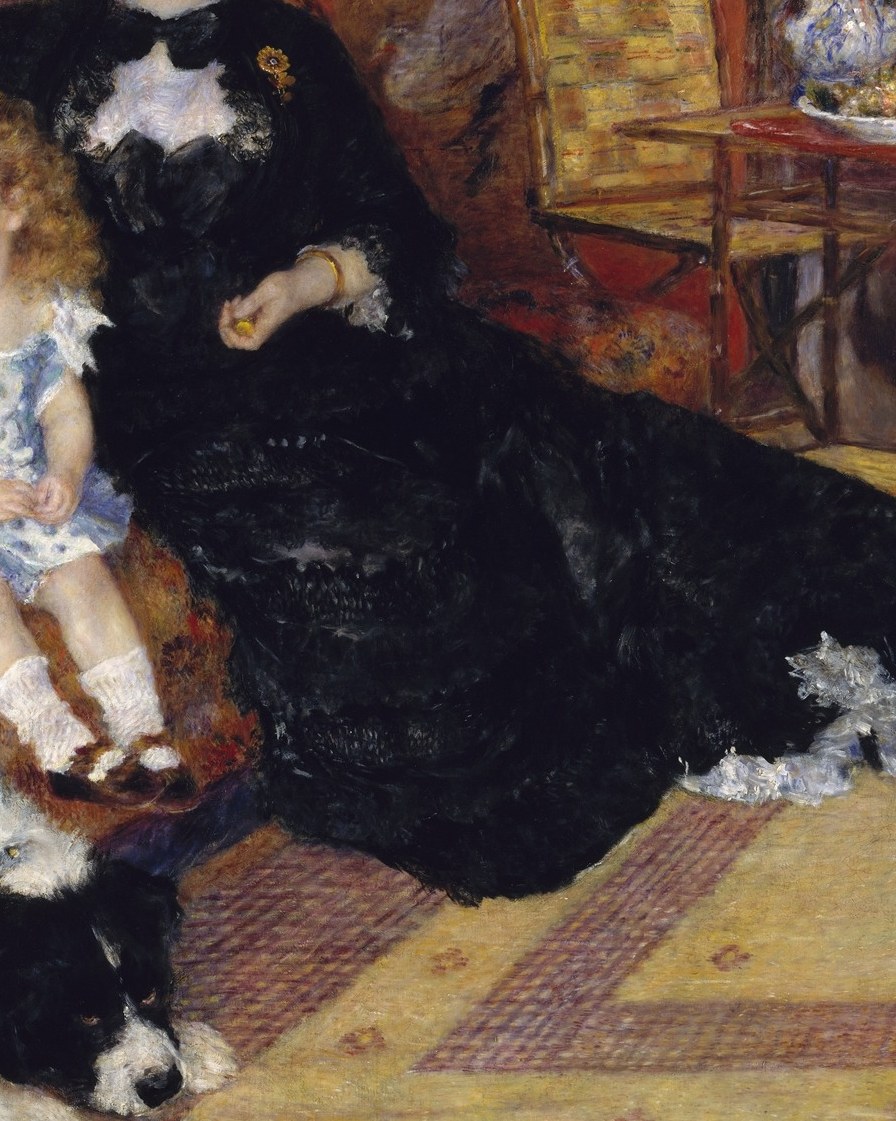
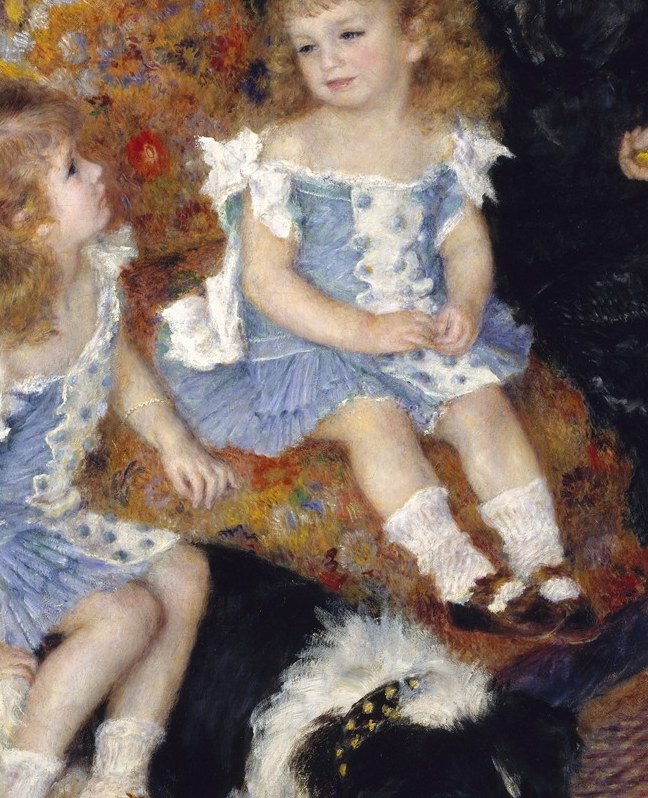
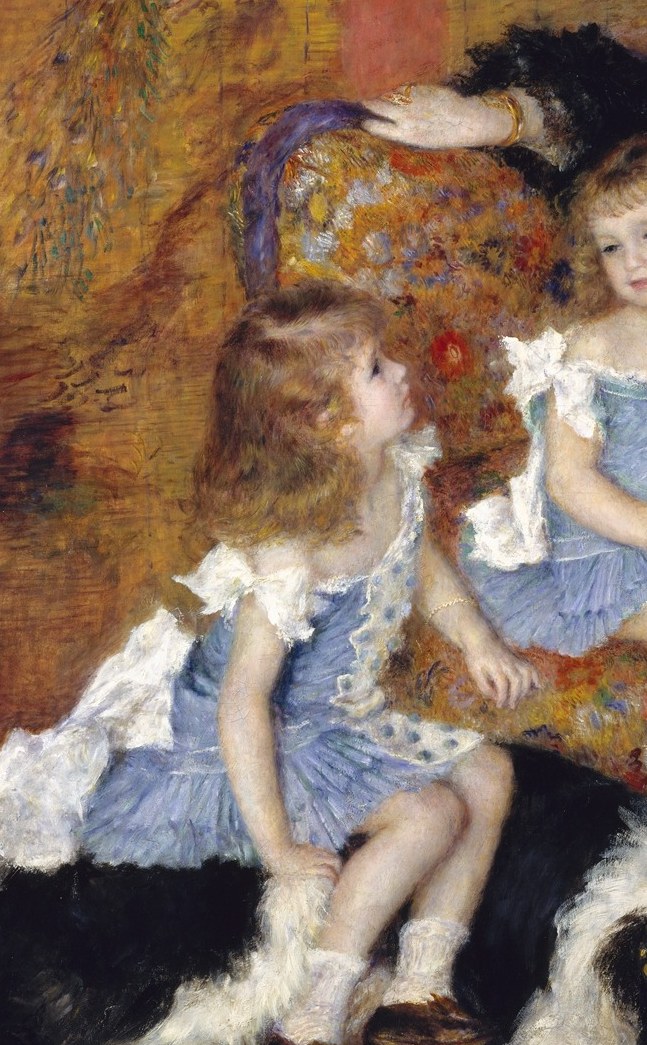
Pierre-Auguste Renoir's "Madame Georges Charpentier and Her Children" (1878) hangs at the Metropolitan Museum of Art, and it doubled as a strategic move in a culture war. The painting depicts Marguerite Charpentier, her daughter Georgette, and her son Paul in their Paris townhouse, but the real story is where it hung in 1879.
Look first at the black Worth gown: an expanse of silk that announces her status as a tastemaker wealthy enough to dress with the elite. Then find the Japanese bamboo screen behind her, the mark of a home that set intellectual fashion. The children in matching blue-white dresses are charming, but note that Paul's dress and long hair were standard for a bourgeois boy under five. The Newfoundland dog anchors the warmth, but the real weight is in Marguerite's composed, direct gaze.
The Charpentiers ran the most powerful avant-garde salon in Paris. Zola, Flaubert, Turgenev, and the Goncourts attended regularly. When Georges Charpentier, a major publisher, commissioned Renoir, an artist Marguerite had championed, and the couple submitted the finished portrait to the state-run Salon, the jury faced a dilemma. Rejecting the work risked offending one of the most influential couples in Paris. They accepted it and gave it a prime placement, overriding their own bias against Impressionism. The painting's public success at that Salon marked a turning point for the movement.
Patronage, personality, and a painting, the right portrait in the right room on the right wall changed who got seen in 1879.
#arthistory #impressionism #renoir
Details
Transcript
In Paris, 1879, the art world had a strict gatekeeper. The state-run Salon could make or break a painter's career. This woman decided to break the rules. Marguerite Charpentier ran the most influential avant-garde salon in the city. Flaubert, Zola, and Turgenev gathered in her japoniste sitting room. When Renoir painted her with her children, she took it to the jury. Her husband was a major publisher. The jury knew her power.