The Seine at Bougival by Alfred Sisley
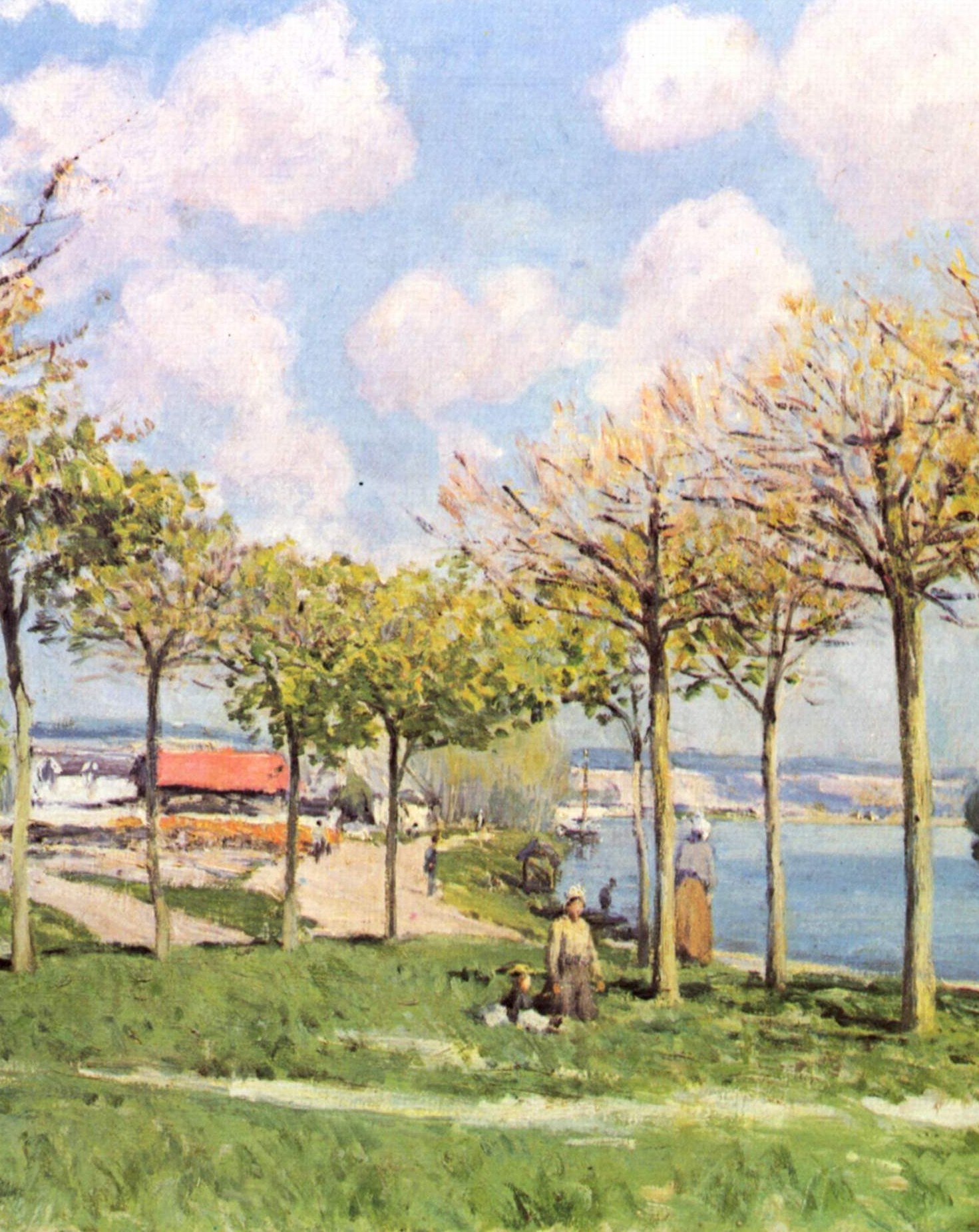
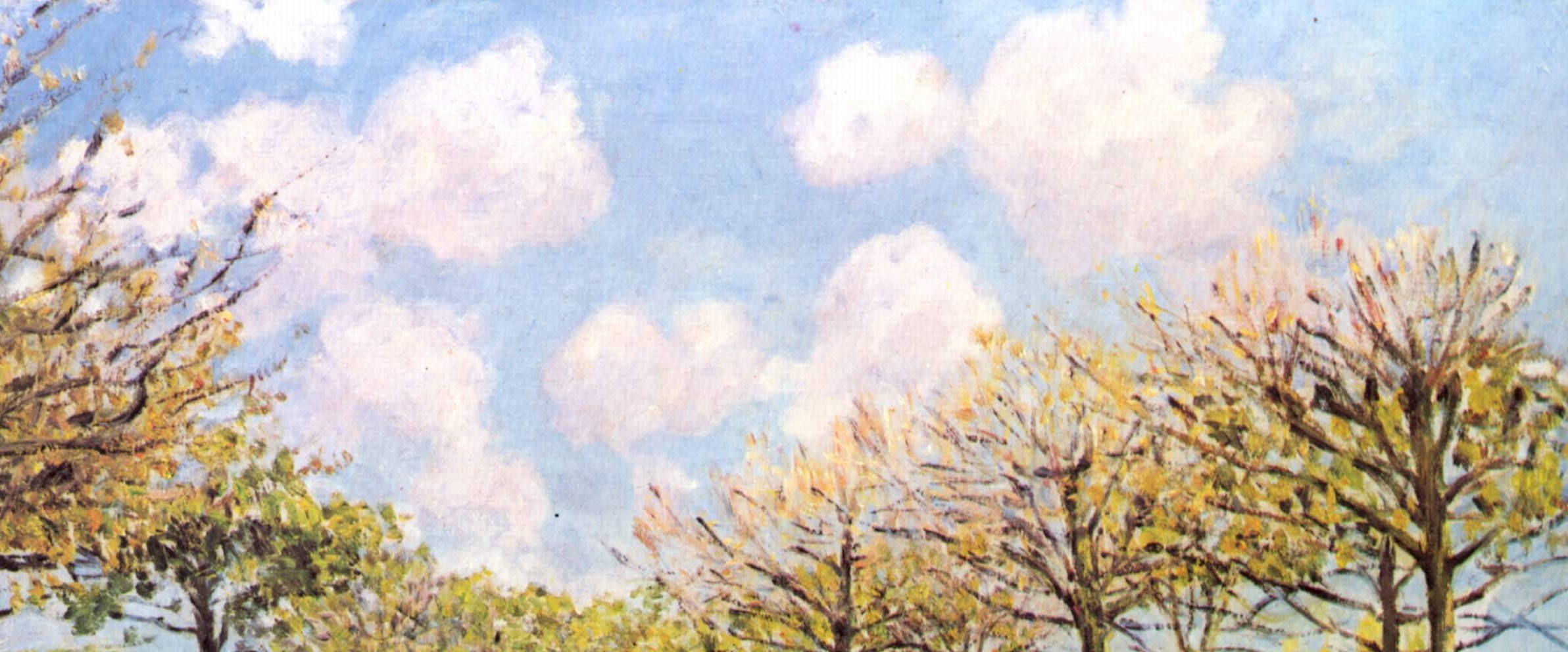
Alfred Sisley’s “The Seine at Bougival” (1876) is a jewel of the Metropolitan Museum of Art’s Impressionist collection. It is the most consistent of the Impressionists: a pure landscape painter who rarely deviated from capturing light on water and sky en plein air. This canvas dedicates nearly half its height to a cumulus cloud bank, the Seine glowing beside a promenade of plane trees.
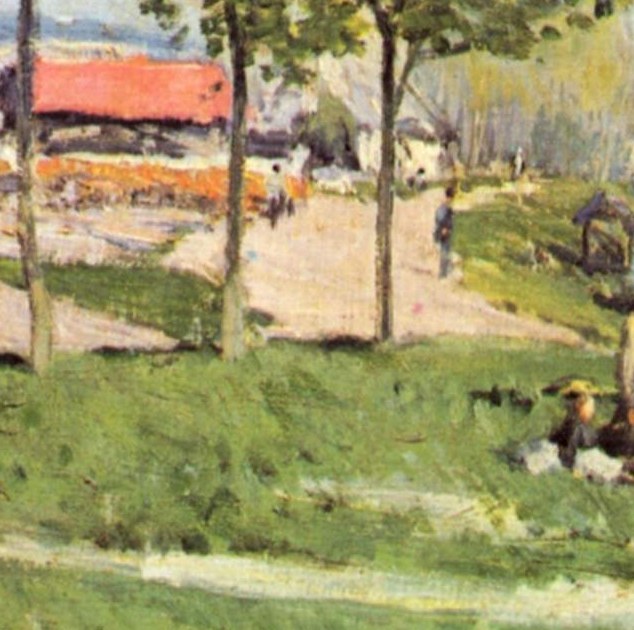
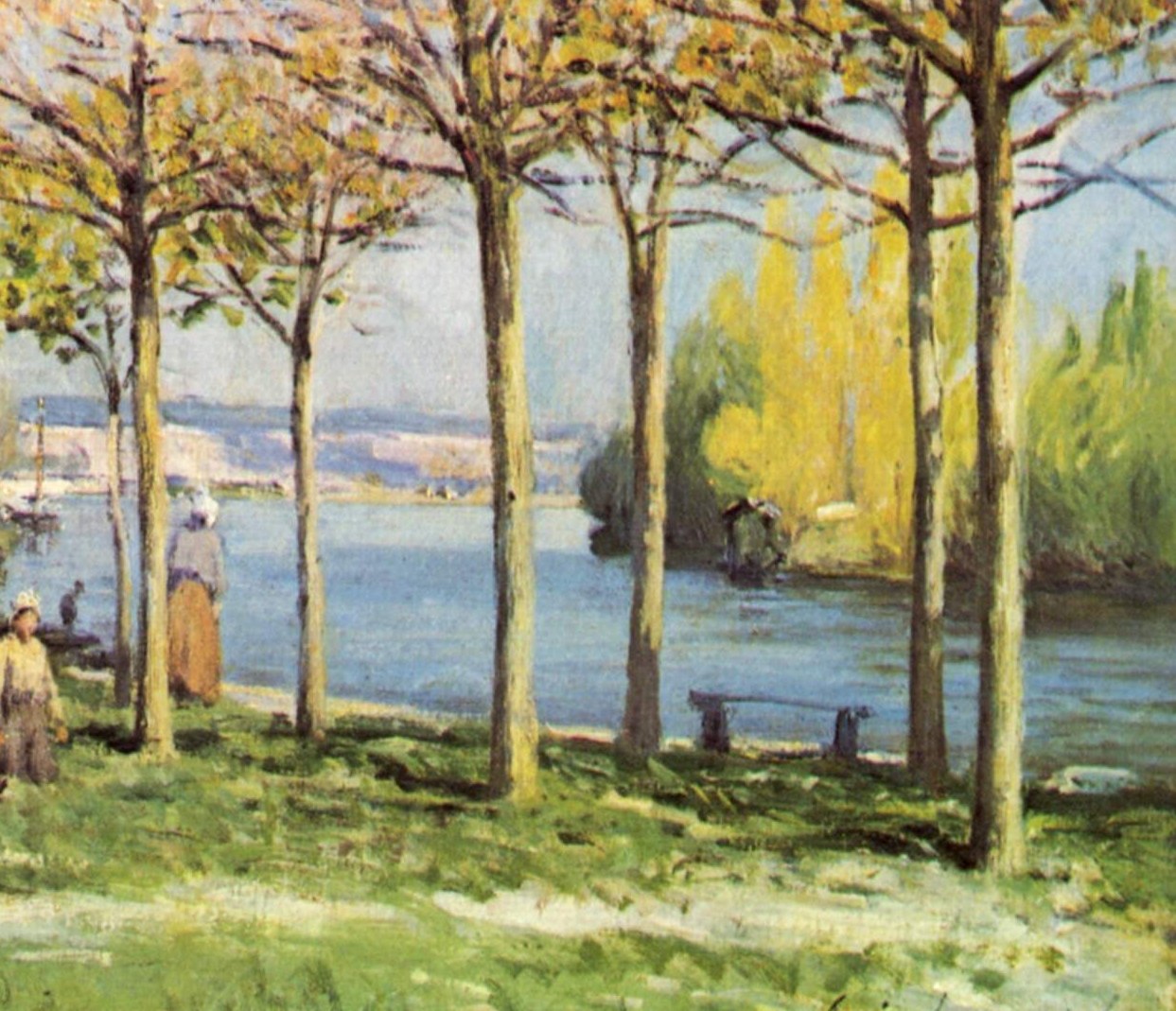
Look for the economy that creates the magic. The Seine’s surface is not painted as water but as a series of cool horizontal dabs. Walk up to it in person and you see broken marks; step back and a coherent shimmer appears. The lone figure beneath the trees is scarcely larger than a brushstroke, yet gives the towering landscape its scale. Sisley’s foliage at the top of the canvas is where his technique is most radical: quick flicks of yellow, lime, and white.
Sisley was born to British parents but spent his life in France. He died in 1899, largely in poverty, his work unrecognized by the market that later made Impressionism priceless. This landscape sat in private hands until 1992, when it came to the Met as a promised and partial gift from Mr. and Mrs. Douglas Dillon.
That acquisition was itself a quiet masterpiece of late-20th-century museum finance. The Dillons structured the donation to maximize tax deductions while retaining possession for years. The painting had none of the violence of a heist, but its path to public view was a story of wealth, law, and leverage nonetheless.
Details

Transcript
In 1992, the Met landed a masterpiece. It was a promised gift from the Dillons, a power couple of Republican politics. But the deal was a masterpiece of tax avoidance. By donating it slowly, they saved millions while keeping the painting on their wall for years. The man beneath the trees is practically a brushstroke. A fleeting figure in a fleeting world of light. Sisley died in poverty, his work unsold.